Science of the SpiritS


People

That's why childhood psychological abuse should be as taboo as sexual or physical abuse: Large new study reveals how harmful psychological abuse in childhood can be

Image
© Ardinnnn
Children who are neglected and emotionally abused experience similar, if not worse, psychological problems than those who are sexually or physically abused.

Despite this, childhood victims of psychological mistreatment rarely receive treatment and their suffering frequently goes unidentified.

Those are the conclusions of a new study of 5,616 youths who had faced different types of childhood abuse (Spinazzola et al., 2014).

The study is published in the journal Psychological Trauma: Theory, Research, Practice, and Policy.

Flashlight

Conspiracy theories: the ironclad logic and how to break it

Image
© Credit: Flickr/dexterd, CC BYConspiracy theories are so hard to debunk because they use science.
As the United Nations warns of the dire consequences of global warming, the commitment of the current Australian government to the reality of climate change remains unclear, with a history of disturbingly uninformed commentary on the issue and a climate policy with a decidedly ad hoc flavour.

Even the prime minister's business adviser, Maurice Newman, suspects the World Meteorological Organisation of conspiracy and propaganda.

Let's be very clear - to deny the science of climate change is to believe in a conspiracy. It may be thought of as a conspiracy between scientists and "the left", the UN, or all of them, but it is a necessary part of any such position.

Those in public life who deny climate science have long had a free reign in the media, appealing to the right for alternative views to be heard, claiming that this or that study is flawed, or explicitly claiming that a conspiracy exists.

The genius of conspiracy theories is that you can't prove them wrong, and this is true for two reasons.

Comment: Are you irate, irritable and irrational when presented with evidence that goes against your preconceived notions of how the world operates? Looking for a solution to your stress?

Then, open your eyes: Conspiracy theories confronting cognitive dissonance


Butterfly

Brittany Maynard: Why I scheduled my death for November 1st

brittany maynard
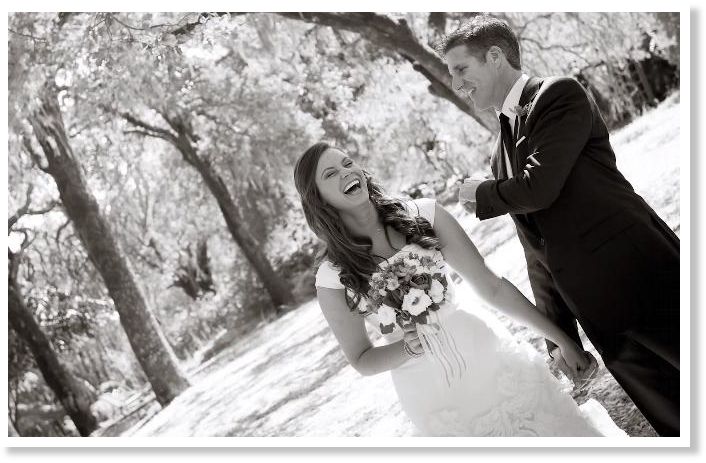
Brittany Maynard with her husband on their wedding day
Brittany Maynard carries a prescription in her wallet. It was written by a doctor in Oregon, one of five states with legal protections for terminally ill patients who want to end their suffering. And in three weeks, she plans to use it to die.

Maynard has chosen to die Nov. 1 in her bedroom in Portland, Ore., surrounded by family - her mother and stepfather, her husband and her best friend, who is a physician. She said she wanted to wait until after her husband's birthday, which is Oct. 26. But she is getting sicker, experiencing more pain and seizures, she told People in an exclusive interview.

"I've had the medication for weeks," she wrote in an op-ed for CNN. "I am not suicidal. If I were, I would have consumed that medication long ago. I do not want to die. But I am dying. And I want to die on my own terms."

Bulb

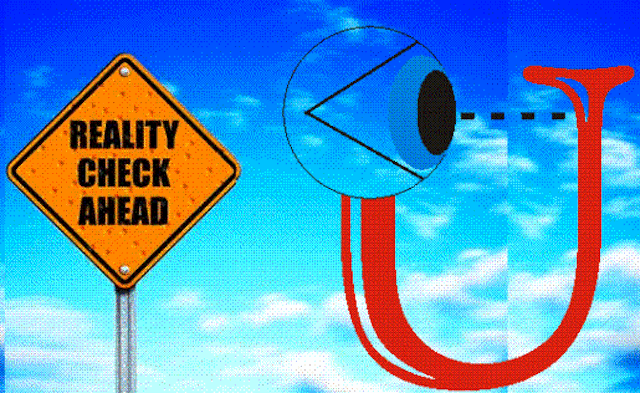
Stepping 'outside' of ourselves expands our view of our thinking, our emotional awareness

New research finds that distance can be the key to cracking your dilemmas.
Image
© What-buddha-said.net
It's easy to become rigidly fixed within a view of who you are ("This is just the way I am"), and to become unable to envision possibilities for expanding your personal capacities, thinking, and emotions outside of that fixed view. Unfortunately, this disables you from enlarging your perspective, which is necessary to solve conflicts or problems that you feel stuck inside of, or unable to change or alter.

President Dwight Eisenhower reportedly said that if you're having difficulty understanding a problem and how to solve it, "enlarge" it. That applies to life beyond the battlefield or White House. That is, "enlarging" how you envision a problem or situation you're stuck within can free you from the limitations of the perspective that imprisons you to begin with.

New empirical research demonstrates this, and shows that, in effect, distancing yourself from a problem or conflict enhances your reasoning, and helps you find new solutions through a broadened perspective. For a study reported in Psychological Science, Igor Grossmann of the University of Waterloo and Ethan Kross from the University of Michigan examined the ability to recognize the limits of one's own knowledge, search for a compromise, consider the perspectives of others, and recognize the possible ways in which the scenario could unfold.

The research found that you may think about a conflict more wisely if you consider it as an outside observer would.

"These results are the first to demonstrate a new type of bias within ourselves when it comes to wise reasoning about an interpersonal relationship dilemma," Grossmann says. "We call the bias 'Solomon's Paradox,' after the king who was known for his wisdom, but who still failed at making personal decisions."


Comment: Due to the nature of the adaptive unconscious, an outside observer would necessarily see situations more wisely, objectively. Read the discussion on our forum based on Timothy Wilson's book, Strangers to Ourselves: Discovering the Adaptive Unconscious


Pi

World's largest Near Death Experiences (NDEs) study published

Dr Sam Parnia
Dr Sam Parnia
Recollections in relation to death, so-called out-of-body experiences (OBEs) or near-death experiences (NDEs), are an often spoken about phenomenon which have frequently been considered hallucinatory or illusory in nature; however, objective studies on these experiences are limited.

In 2008, a large-scale study involving 2060 patients from 15 hospitals in the United Kingdom, United States and Austria was launched. The AWARE (AWAreness during REsuscitation) study, sponsored by the University of Southampton in the UK, examined the broad range of mental experiences in relation to death. Researchers also tested the validity of conscious experiences using objective markers for the first time in a large study to determine whether claims of awareness compatible with out-of-body experiences correspond with real or hallucinatory events.

Comment: The paper, Parnia S, et al. AWARE - AWAreness during REsuscitation - A prospective study. Resuscitation, 2014 is available here


Family

Toddlers regulate behavior to avoid making adults angry

Baby
© Compassionate Sleep Solutions
When kids say "the darnedest things," it's often in response to something they heard or saw. This sponge-like learning starts at birth, as infants begin to decipher the social world surrounding them long before they can speak.

Now researchers at the University of Washington have found that children as young as 15 months can detect anger when watching other people's social interactions and then use that emotional information to guide their own behavior.

The study, published in the October/November issue of the journal Cognitive Development, is the first evidence that younger toddlers are capable of using multiple cues from emotions and vision to understand the motivations of the people around them.

"At 15 months of age, children are trying to understand their social world and how people will react," said lead author Betty Repacholi, a faculty researcher at UW's Institute for Learning and Brain Sciences and an associate professor of psychology. "In this study we found that toddlers who aren't yet speaking can use visual and social cues to understand other people - that's sophisticated cognitive skills for 15-month-olds."

People

Supervisors' abuse, regardless of intent, can make employees behave poorly

So-called motivational abuse is seen as a violation and leads to behavioral backlash

Boss yelling
© Bigstockphoto
Employees who are verbally abused by supervisors are more likely to "act out" at work, doing everything from taking a too-long lunch break to stealing, according to a new study led by a San Francisco State University organizational psychologist.

Even if the abuse is meant to be motivational -- like when a football coach berates his team or a drill sergeant shames her cadets -- the abused employees are still more likely to engage in counter-productive work behaviors, said Kevin Eschleman, assistant professor of psychology at SF State.

The fallout from this abuse is not limited to the supervisor and employee and can in fact affect an entire company if it leads to lost work time or theft, Eschleman warned. "We didn't just focus on how these workers felt or whether they started to dislike their jobs more. We looked at consequences that actually affect the bottom line of an organization," he said.

Info

First hint of 'life after death' in biggest ever scientific study

Southampton University scientists have found evidence that awareness can continue for at least several minutes after clinical death which was previously thought impossible.
Life After Death
© Shaun Wilkinson/Alamy
Some cardiac arrest patients recalled seeing a bright light; a golden flash or the Sun shining.
Death is a depressingly inevitable consequence of life, but now scientists believe they may have found some light at the end of the tunnel.

The largest ever medical study into near-death and out-of-body experiences has discovered that some awareness may continue even after the brain has shut down completely.

It is a controversial subject which has, until recently, been treated with widespread scepticism.

But scientists at the University of Southampton have spent four years examining more than 2,000 people who suffered cardiac arrests at 15 hospitals in the UK, US and Austria.

And they found that nearly 40 per cent of people who survived described some kind of 'awareness' during the time when they were clinically dead before their hearts were restarted.

One man even recalled leaving his body entirely and watching his resuscitation from the corner of the room.

Despite being unconscious and 'dead' for three minutes, the 57-year-old social worker from Southampton, recounted the actions of the nursing staff in detail and described the sound of the machines.

Magnify

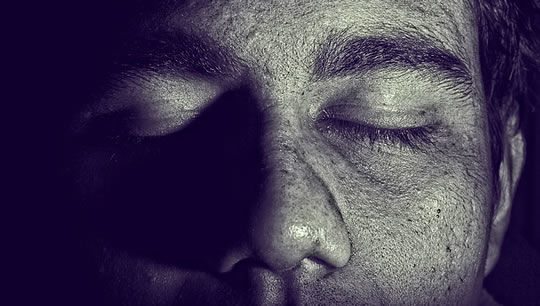
Life After Death? This is what people experience as the brain shuts down

What people see, feel and experience, in the minutes after cardiac arrest and before they are brought back to life.

Eyes Shut
© Hasibul Haque Sakib
The largest ever study into near-death and out-of-body experiences has found that 40% of people have some 'awareness', even after they are considered clinically dead.

Fifteen hospitals in the US, UK and Australia took part in the four-year study.

Over 2,000 people were included in the research, all of whom had suffered cardiac arrest (Parnia et al., 2014).

Of those people, 330 survived and were asked afterwards what they had experienced.

Amongst the survivors, 140 said they had some kind of awareness or experience while they were before they were brought back to life.

Comment: See more articles on the topic of near-death experiences (or NDE):

World's Largest-ever Study Of Near-Death Experiences

Near-Death Experiences Explained by Science

Near-Death Researcher Believes the Mind Survives Death

Brain Wave Surge Explains Near-Death Experiences


Books

Academic Achievement: You inherit more than just intelligence from your parents

Why the heritability of educational achievement is about much more than just intelligence.

Classroom
© theirhistory
The heritability of academic ability isn't just down to intelligence, but a whole range of factors, according to new genetic research.

The study of 13,306 twins found that while intelligence was the most heritable trait, a number of cognitive and behavioural factors predicted academic achievement (Kraphol et al., 2014).

Exam grades were also affected by personality, well-being, self-efficacy (confidence in your own abilities) and behaviour problems.

Behaviour problems, self-efficacy and personality aren't just down to the environment: they are also partly inherited.

Overall, the study found that 62% of differences between children on their exam results at around 16-years-old could be explained by heritable traits.