Science of the SpiritS


Health

Leading addiction specialist Dr. Gabor Mate explains what is needed to stop the opioid crisis

Dr Gabor Mate
The opioid crisis is happening all around us in the background of society, as overdoses from street drugs and prescription painkillers continue to rise. Talk to your local firemen and paramedics and you'll quickly realize the situation is sucking up our public resources while ruining lives and destroying families. A crisis as devastating as this should be top priority for a sane society, however this issue gets very little media attention, all the while, pharmaceutical companies are reaping massive profits, and globally, the black market for illegal heroin has become a global industry.

Pharmaceutical makers are tweaking their product lines to supply more options for opiate addicts: stronger pills, weaker pills, new guidelines, overdose antidotes, and so on. Yet, none of this addresses the root of the problem, instead only targeting the symptoms of the crisis, and a bigger idea is needed to interrupt the trend.

Gabor Maté, Canada's renowned addiction specialist recently commented on this issue, specifically addressing fentanyl, the super-potent new pharmaceutical grade opiate which, in some areas, has been found in up to 90% of street drugs tested at independent testing facilities. He first spoke about the genuine need for pain killers:
"The drugs these users choose are often opiates, the most powerful painkillers we know. In my years as a palliative care physician, I daily had reason to be grateful for the easing of suffering the opiate medications afforded my patients afflicted with cancer and other pain-inducing conditions. But opiates also soothe emotional pain; in fact, the suffering of psychic pain is experienced in the same part of the brain as that of physical pain." ~ Gabor Maté

Comment: What is the root cause of addiction, and how do you heal it?


Magic Wand

The magic of intuition is not magic

Dr. Joe Dispenza quote
© Dr. Joe Dispenza
Have you ever wondered how it is that when you think of your friend on the other side of the world, seconds later they call or text? Or how a mother can sense her child is in distress when the child is at another location? When something like this occurs, there are three possibilities at play, the first being intuition.

According to the Merriam Webster dictionary, intuition is defined as, "The power or faculty of attaining direct knowledge or cognition without evident rational thought and inference." Another way to think of it is that this direct knowledge is essentially a download of information from the unified field into our brain. It occurs when we stop thinking and analyzing and we go into trance. It's almost as if our brain pauses, and that pause in the chatter allows other types of information to enter our nervous system. The challenge most of us face is what to do with the information when we receive it. Often we tend to analyze it and not trust its authenticity, but mothers and people who are open and can connect easily tend to trust it more. We all have access to this type of information—some are just more skilled at receiving it than others.

Comment: More on intuition: Radio shows: Telepathic communication:


Dig

Scientific studies show how soil bacteria relieves depression

woman in the woods
It's a commonly known fact that the act of gardening can reduce stress and improve moods, but recent scientific studies have now shown that a particular microorganism that is found in soil can improve wellbeing and even act as an antidepressant. Mycobacterium vaccae is commonly found in soil, and has been proven to activate the release of brain serotonin, according to reports. The chemical serotonin together with dopamine boost immune systems and keep people happy. Both of these chemicals are neurotransmitters, which act as chemical messengers in the brain. dopamine affects emotions, movements and sensations of pleasure and pain, whilst serotonin regulates mood, social behaviour, libido, sleep, memory, and learning. When a person is gardening, M. vaccae is present on the skin when bare hands are in the soil. This is then either inhaled or enters into the bloodstream through any cuts.

The positive effects of the soil bacteria were discovered by accident by oncologist Dr Mary O'Brien, after she created a serum from the bacteria and gave it to lung cancer patients in an attempt to boost their immune system. Following this, she noticed the additional effects that the bacteria was having on the patients, which included enhanced happiness as well as them suffering less pain. Building on this concept, researchers Dorothy Matthews and Susan Jenks administered M. vaccae to mice before performing behavioural tests. Jenks said, "What our research suggests is that eating, touching and breathing a soil organism may be tied to the development of our immune system and nervous system." Their tests also showed that the mice were less anxious. Matthews stated, "It is interesting to speculate that creating learning environments in schools that include time in the outdoors where M. vaccae is present may decrease anxiety and improve the ability to learn new tasks."

Comment: More on the benfits of getting your hands in the dirt:


Info

In the hunt for animal consciousness, we find ourselves

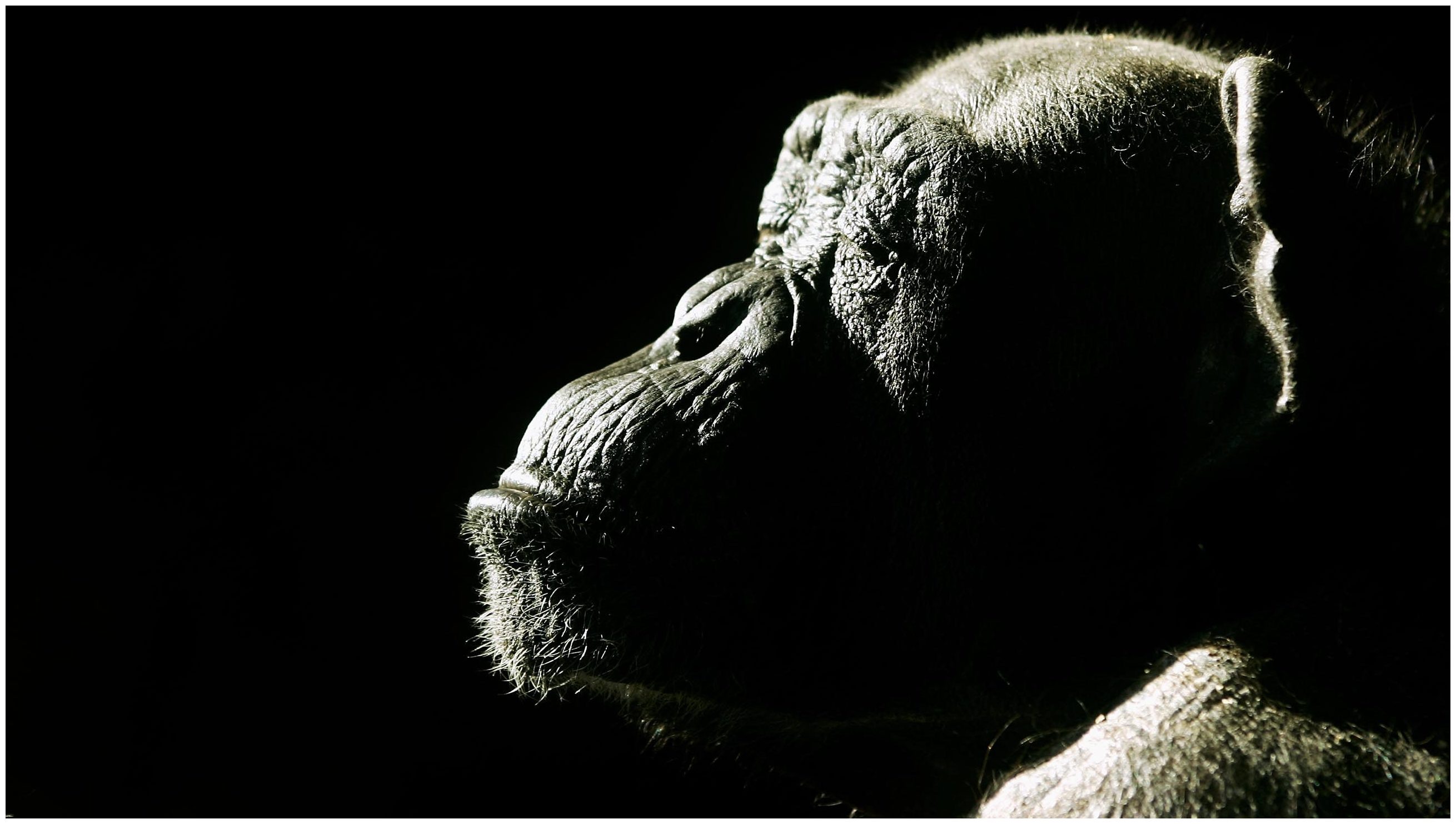
Chimpanzee
© Undark Org
Who knows what Arturo the polar bear was thinking as he paced back and forth in the dark, air-conditioned chamber behind his artificial grotto?

Just down the pathway Cecilia sat quietly in her cage, contemplating whatever chimpanzees contemplate.

In recent years, both creatures, inhabitants of the Mendoza Zoological Park in Argentina, have been targets of an international campaign challenging the morality of holding animals captive as living museum exhibits. The issue is not so much physical abuse as mental abuse — the effect confinement has on the inhabitants' minds.

Last July, a few months after I visited the zoo, Arturo, promoted by animal rights activists as "the world's saddest polar bear," died of what his keepers said were complications of old age. (His mantle has now been bestowed on Pizza, a polar bear on display at a Chinese shopping mall.)

But Cecilia (the "loneliest chimp," some sympathizers have called her) has been luckier, if luck is a concept a chimpanzee can understand.

In November, Judge María Alejandra Mauricio of the Third Court of Guarantees in Mendoza decreed that Cecilia is a "nonhuman person" — one that was being denied "the fundamental right" of all sentient beings "to be born, to live, grow, and die in the proper environment for their species."

Agreeing to a petition by animal rights lawyers in Argentina for a writ of habeas corpus — a demand that a court rule on whether a prisoner or inmate is being legally detained — the judge ordered that the chimpanzee be freed from the zoo and transferred to a great ape sanctuary in Brazil.

In an earlier case, an appeals court in Buenos Aires upheld a judge's demand that the city zoo provide an orangutan named Sandra with a way of life consistent with her "well-being, behavioral complexity, and emotional states."

Argentine law applies, of course, only in Argentina. But the decisions in the two cases have been taken as encouragement by activists in other countries. In the United States, the Nonhuman Rights Project has been trying for years — so far unsuccessfully — to use habeas corpus to free captive chimpanzees from labs and private zoos and have them declared nonhuman persons.

Books

Storyhealing: Complementary treatments for being human

storyhealing
Every month or so, I see a patient called Fraser in my primary care clinic, a soldier who was deployed in Afghanistan. Fifteen years after coming home, he is still haunted by flashbacks of burning buildings and sniper fire. He doesn't work, rarely goes out, sleeps poorly, and to relieve his emotional anguish he sometimes slices at his own forearms. Since leaving the army, he has never had a girlfriend. Fraser was once thickly muscled, but weight has fallen off him: self-neglect has robbed him of strength and self-confidence. Prescription drugs fail to fully quieten the terror that trembles in his mind. Whenever I used to see him in clinic, he'd sit on the edge of his seat, shakily mopping sweat from his forehead and temples. I'd listen to his stories, tweak his medications, and tentatively offer advice.

When Fraser began coming to see me, I was reading Redeployment (2014) by Phil Klay - short stories about US military operations, not in Afghanistan, but in Iraq. No book can substitute for direct experience, but Klay's stories gave me a way to start talking about what Fraser was going through; when I finished the book, I offered it to him. He found reassurance in what I'd found illuminating; our conversations took new directions as we discussed aspects of the book. His road will be a long one, but I'm convinced those stories have played a part, however modest, in his recovery.

People 2

Scout vs soldier mindset, or why you think you're right even when you're wrong

lifting blindfold
© Anna Parini
Are you a soldier or a scout? Your answer to this question, says decision-making expert Julia Galef, could determine how clearly you see the world.

Imagine for a moment you're a soldier in the heat of battle — perhaps a Roman foot soldier, medieval archer or Zulu warrior. Regardless of your time and place, some things are probably constant. Your adrenaline is elevated, and your actions stem from your deeply ingrained reflexes, reflexes that are rooted in a need to protect yourself and your side and to defeat the enemy.

Now, try to imagine playing a very different role: the scout. The scout's job is not to attack or defend; it's to understand. The scout is the one going out, mapping the terrain, identifying potential obstacles. Above all, the scout wants to know what's really out there as accurately as possible. In an actual army, both the soldier and the scout are essential.

You can also think of the soldier and scout roles as mindsets — metaphors for how all of us process information and ideas in our daily lives. Having good judgment and making good decisions, it turns out, depends largely about which mindset you're in. To illustrate the two mindsets in action, let's look at a case from 19th-century France, where an innocuous-looking piece of torn-up paper launched one of the biggest political scandals in history in 1894. Officers in the French general's staff found it in a wastepaper basket, and when they pieced it back together, they discovered that someone in their ranks had been selling military secrets to Germany. They launched a big investigation, and their suspicions quickly converged on one man: Alfred Dreyfus. He had a sterling record, no past history of wrongdoing, no motive as far as they could tell.

Comment: Along the same vein:58 Cognitive biases that screw up everything we do


TV

It's called programming for a reason: TV commercials and the dumbing down of the population

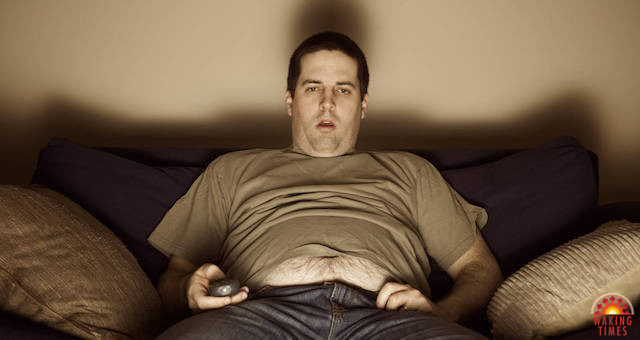
watching tv
At the heart of the social insanity, mindless acquiescence to authority, and automatic compliance with any and every new government rule or regulation, is a deliberate effort to dumb down the population. It takes place in the halls of our educational institutions, and it comes home with us at night to our television screens.

According to educational whistleblower and author of The Deliberate Dumbing Down of America, Charlotte Iserbyt:
"...over a thirty- to fifty-year period-what must surely amount to tons of materials containing irrefutable proof, in the education change agents' own words, of deliberate, malicious intent to achieve behavioral changes in students/parents/society which have nothing to do with commonly understood educational objectives."
We know the education system is designed to produce drones, but today I'd like to bring your attention to the role television commercials play in engineering our society toward entropy, division, conformity and decay.

Consider at once this ridiculous advertisement from Australia, where a wine company is hoping you'll drink more of their booze after watching a computer generated kangaroo liven up the party while getting the attention of supermodels. They overtly twist their brand name, Yellowtail, into crude sexual innuendo, appealing to your most base desires.

Brain

Metacognitive therapy successful in helping depressed patients separate thoughts and reality

depression
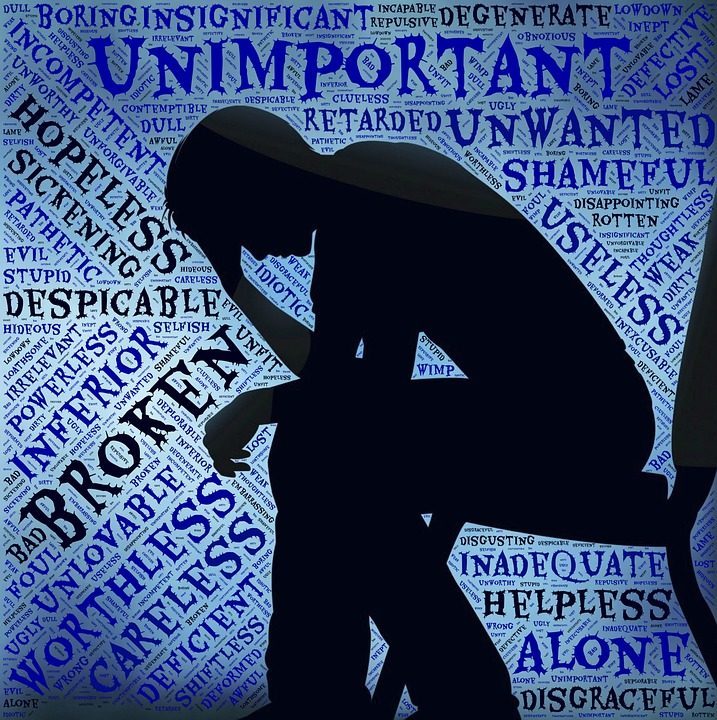
Most if not all negative thinking is based on fear and frequently develops into chronic depression which can damage our health and mental wellness. Depressed individuals "don't need to worry and ruminate," says Professor Roger Hagen, at the Norwegian University of Science and Technology's (NTNU) Department of Psychology. "Just realizing this is liberating for a lot of people."

Depression poses a risk for cardiovascular diseases in men that is just as great as that posed by high cholesterol levels and obesity.

Hagen and NTNU colleagues Odin Hjemdal, Stian Solem, Leif Edward Ottesen Kennair and Hans M. Nordahl have recently published a scientific paper on the treatment of depression using metacognitive therapy (MCT).

The study shows that learning to reduce rumination is very helpful for patients with depressive symptoms.
"Some people experience their persistent ruminative thinking as completely uncontrollable, but individuals with depression can gain control over it," says Hagen.

People

The science behind stupidity: Why smart people make dumb decisions

thinking woman
© Shutterstock
We've all been there.

We make what we think is a rational decision. And then seconds, minutes or days later we wonder "What was I thinking?!" Was it a temporary lapse of sanity? Were we just distracted and decided anyway?

We knew it wasn't the right decision or the best decision, but in that moment, we made a decision anyway. And it ended up being a stupid one. Why?

The Science Behind "Stupid"

Does this mean that we are indeed stupid? Nope. It simply means that not every decision we make is actually rational. We see what we want to see filtered through our inherent biases, and then we make decisions based on those biases. These biases are called cognitive biases and we all have them.

Comment: The Truth Perspective: You are not so smart - understanding our cognitive biases


Hearts

Why losing a dog can be just as hard as losing a relative or friend

Man walking his dog at sunset
© Shutterstock
Recently, my wife and I went through one of the more excruciating experiences of our lives - the euthanasia of our beloved dog, Murphy. I remember making eye contact with Murphy moments before she took her last breath - she flashed me a look that was an endearing blend of confusion and the reassurance that everyone was ok because we were both by her side.

When people who have never had a dog see their dog-owning friends mourn the loss of a pet, they probably think it's all a bit of an overreaction; after all, it's "just a dog."

However, those who have loved a dog know the truth: Your own pet is never "just a dog."

Many times, I've had friends guiltily confide to me that they grieved more over the loss of a dog than over the loss of friends or relatives. Research has confirmed that for most people, the loss of a dog is, in almost every way, comparable to the loss of a human loved one. Unfortunately, there's little in our cultural playbook - no grief rituals, no obituary in the local newspaper, no religious service - to help us get through the loss of a pet, which can make us feel more than a bit embarrassed to show too much public grief over our dead dogs.