Society's ChildS


Arrow Down

US Army intended to weaponise an episode of Pokemon in the 90's

Pokeman
© Flickr/Kate Haskell
While the Pokemon Go craze continues to spread across the world, a number of troublesome stories about the app and its GPS features are coming to light. While drivers crash into the back of police cars and teenagers mindlessly cross busy highways - whilst searching for their favorite virtual 90s creatures - others are delving into the darker mysteries surrounding the app and Pokemon franchise as a whole.

An activist discovered a declassified document from the Army's National Ground Intelligence Center, after filing a Freedom of Information Act request. Shockingly, the report revealed that the U.S. Army intended to weaponise an episode of the popular 90s children's program, Pokemon.

On December 16, 1997 thousands of children across Japan sat in front of their televisions, eagerly awaiting the latest episode of Pokemon. However, upon watching the episode, as many as 700 children experience seizures and were rushed to hospital.

The episode, called 'Electric Soldier Porygon', featured a scene in which Pikachu uses his lightning powers to blow up missiles. The flashing pulses within this scene caused the children to experience the unusual seizures. As a result, the episode was banned from airing, even in edited form. The effects of the episode were so damning, the entire show was removed from the air for four months.

While the world began to speculate what had caused the children's reaction to the episode, the U.S. Army researched the episode in an attempt to weaponize it. Imagine it: The U.S. Army in possession of a visual weapon that could overload the viewers brain and cause them to convulse.

Bizarro Earth

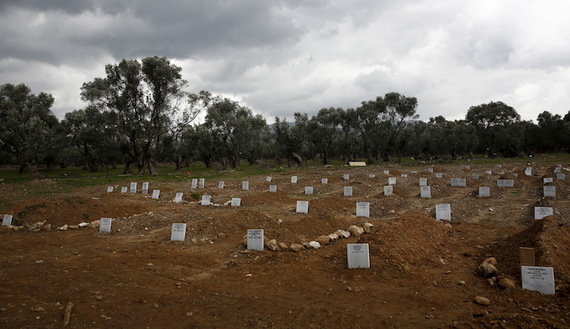
Nameless graves leave grim reminders of refugee plight on Turkey's coasts

Graves of unidentified refugees in Turkey
© REUTERS/Giorgos MoutafisGraves of unidentified refugees and migrants who drowned at sea during an attempt to cross a part of the Aegean Sea from the Turkish coast are seen at a cemetery near the village Kato Tritos on the Greek island of Lesbos, Feb. 4, 2016.
The Turkish coastal city of Izmir and the nearby Greek island of Lesbos have become the final resting places of refugees whose desperate journeys to Europe ended in tragedy in the Aegean Sea. The plot of land where Lesbos buried refugees ran out of space earlier this year, and a second plot of land was opened. In Izmir, wooden signs inscribed with numbers mark the graves in a potter's field converted into a refugee cemetery.

Izmir has been one of the main departure points for refugees seeking to cross from Turkey to Greece. Syrian families sleeping in parks and traffic islands had become a common sight across the city in the crisis days that led up to the Turkey-EU agreement to stem the flow in March. A "refugee industry" flourished in the city, including underground workshops manufacturing dinghies — often unseaworthy — and fake life jackets filled with non-buoyant material. Even shops on main streets sold life jackets and other supplies the refugees needed for their journeys, as Syrian child beggars became a fixture in the streets and better-off Syrians sent rental prices soaring.

Attention

One person killed, eleven injured by blast in south German city of Ansbach during music festival

Ansback, Germany explosion
© Twitter / Sunset
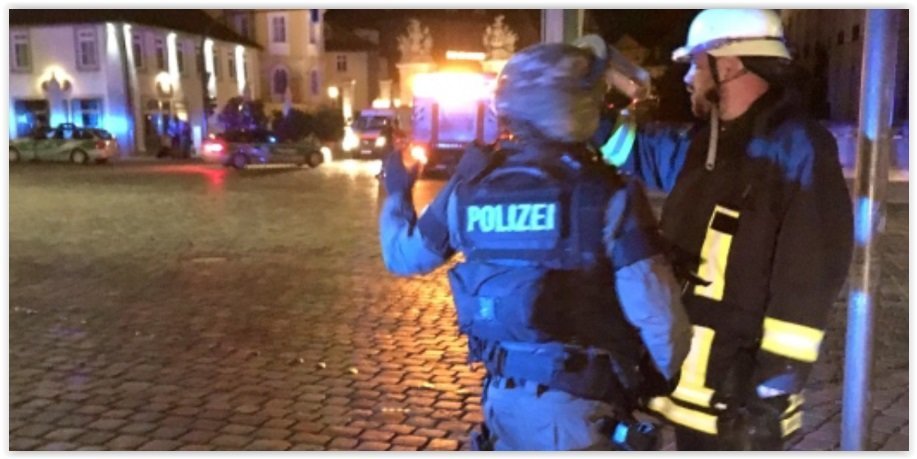
One person killed, eleven others were injured by an explosion that hit a restaurant in the south German city of Ansbach in the federal state of Bavaria, local media reported.

The incident took place at 10:00 p.m (20:00 GMT) in the central part of the city, not far away from a place where a music festival took place at the weekend, Suddeutsche Zeitung.

The local police has confirmed the number of victims.

Mayor of German city of Ansbach Karda Seidel said that the cause of the explosion in the city center was an explosive device. "This is not a gas explosion, it was caused by a bomb," said Seidel.

Clipboard

The truth about the situation in Venezuela - an insider's perspective

venezuela
After three years as a correspondent in Venezuela, BBC's Daniel Pardo decided to share a look into five myths he's identified in relation to the country's situation, as perceived by people abroad. Those up-to-date with the news know that almost every mainstream media outlet paints a gloomy picture of famine, insecurity and censorship. But, how bad is the situation really?

1. There's Famine

While it is true that some areas in Venezuela are experiencing food shortages, and most people (90 percent according to an Encovi poll) have declared they now eat less and worse, there is no such thing as a widespread famine.

According to U.N. criteria, a famine is defined by severe food scarcity in more than 20 percent of households, a global acute malnutrition rate above 30 percent and death rates above 0.02 percent — two deaths per 10,000 people per day. In comparison, the most pessimistic figures for Venezuela point toward 20 to 25 percent malnutrition rate and a death rate that does not even reach one person per 1 million people per day.

Comment: Further reading:


Fire

Huge fire breaks out near NATO base in western Turkey

Turkey NATO base fire
© secildemirkol / Instagram
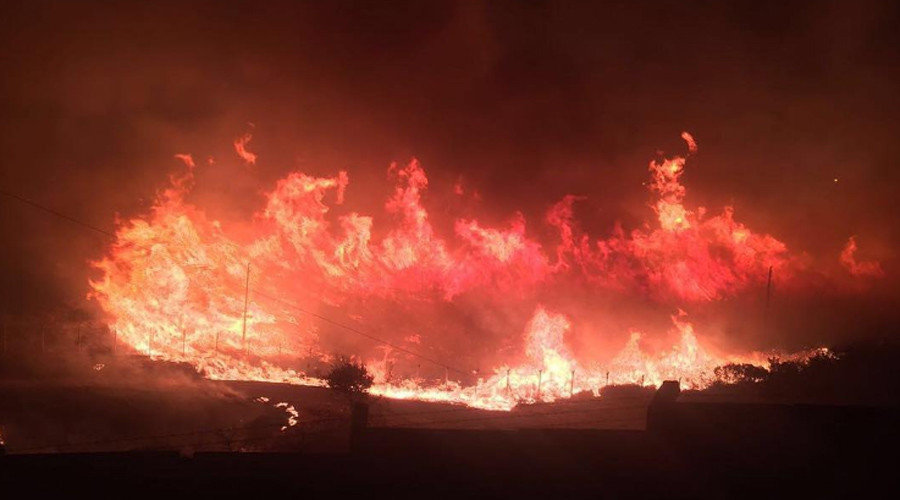
A massive fire has erupted near a NATO base within the Buca district, Izmir, western Turkey. Authorities are investigating a possible act of sabotage, local media reports.

The inferno started on Sunday evening on the border of the Sahintepe and Mevkiinde districts. The fire engulfed the grassy wooded area and is spreading closer to NATO's military base because of strong winds.

According to CNN Turk, the fire is threatening a number of populated areas, and has already impacted a home for the elderly and its adjacent garden.

Comment: Authorities are suggesting this may have been an act of anti-American sabotage.


Snakes in Suits

Being human on a psychopathically controlled Earth: Three lessons from the movie 'Groundhog Day'

Groundhog Day
Bill Murray in the movie Groundhog Day
The 1993 movie Groundhog Day is the story of a person trapped to live the same day over and over. The main character responds to this situation in three phases:
  1. Manipulative control for selfish short-term desires.
  2. Depression and attempted rejection from no escape and no satisfaction.
  3. Self-expression for virtue and service with satisfaction.
After selfish desire is transcended, the character awakens on a new day with all the earned skills of practiced virtues.

Arrow Down

Girl's plight reflects misery of Libya after Gaddafi

Libya healthcare decline
© unknown
Unable to get specialist care for his six-year-old daughter in Libya or a visa for treatment abroad, Abdulhakim Shaybi bought a motor boat and set off with her last month across the Mediterranean.

Two-and-a-half hours into their journey from Sabratha in western Libya, they reached a European ship deployed to rescue migrants.

Info

The rise of black nationalist groups that may have influenced killers in Dallas, Baton Rouge - or not

Members of the New Black Panther Party
© Justin Sullivan/Getty ImagesMembers of the New Black Panther Party protest near the site of the Republican National Convention on July 16 in Cleveland.
Micah Xavier Johnson, who killed five police officers in Dallas, was increasingly drawn to black nationalist ideology and attended several meetings of the People's New Black Panther Party.

Gavin Eugene Long, who killed three officers in Baton Rouge, said he belonged to the Washitaw Nation, an obscure black nationalist group that claims ownership to the huge swath of the United States obtained in the Louisiana Purchase on the belief that they are descended from a U.S. indigenous group.

The People's New Black Panther Party and the Washitaw Nation have vastly different ideologies and no direct ties to each other, but they are part of a broad landscape of black nationalist groups playing a role in the country's violent summer 2016.

"There are a few big groups and a lot of little ones, and they are growing in an echo chamber where all they hear is 'anger, anger, anger, anger, anger,' " said J.J. MacNab, an author and George Washington University researcher who specializes in ­extremism.

Some of these entities espouse extremist, anti-government views, and their numbers jumped from 113 groups in 2014 to 180 last year, according to the Southern Poverty Law Center, which tracks extremism.

Ryan Lenz, an SPLC analyst, said that increase has partly been a response to a rise in white supremacist and white nationalist activity amid the racially charged environment of the past two years, including the 2016 presidential campaign. For example, SPLC figures show that the number of Ku Klux Klan chapters increased from 72 in 2014 to 190 last year.

Comment: Given the mysterious way in which the 4 suspects of the Dallas shootings somehow got whittled down to one in the mainstream press, and given all the other peculiarities we find in many of these types of narratives, we'd do very well to consider how many of these tragedies are greatly "helped along" by various NON-Black Nationalist agencies and groups - who are basically sent in to foment greater rage and anger among those wearing badges and blue uniforms.


Eye 2

Pensioner accused of boiling neighbors' heads and flushing body parts

toilet
© Dylan Martinez/Reuters
A man accused of killing his two neighbors and flushing their body parts down the toilet has been arrested by police in Russia.

A plumber called out to investigate a blocked sewage system at an apartment block in the Kalininsky District of St. Petersburg made the shocking discovery and alerted authorities.

Airplane

India steps up search for missing military plane

Indian Air Force missing plane route
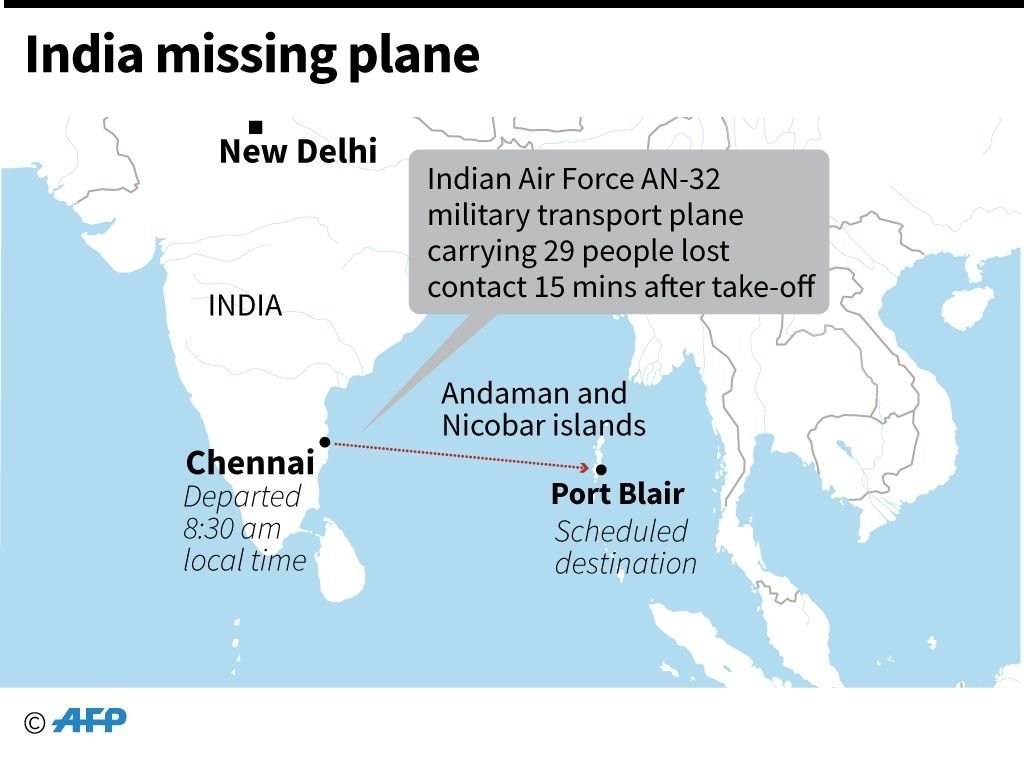
© AFP Photo/John SaekiIndian Air Force plane missing en route to Port Blair
India on Saturday stepped up a major search operation for an air force plane that disappeared over the Bay of Bengal the day before with 29 people on board, as the defence minister headed to the region.

The AN-32 military transport plane was on a routine flight from the southern city of Chennai to Port Blair, capital of the remote Andaman and Nicobar islands, on Friday morning when it vanished from radar screens.

Twenty-one of the passengers on board were defence personnel, including six crew members, while eight others worked for the military in non-uniform roles, an IAF source told AFP.