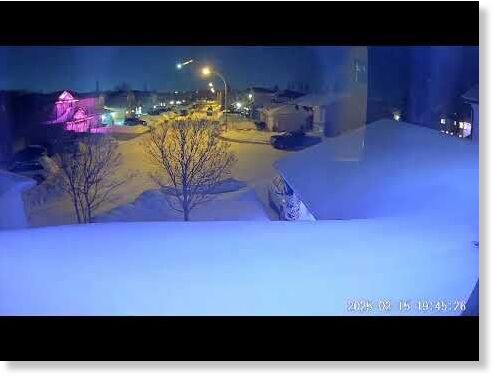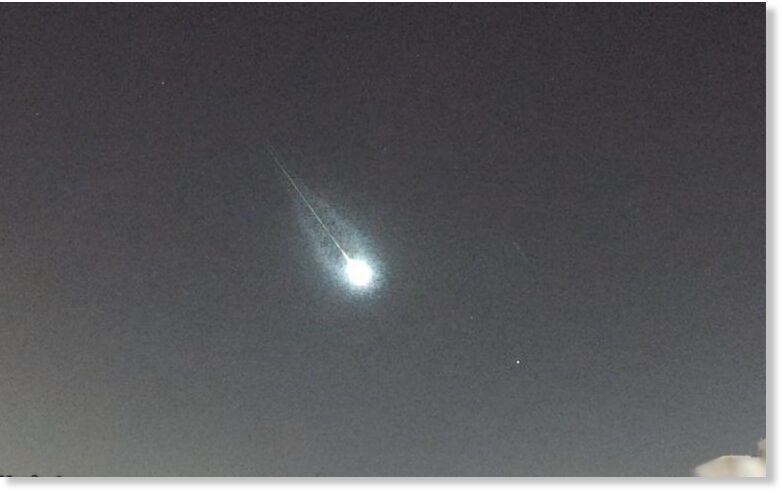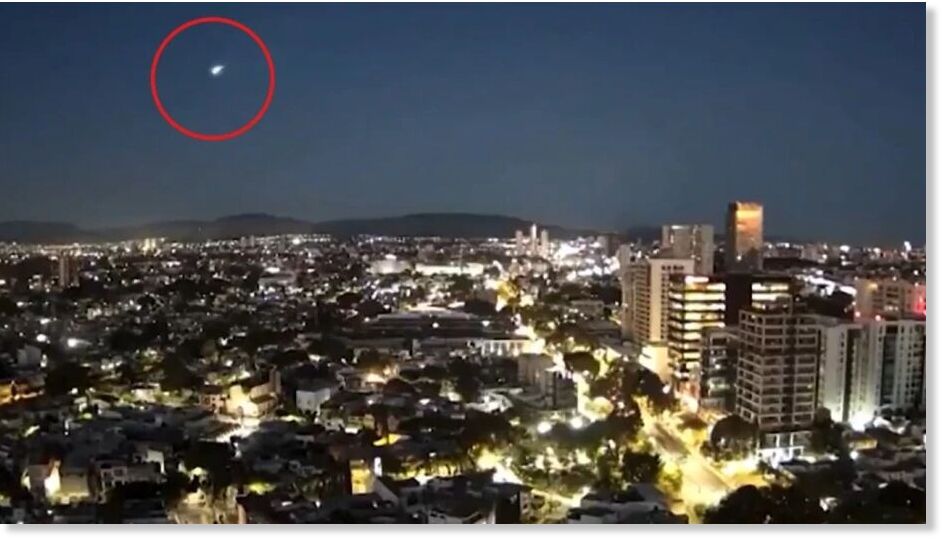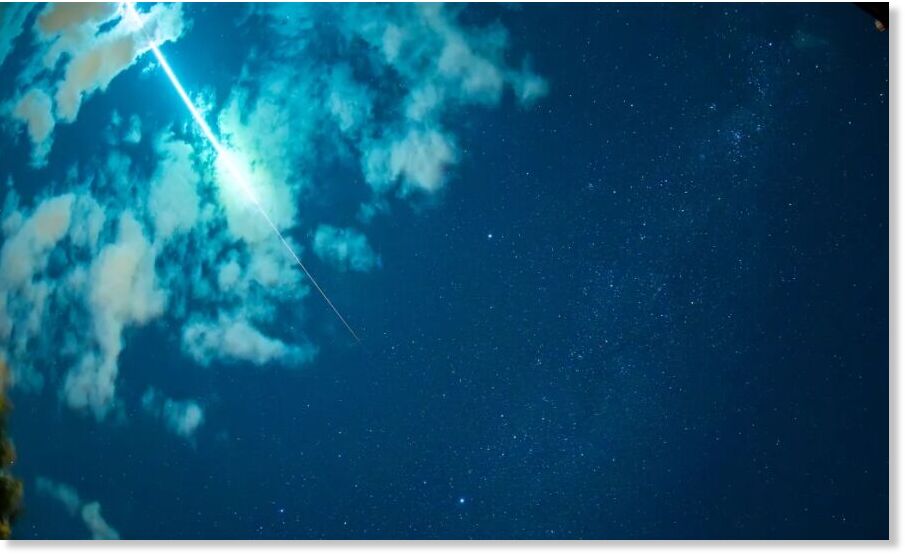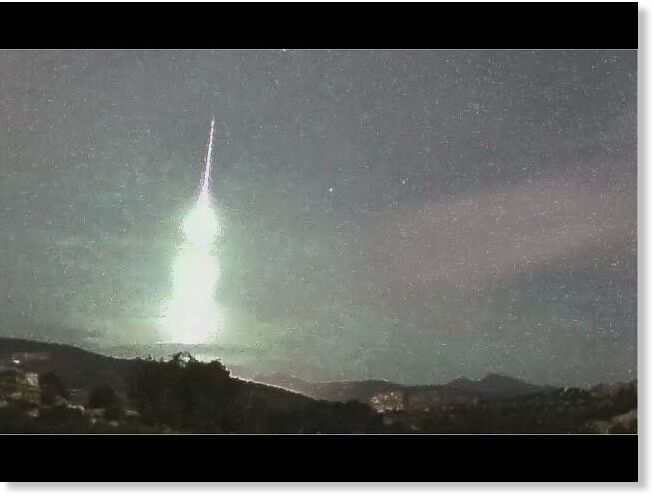
This stunning bolide was spotted from Spain on February 16, at 2:11 local time (equivalent to 1:11 universal time). It was brighter than the full Moon. The fireball was observed by some casual eyewitnesses, who reported it on social networks.
The event was generated by a rock (a meteoroid) from a comet that hit the atmosphere at about 135,000 km/h. The fireball overflew the province of Huesca (Spain). It began at an altitude of about 94 km over the locality of Loporzano (province of Huesca), moved northeast, and ended at a height of around 33 km over the locality of Sobás (province of Huesca).
This bright meteor was recorded in the framework of the SMART project, operated by the Southwestern Europe Meteor Network (SWEMN) from the meteor-observing stations located at La Hita (Toledo), Calar Alto, Sierra Nevada, La Sagra (Granada), Olocau (Valencia), Faro de Cullera (Valencia), Sant Celoni, and Breda. The event has been analyzed by the principal investigator of the SMART project: Dr. Jose M. Madiedo, from the Institute of Astrophysics of Andalusia (IAA-CSIC). Its code in the SWEMN database is: SWEMN20250216_011130.
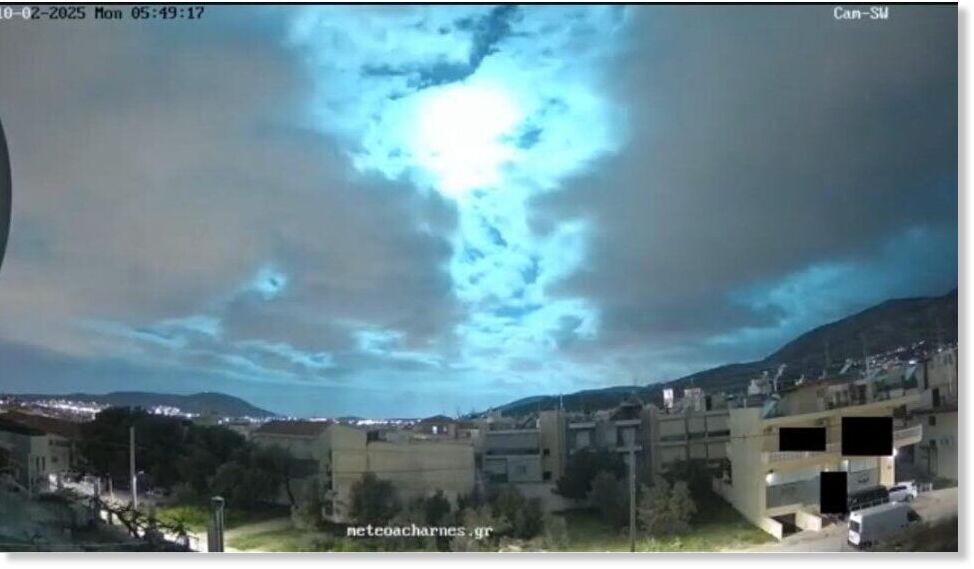
The director of the Hellenic National Meteorological Service (EMY), Theodoros Kolydas, explained that the mysterious morning glow observed by some in the Attic sky on early Monday was caused by a meteor entering Earth's atmosphere.
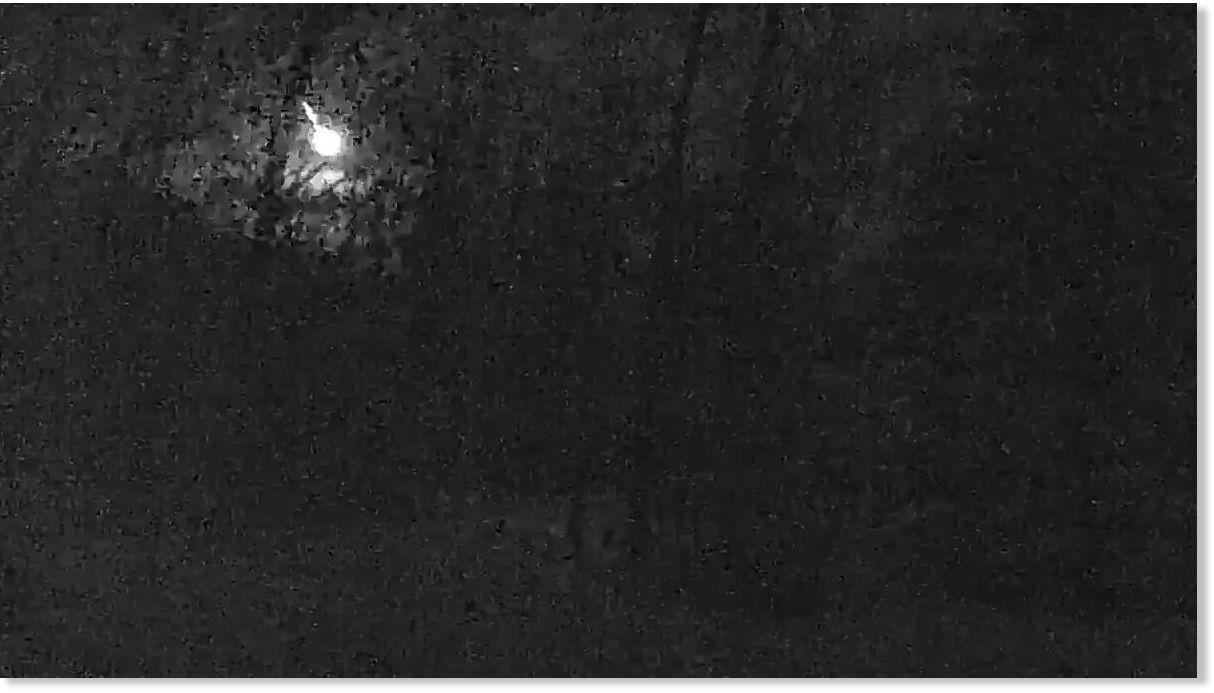
A video captured by a camera mounted on a meteorological station in Acharnes shows a sudden flash of light that does not appear to originate from cloud formations.
Kolydas confirmed that the phenomenon was indeed a meteor, with its glow visible across central Greece.
"For an observer on Earth, meteors that enter the atmosphere in the early morning hours travel at higher speeds and are more difficult to spot, whereas those appearing in the early evening move more slowly," he noted.
Photographer John Wekking captured "a brilliant fireball, overhead last night (31 January), 23:07hrs as captured by my aurora camera. North at the bottom."
People in the South Island have witnessed a fireball break through the atmosphere near Wānaka with a loud sonic boom.
The meteoroid became a fireball and raced above Queenstown about 11pm on Friday, before burning out over Southland.
Fireballs Aotearoa, a group interested in meteorites, said a sonic boom was widely reported as the object came in overhead.
Although most of its mass burned up in the fireball stage, it was believed a small meteorite may have landed in a remote portion of the Eyre Mountains in northern Southland.
Fireballs Aotearoa are on the hunt for it and believe it may have landed in the Eyre Mountains in Southland.
A very bright fireball exploded over the skies of the Río de la Plata area at around 01:15 UTC on February 2, 2025, creating a spectacular display for people of both Uruguay and Argentina.
A very bright fireball exploded over the Rio de La Plata, Argentina at approximately 01:15 UTC on February 2 (22:15 local time on February 1). The Rio de La Plata area, situated south of Uruguay, shares a coastline with Argentina.
Social media reports indicate that the fireball had a green trail, which suggests the presence of magnesium.
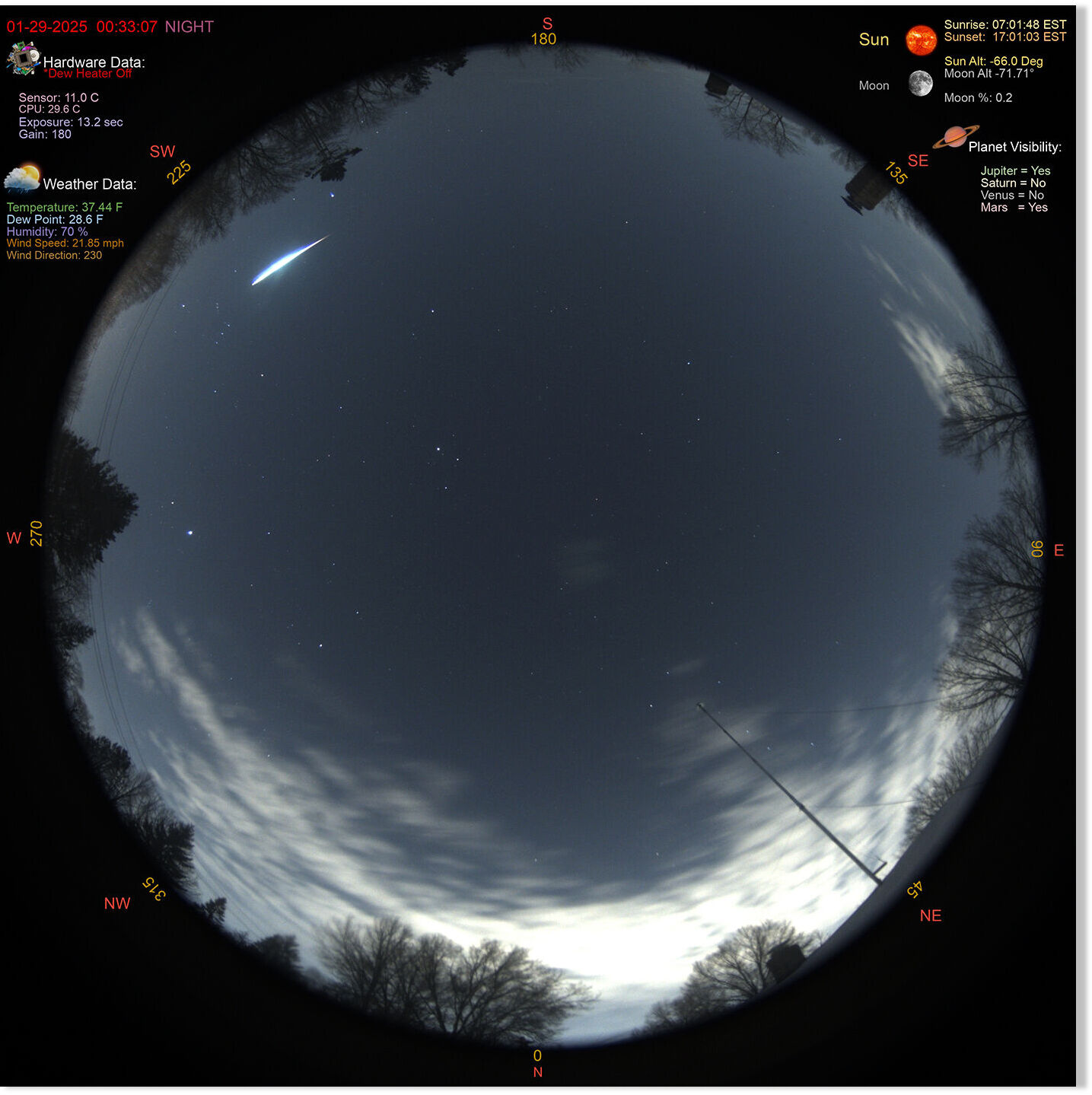
We received 27 reports about a fireball seen over IL, IN, Indiana, KY, MI, Michigan, OH, Ohio, Ontario, PA and Pennsylvania on Wednesday, January 29th 2025 around 05:32 UT.
For this event, we received one video and one photo.