© Earth Observatory, NASA
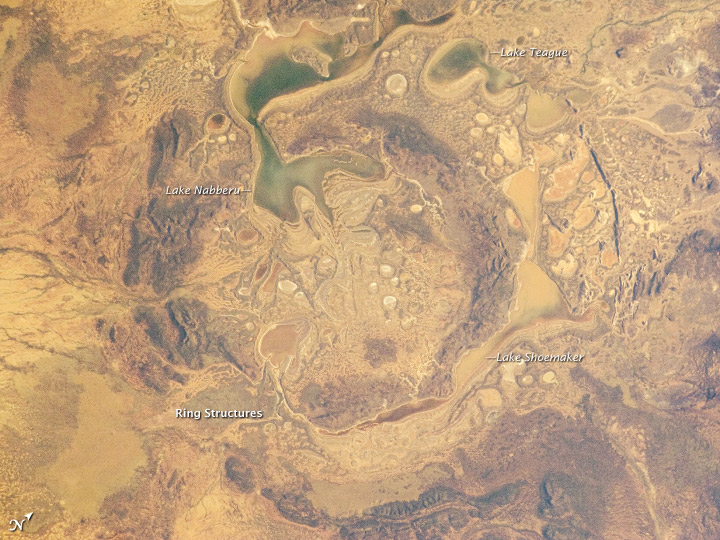
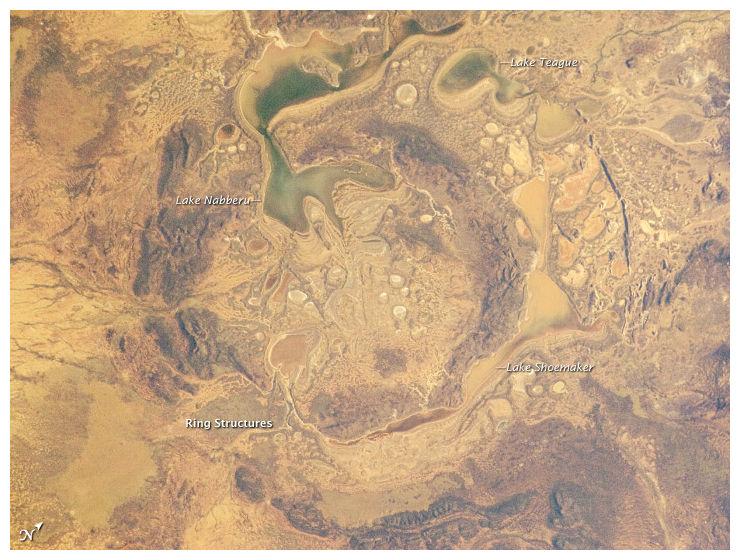
The Shoemaker (formerly Teague) Impact Structure - located in Western Australia in a drainage basin south of the Waldburg Range - presents an other-worldly appearance in this astronaut photograph. The Shoemaker impact site is approximately 30 kilometers (19 miles) in diameter and clearly defined by concentric ring structures formed in sedimentary rocks (brown to dark brown, image center). The rocks were deformed by the impact event approximately 1.63 billion years ago (as reported by the
Earth Impact Database). Other age-dating analyses of granitic rocks at the core of the structure call this age into question (
Pirajno et al. 2003).
Several saline and ephemeral lakes - Nabberu, Teague, Shoemaker, and numerous smaller ponds - occupy the land surface between the ring structures. Differences in color result from both water depth and from suspended sediments, with some bright salt crusts visible around the edges of smaller ponds (image center). A Landsat 7 view of the
Shoemaker structure illustrates the extent of these ephemeral lakes, or playas, in the region.
The Teague Impact Structure was renamed Shoemaker in honor of
Dr. Eugene M. Shoemaker (1928-1997), a pioneer in impact crater studies and planetary geology, as well as the founder of the
Astrogeology Branch of the U.S. Geological Survey.





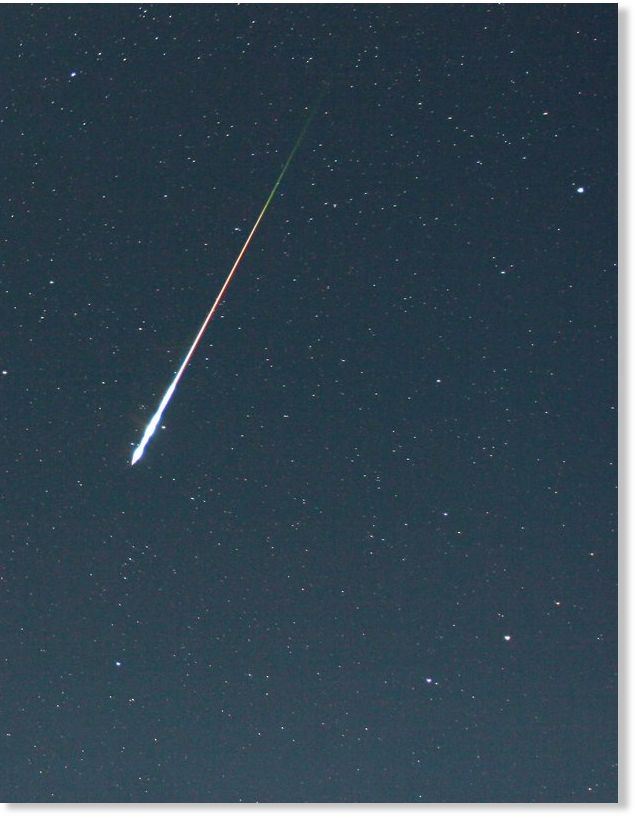



Comment: As Niall Bradley wrote about this phenomenon earlier this year on SOTT: Check out the latest edition of Connecting the Dots for more coverage of another sighting of a rocket trail/fireball spotted over Vytegra, Russia on 22d of June this year.