
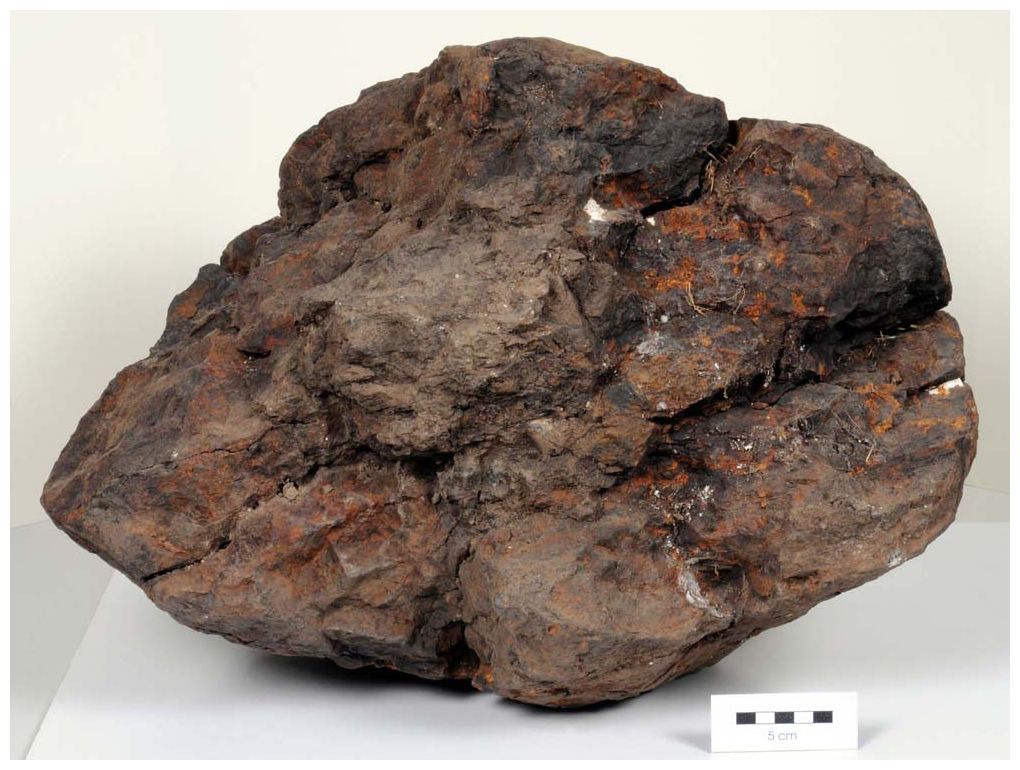
© The Open UniversityLikely the largest meteorite found in Britain, this one spans about 1.6 feet (0.5 meters) across and has been on Earth some 30,000 years.
With a weight that rivals a baby elephant, a meteorite that fell from space some 30,000 years ago is likely Britain's largest space rock. And after much sleuthing, researchers think they know where it came from and how it survived so long without weathering away.
The giant rock, spanning about 1.6 feet (0.5 meters) across and weighing 205 pounds (93 kilograms), was likely discovered by an archaeologist about 200 years ago at a burial site created by the Druids (an ancient Celtic priesthood) near Stonehenge, according to said Colin Pillinger, a professor of planetary sciences at the Open University.
Pillinger curated the exhibition "Objects in Space," which opens today (Feb. 9) and is the first time the public will get a chance to see the meteorite. The exhibition will explore not only the mystery that surrounds the origins of the giant meteorite, but also the history and our fascination with space rocks.
As for how the meteorite survived its long stint on Earth, researchers point to the ice age.

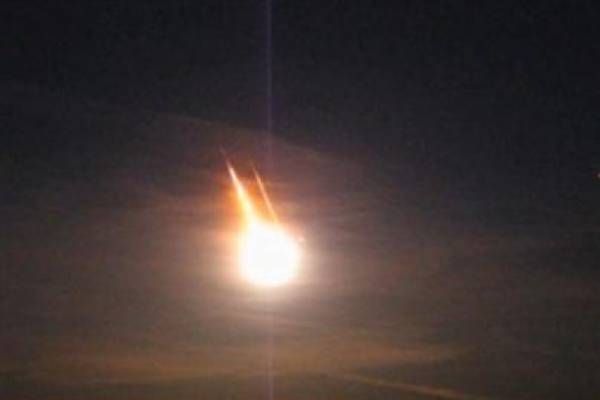
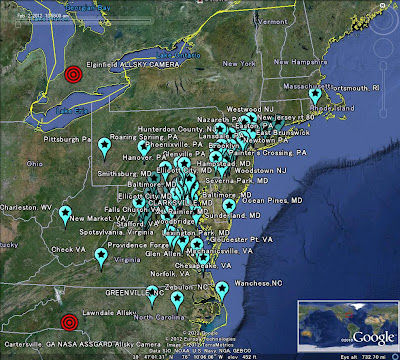
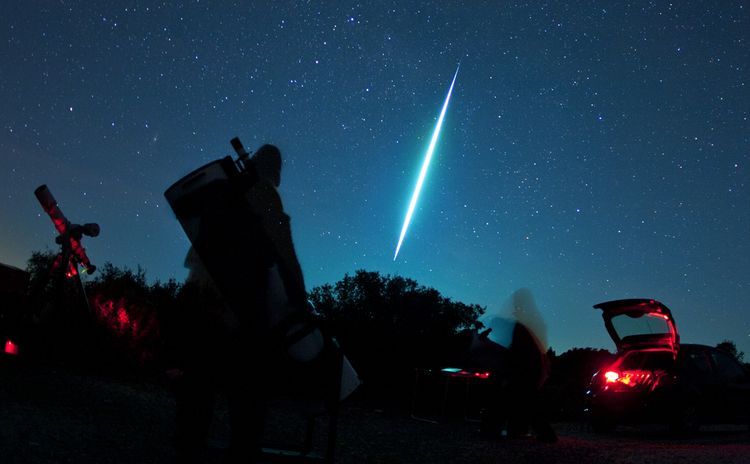





Comment: Our immediate cosmic environment IS probably littered with junk left there by certain governments who live by the maxim that the means justify the ends. But it is the height of denial to buy into the notion that all these reports of fireballs we've been collecting are man-made objects. This 'space junk' theme is starting to smell strangely like 'anthropogenic global warming', which provides a plausible - but 'not even wrong' - cover story for Earth changes.
Forget About Global Warming: We're One Step From Extinction!