Fire in the SkyS


Fireball 4

Eyewitness descriptions suggest 12 missing Marines aboard 2 downed helicopters off Hawaii were taken out by meteor explosion

hawaii helicopters
© HNNUS Marines and police discuss search and rescue options after two military choppers go down off Hawaii
All four life rafts from the two choppers that collided off Oahu's North Shore have been recovered, but rescuers have yet to find any sign of survivors. The search for the 12 Marines on board the two helicopters continued into its fifth day Tuesday, with Marines combing North Shore beaches for debris, while multiple county, state and federal agencies search for survivors by air and sea.

Navy divers have also been dispatched, and are using sonar technology around the last known position of the two choppers about two miles off Haleiwa. So far, they haven't seen any debris. The two Marine Corps choppers collided during a routine training mission about 10:40 p.m. Thursday, setting off a massive ocean search-and-rescue effort during one of the biggest swells of the winter season. Low visibility also hampered search efforts.

Ocean conditions are favorable for searching Tuesday, but surf is expected to start rising again Wednesday. The Coast Guard says there has been no indication that anyone was ever on the life rafts that were recovered. Still, the Coast Guard said Sunday that it remains hopeful survivors will be found, and in a statement Monday, Coast Guard officials said their goal is to ensure with "absolute certainty we've thoroughly canvassed every location we might find them."

Comment: The eyewitness descriptions are clearly not referring to a fireball resulting from the collision of two man-made objects, as the article implies.

The obvious explanation is that the two helicopters were taken out by the shockwave from an overhead meteor fireball explosion, the force from which suddenly and catastrophically disabled the craft and scattered their debris over a wide area.


Fireball 2

Fireball meteor disintegrates over Lviv, Ukraine

fireball
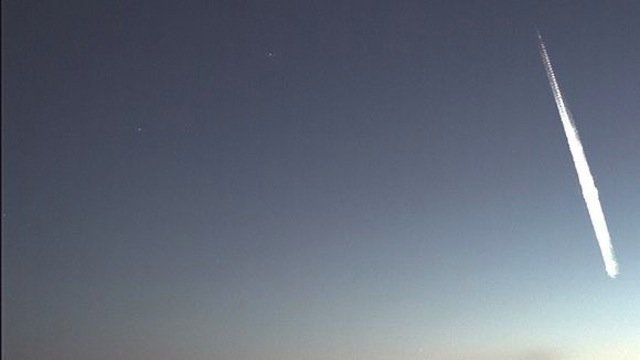
The sky of the largest city in western Ukraine was visited by a disintegrating bright white fireball on January 23, 2016, local time.

The entry of this space rock must have been impressive and has most probably created a loud sonic boom.


Here another video from the same event... From another camera of the network:


Fireball 2

Meteor fireball observed over the Mediterranean Sea - 19.01.16

meteor over the Mediterranean Sea
© SMART Project (screen capture)
Meteorite-producing fireball observed on 19 Jan 2016 (at about 23h59m UT). The event took place over the Mediterranean Sea. It was recorded by the meteor-observing stations operated by the University of Huelva at Calar Alto, La Hita and La Sagra astronomical observatories.


Fireball 5

Bright meteor fireball lights up evening skies in Finland

Finland fireball
© Aki TaavitsainenA file photo of a meteorite captured over the skies of Mikkeli in October 2015.
There were many of reports of a large, bright fireball that lit up skies over towns across southern Finland at about 8 pm on Saturday. Some eyewitnesses of the phenomenon said it looked like lightning or a camera flash. Still others reported they also heard a thunder-like rumbling afterwards.

The website of astronomy magazine Tähdet ja avaruus, which uses the assistance of astronomers from across Finland, says that there were some 200 reports of sightings of a bright flash of light in the dark skies of southern and western areas at about 8 pm Saturday.

According to Tähdet ja avaruus the flashing light was likely a meteorite but said they had not yet seen Saturday night's incident captured in a photograph.

If the suspected meteorite was photographed, it might be possible to determine its trajectory and possibly learn if the object may have reached the Earth's surface.

Large, bright meteorites are regularly seen in the skies of Finland several times a year.


Fireball 4

Meteor fireball filmed over Hungary

Meteor fireball over Hungary
© Youtube/Zoli Vinkler (screen capture)
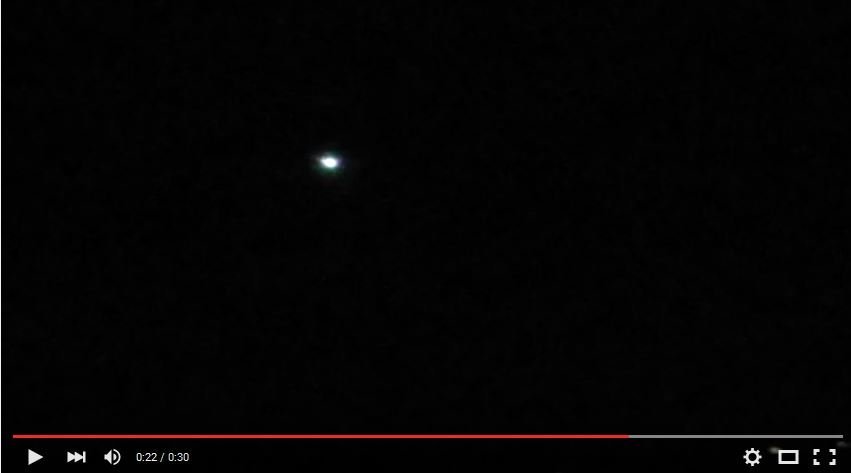
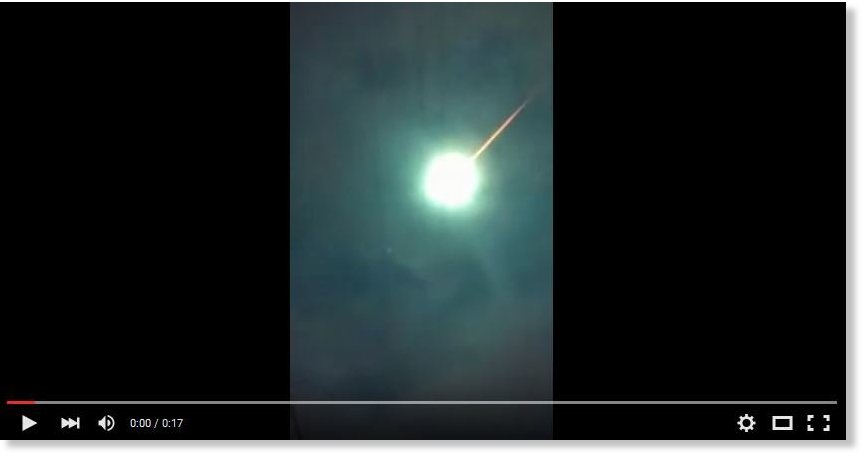
Meteor fireball over Hungary 15.01.2016


Comment: NASA space data supports citizens' observations: Meteor fireballs are increasing dramatically


Fireball 2

Weather webcam captures meteor passing over Queensland, Australia

Brisbane meteor
© Australian Weathercam NetworkDozens of people took to social media on Monday night after spotting a meteor over the skies of south east Queensland
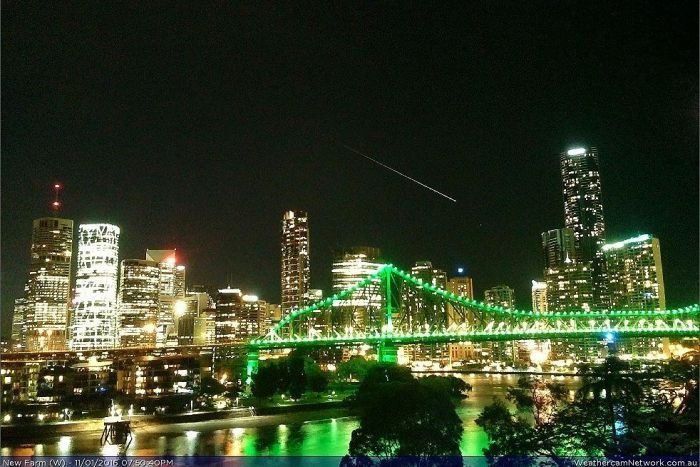
A Brisbane webcam set up to monitor the weather has snapped the moment a meteor blazed over the city.

The Australian Weathercam Network's (AWN) camera at New Farm, which takes a photo every 20 seconds at night, captured the shooting star over a green-lit Story Bridge at exactly 7:50:40pm on Monday.

It was also sighted by dozens of people who took to social media to share their excitement.

Dr Stephen Hughes from Queensland University of Technology's Science and Engineering Faculty said the meteor had to be burning bright for it to be photographed so clearly over a brightly-lit Brisbane CBD.

"If it was in the sky for several seconds, that's in a fireball category, like something the size of an orange coming through the atmosphere," he said.

Dr Hughes said spotting a meteor was common, adding that a stargazer could see one as frequently as every half hour.

"If you see a meteor flash really quick it's probably the size of a grain of sand. If it's like this it could be bigger because it's burning for longer," he said.

"The fact it's got that light competition and it can still be seen ... I would veer towards something a bit bigger coming in."

Comment: NASA space data supports citizens' observations: Meteor fireballs are increasing dramatically


Fireball 2

Mysterious fireball seen in north Georgia sky

large fireball
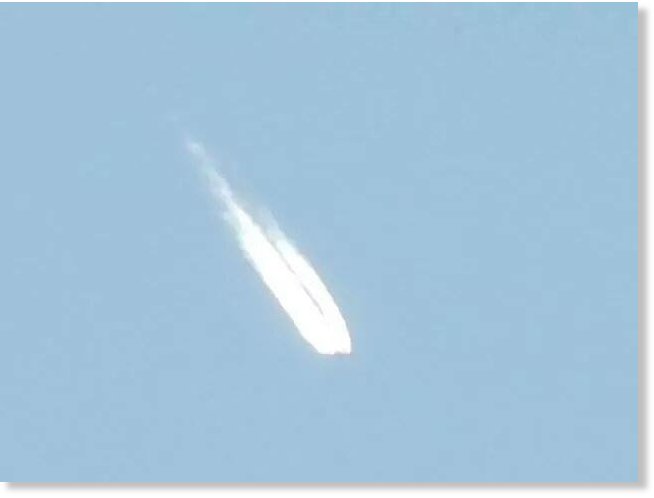
© Dale Hulsey/ FacebookPeople all across the metro Atlanta area reported seeing a large fireball streak through the sky Monday afternoon over Snellville and Winder.
People all across the metro Atlanta area reported seeing a large fireball streak through the sky Monday afternoon over Snellville and Winder.

Several WSB-TV viewers submitted images and video to Severe Weather Team 2 Meteorologist Glenn Burns of the object, which was spotted around 3:45 p.m.
Okay...so we have a mystery on our hands. I know some people who know some people...we will find out something soon.
...Posted by Glenn Burns on Monday, January 11, 2016

Glenn spoke to officials at the Tellus Science Museum in Cartersville, who say they believe the mysterious fireball is space debris, but so far, no one has officially determined what it was.


Here is the video of this object seen over Snellville at 3:45 this afternoon. No sound was observed. This was submitted by one of our FB friends.
Posted by Glenn Burns on Monday, 11 January 2016

Fireball

NASA creates a 'Planetary Defense Coordination Office' that will track meteors headed toward Earth

Asteroids hitting Earth
© Getty

Why is NASA suddenly so concerned about meteors and asteroids hitting the Earth? After telling us that "no large object is likely to strike the Earth any time in the next several hundred years" last year, NASA is now spending millions of dollars to set up a "Planetary Defense Coordination Office" that will be headed up by a designated "Planetary Defense Officer". According to NASA, more than 13,500 near Earth objects have been found so far, and another 1,500 new NEOs are being discovered each year. Approximately 10 percent of all near Earth objects are one kilometer or larger in size, and if one of those giant space rocks ever hit us, it would likely be considered an "extinction level event". It makes sense that NASA would be concerned about this threat, but why now?

The announcement of this new office was made on Friday, and very few mainstream news outlets covered it. But I did find this story on CNBC...
If and when the interplanetary asteroid apocalypse comes, NASA plans to be prepared.

In a little noticed move this week, the space agency announced that it had created a directorate for "detecting and tracking near earth objects (NEOs)."

The new Planetary Defense Coordination Office—which, despite its science fiction-sounding name, is part of a very real effort to ward off the potentially deadly impact of asteroids that may hit the planet—is charged with supervising "all NASA-funded projects to find and characterize asteroids and comets that pass near Earth's orbit around the sun."
Of course once again NASA played down the idea that there is any sort of "imminent threat" during the announcement of this new program, but if there is no threat why go to so much trouble and effort?

According to the Washington Times, one of the things that this new Planetary Defense Coordination Office will be focusing on is a way to "redirect" potentially dangerous asteroids...

Comment: No. Even NASA's own space data supports citizens' recent observations, namely the inconvenient fact that meteor fireballs are increasing dramatically.

Asteroid 'redirection' or 'deflection' remains just theoretical. A more accurate way of looking at it is that NASA is funding deflection and redirection of the topic of space threats by 'getting the message out' that 'everything is just fine'.

It is well worth remembering what can come out of the sky, without any warning at all, such as the Chelyabinsk meteor in February 2013:


For more on the very high probability of Earth soon being on the receiving end of direct or indirect cometary bombardment, and why, see Laura Knight-Jadczyk's Comets and Catastrophe series: And the books: Comets and the Horns of Moses by Laura Knight-Jadczyk and Earth Changes and the Human Cosmic Connection: The Secret History of the World - Book 3 by Pierre Lescaudron and Laura Knight-Jadczyk


Fireball 4

Huge meteor fireball lights up sky over Argentina

Huge meteor fireball over Argentina
© Youtube/Merve Kavak (screen capture)
Fire In The Sky Huge Meteor Lights Up Argentina.


Comment: NASA space data supports citizens' observations: Meteor fireballs are increasing dramatically
comparing 2014 to 2013, the frequency of fireballs increased by 120%. Comparing 2015 to 2014, fireballs increased by 20%. That is a significant increase, and it should be generating a lot of attention. If it is, then it's being done very quietly behind closed doors.
Further research into increased meteor fireball activity - including its causes, effects, and role in human history - can be found in Earth Changes and the Human-Cosmic Connection by Pierre Lescaudron and Laura Knight-Jadczyk.


Fireball 2

Meteor fireball filmed over Tulsa, Oklahoma

Fireball
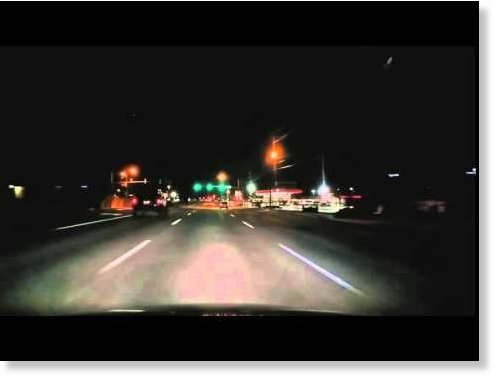
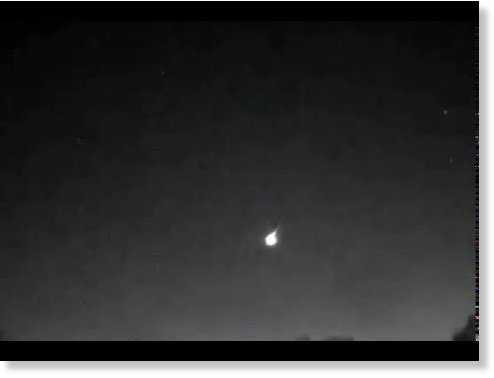
January 9, 2016 Meteor - Tulsa Oklahoma