"
It was nothing of this earth, but a piece of the great outside; and as such dowered with outside properties and obedient to outside laws."
The Colour Out of Space, by
H.P. Lovecraft (1927)
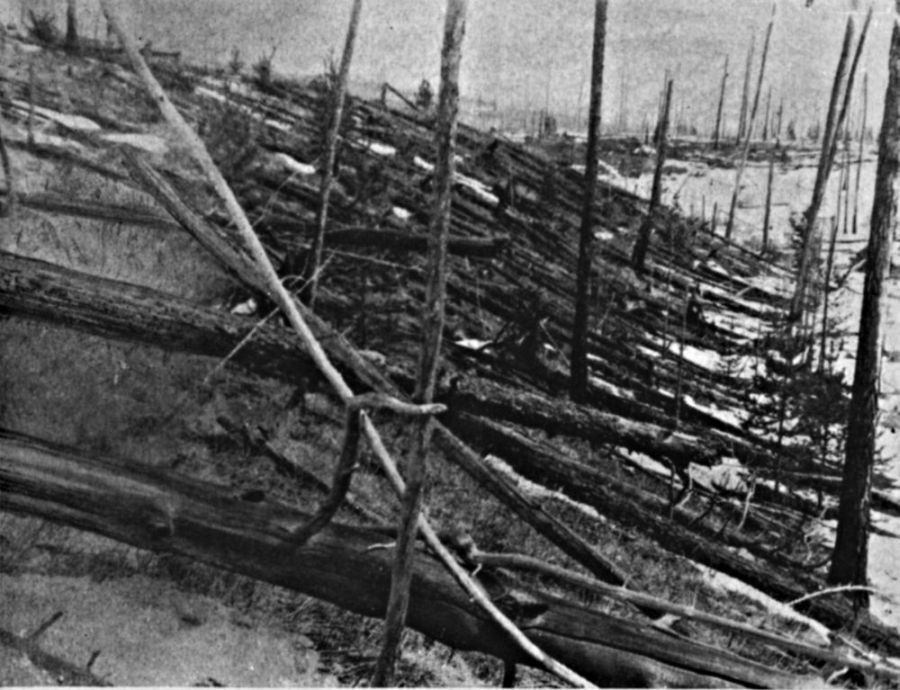
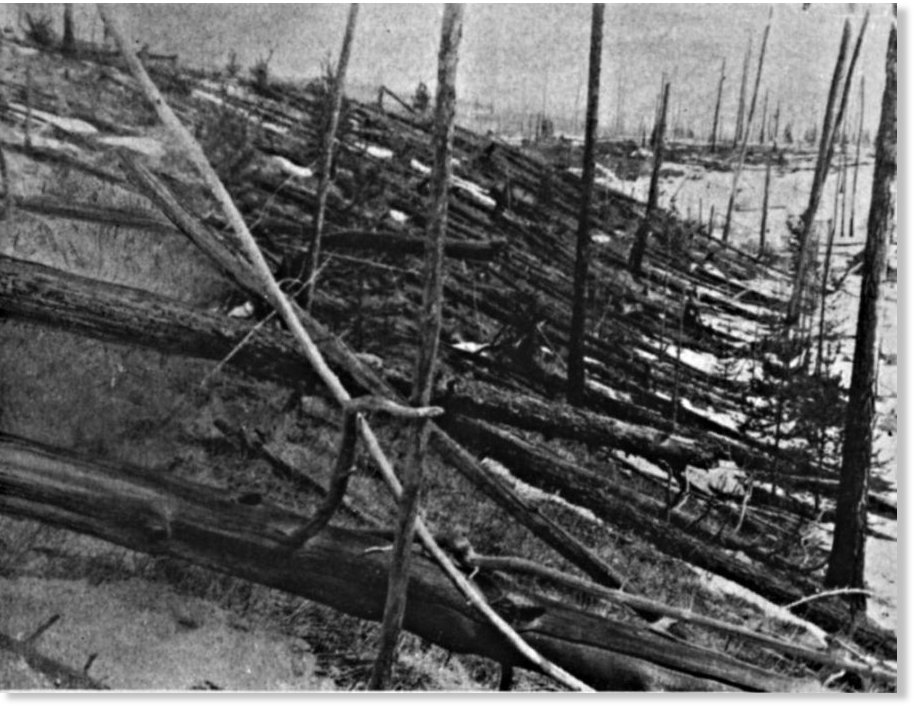
© Evgeny KrinovFig.1. The forest of Tunguska, photography taken by Evgeny Krinov in 1929.
In the morning of June, 30 1908 eyewitnesses reported a large fireball crossing the sky above the taiga of the
Stony Tunguska (PodkamennayaTunguska) in Siberia. A series of explosions was heard even in the 1.200km distant village of
Achajewskoje. Various meteorological stations in Europe recorded seismic and pressure waves and in the following days strange atmospheric phenomena were observed, silvery glowing clouds, colourful sunsets and strange luminescence in the night.
Russian newspapers reported about a meteorite impact based on the eyewitness accounts and the hypothesis of
Dr. Arkady Voznesensky (1864-1936), director of the Meteorological Observatory at
Irkutsk from 1895 to 1917. International newspapers speculated about a possible volcanic explosion, remembering the
eruption of Krakatoa in 1883. However the inaccessibility of the region and the instable political situation in Russia prevented further research.
Thirteen years later the
Russian mineralogist Leonid Alexejewitsch Kulik (1883-1942), reading some of the eyewitnesses' accounts about an explosion and a large glowing object, became interested in the phenomena - there was also the hope to recover precious extraterrestrial metals from the supposed meteorite.
Kulik travelled to the city of
Kansk, where he discovered further reports in the local archives. Most stories refer to large fireballs, flames and a sequence of 14 thunders. March 1927 he arrived at the outpost of
Wanawara -then, April 13, Kulik discovered a large area of 2.150 square km covered with rotting logs and almost no tree still standing - the strange "Forest of Tunguska".

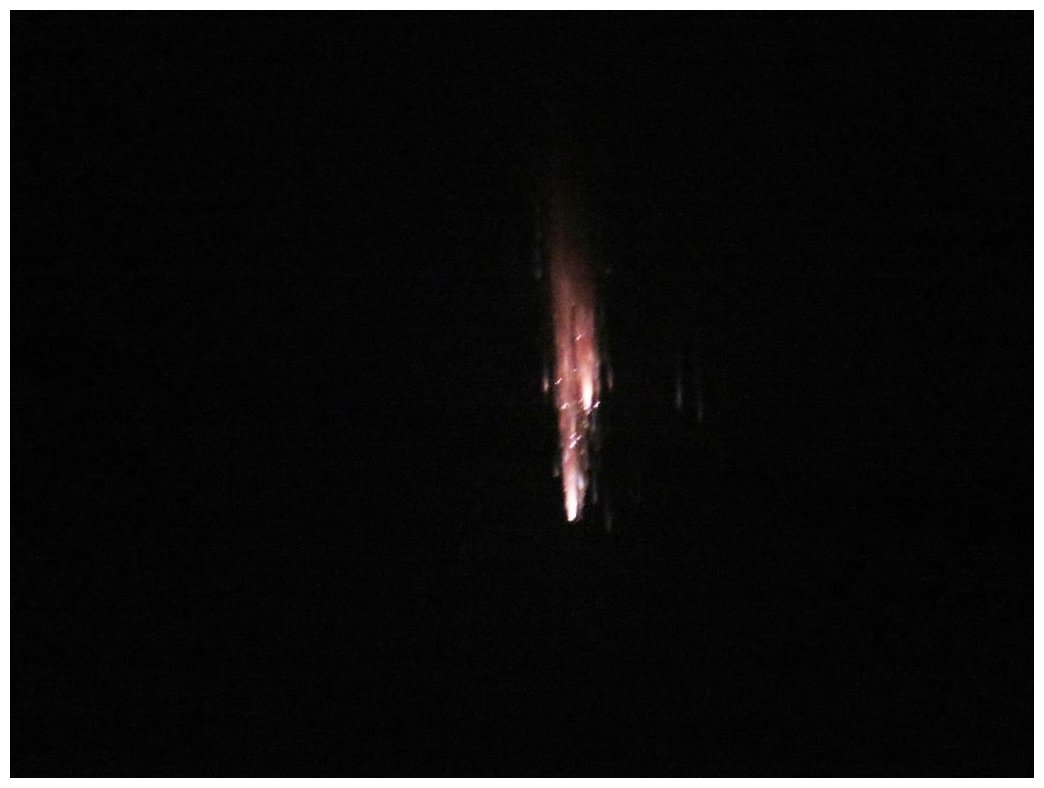
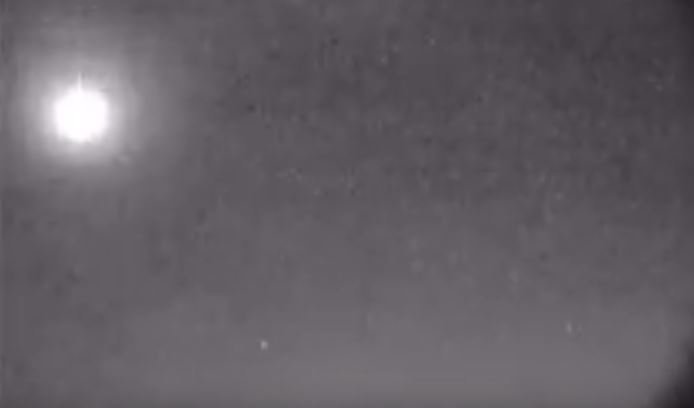
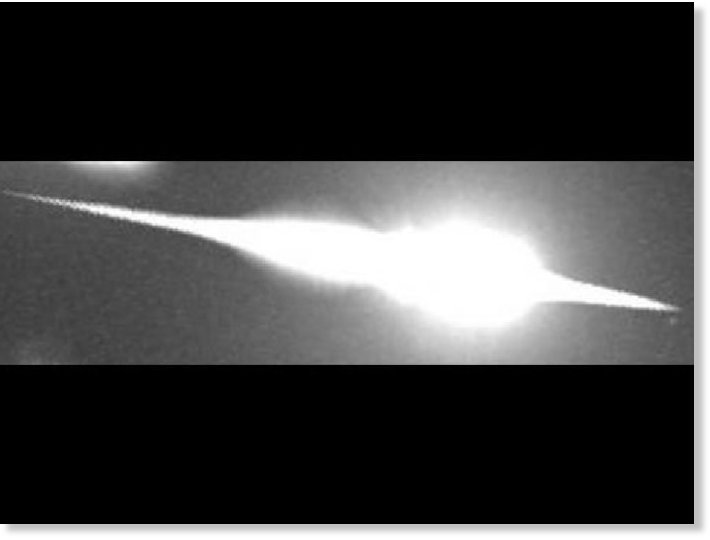






Comment: Actually, electrically charged meteors CAN travel very slowly. AND, disintegration - shedding - is quite common.