Fire in the SkyS


Fireball 2

Second meteor fireball in a week, third so far this year, streaks across San Diego sky

meteor San Diego
© Twitter/Itica Milanes
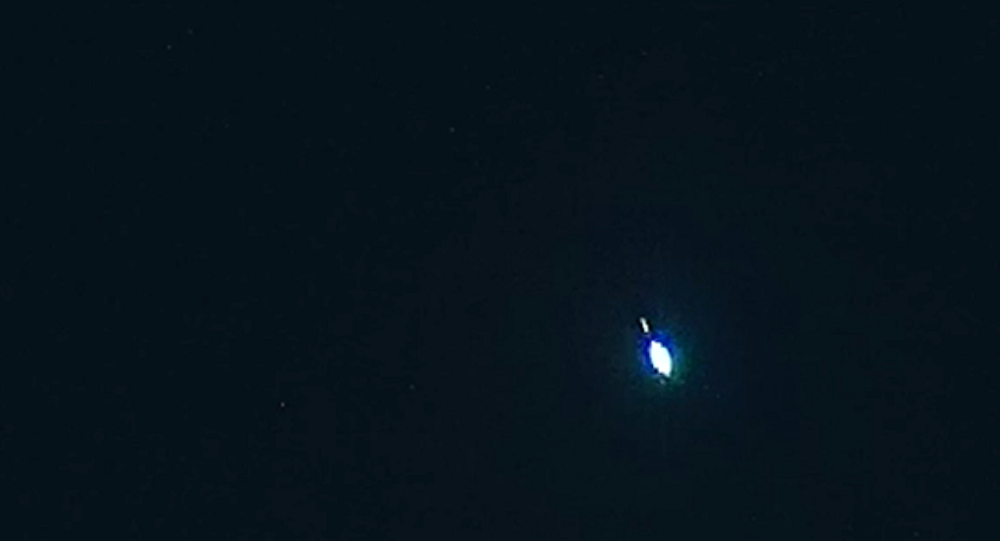
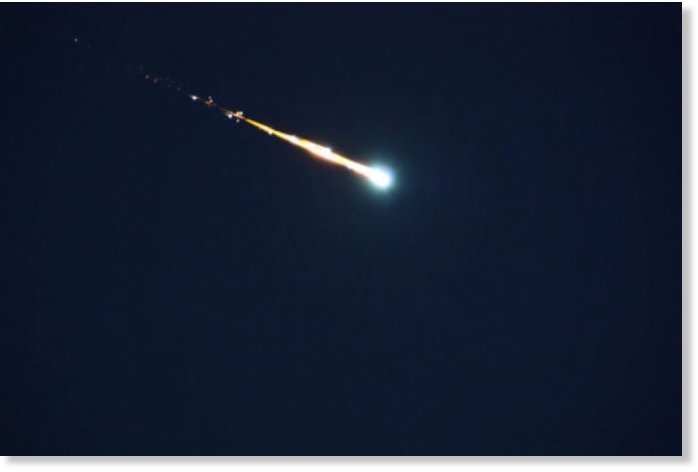
Another mysterious bright light streaked across the Southern California sky on Thursday evening, for at least the third time this year.

The bright streak was reported by nearly 50 witnesses to the American Meteor Society (AMS) as blue or green, and was captured on dashcam video and posted to social media.


Comment: Meteor fireball lights up the sky over San Diego, California


Fireball 4

Bright green meteor fireball spotted in skies across New Zealand

Fireball - stock image
Stock image
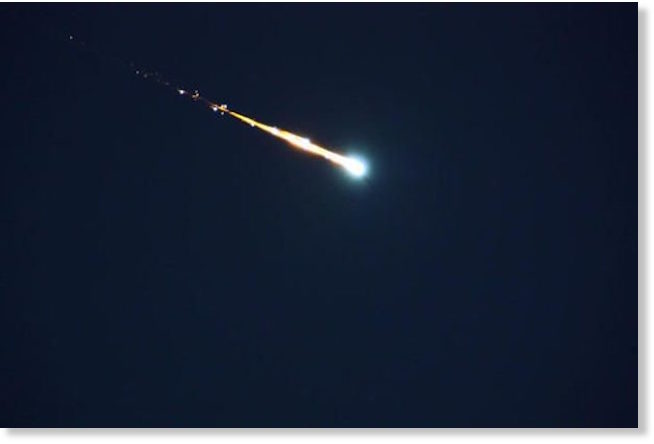
People across the country are reporting what is possibly a meteor shining bright as it passed overhead on Friday night. The "huge fireball or space junk re-entry" was reported in the skies above the capital from about 7.30pm.

A resident in the Upper Hutt suburb of Totara Park said they thought it was space junk after seeing three bright objects. "I came outside [for a cigarette] and something caught my eye, it was very, very bright and moving fast.

"It was phenomenally big, it was glowing orange in the middle with green on the sides - it was like a firework, it got brighter and brighter, whiter and whiter." The object was seen heading south.

"It was halfway across the sky and took about four seconds to cross the ocean, I think it was quite close [to the ground]. It's probably one of the most phenomenal things I've ever seen."

Paul Andrews was travelling south on Wellington's Happy Valley Road when it flew overhead. "It was a very bright fluorescent green colour with quite a long tail, looked like it was breaking up as it was getting closer to crashing into the ocean. "It seemed very close, almost looked like it was going to land out in Cook Strait."

Fireball 4

Meteorite lands in Leeds garden

Meteorite
© Yorkshire Evening Post
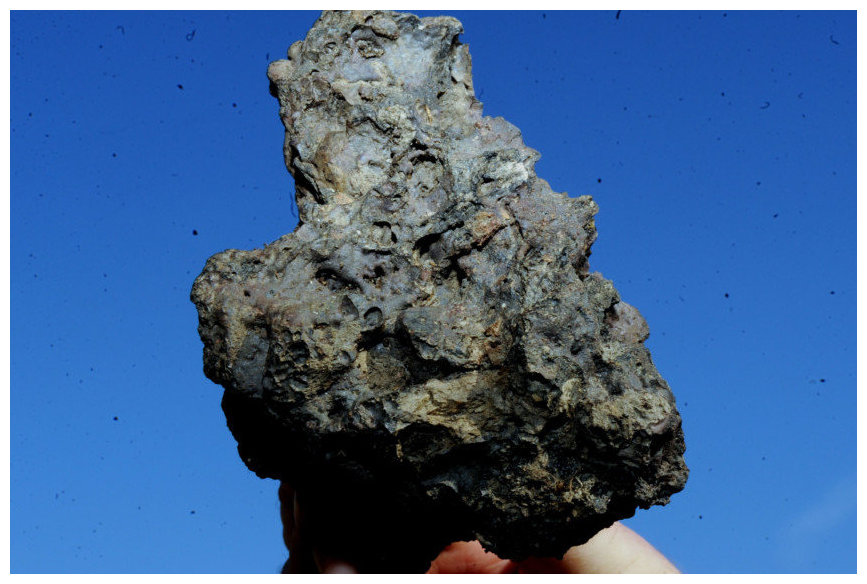
Is it an astronomical gift or something much more mundane? David Stevenson is not sure, but he does know that a glowing hot rock appeared in his Leeds garden, apparently leaving a burning 'impact' site in its wake.

The 46-year-old was at home in Bramley with a friend when in the early hours of the morning he walked outside to the smell of burning. He found a circular area of grass on his lawn, about a metre wide, that was smouldering away and giving off wisps of smoke.

He retired to bed baffled but it was only upon closer inspection in the light of day that he discovered a weighty rock, roughly the size of two tennis balls near to the area of parched ground.

Having dismissed any prank or mischief, Mr Stevenson believes the rock may be a fragment of meteorite that has been sent crashing onto his garden lawn from outer space. His own tests have found it to be magnetic and it was initially giving off enough heat to light a cigarette.

Meteor

Meteor fireball lights up the sky over San Diego, California - August 15, 2016

Fireball over San Diego
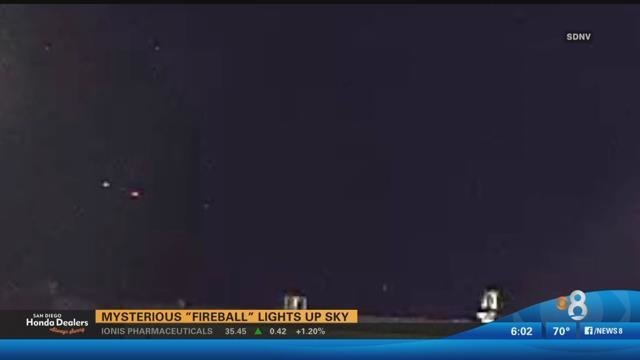
A 'fireball' of some kind was caught streaking across the San Diego sky overnight.

A CBS 8 viewer captured video of the mysterious streak along El Cajon Boulevard in City Heights.

We haven't heard of an explanation for the 'fireball' yet, but a few residents called saying they saw it and that it was a meteor.


Comment: Another video recorded on the same day:


Fireball 5

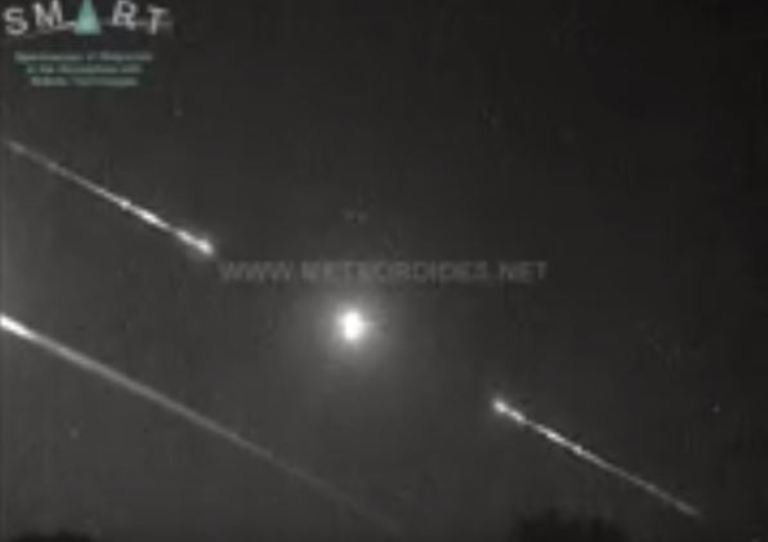
Meteor fireball recorded over Spain on 15 August 2016

meteor fireball over Spain
© SMART Project (screen capture)
This bright fireball was recorded on Aug. 15 at 0:04 UT (2:04 local time). It was produced by a cometary meteoroid that hit the atmosphere at about 85.000 km/h. The meteor belongs to the kappa-Cygnid meteor shower and began at an altitude of about 105 km. It ended at about 58 km over the ground level.


Meteor

Meteor fireball flies over Malaga, Granada provinces in Spain

Malaga fireball
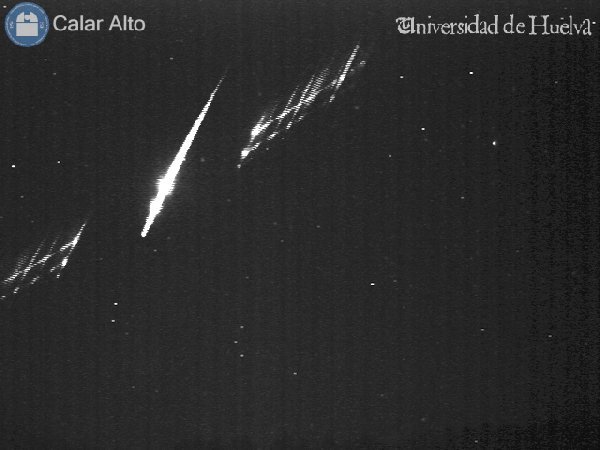
At 4:42 local time (2:42 UT) of August 6th 2016, SMART Project detectors had registered a fire ball that flew over Granada and Málaga provinces.

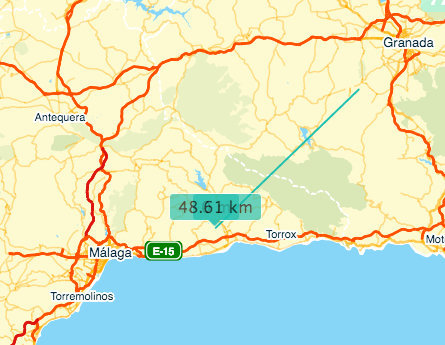
The analysis carried out by the SMART Project PI José María Madiedo (University of Huelva), points that this fireball was generated due to the impact with our atmosphere of a Perseid meteoroid.The fireball started at an altitude of about 126 km over Granada province,moving southwestward and having a final altitude of about 72 km over Málaga province.

The event was recorded from fireball detection station that SMART Project operate at Calar Alto, La Sagra, La Hita, Sevilla and Huelva.
Malaga and Granada provinces
© spainmaps.es

Fireball 2

Perseid meteor shower contained 14 fireballs over the U.S. on August 4th

File photo of meteor
The Perseid meteor shower can also produce fireballs in the sky. In fact, last night 14 fireballs were produced from the Perseid meteor shower.

Fireballs are meteors that have a glowing tail. They are officially rated fireballs if the glowing tail is brighter than Venus.

Mike Murray, astronomer at the Delta College Planetarium, says the Perseid meteor shower gives us the best chance all year to see fireballs. Fireballs are created when the larger meteors take a longer time to burn up and disappear. By larger, Murray says the fireball meteors are still only about the size of a pea.

NASA has a camera network of 15 cameras pointing at the sky. These cameras can see and record the fireballs. Groups of these cameras are located in the Southeast U.S., the Northeast U.S. and the Southwest U.S.

Comet

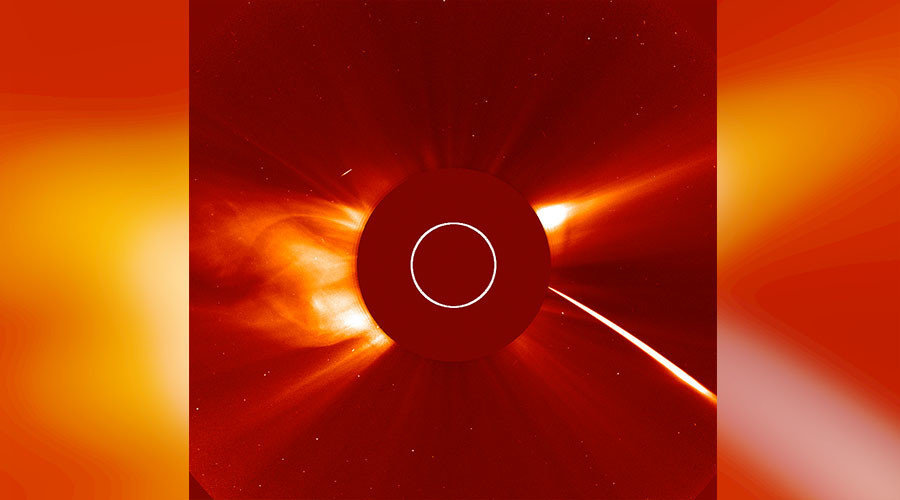
Sungrazer comet 'vaporized' by sun during 1.3 million mph plunge

Sun diving comet
© NASA
Stunning footage from the European Space Agency (ESA) and NASA's Solar and Heliospheric Observatory (SOHO) captured a bright 'sungrazer' comet as it darted toward our star at colossal speed on Thursday.

The space rock, composed of compacted ice and dust, was part of the 'Kreutz' family of comets, according to NASA.

This 'sungrazer' group of comets follows a related orbit in our solar system after breaking off from a huge comet centuries ago. Dozens have already been recorded evaporating in the solar atmosphere.

Galaxy

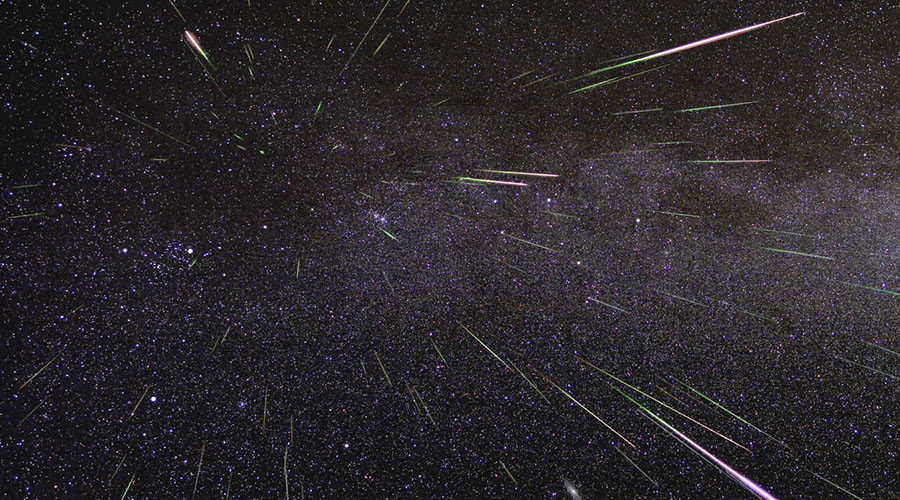
Perseid cosmic sky-show forecast to be spectacular performance this month

Perseid
© NASA
NASA is advising the world to pack up and go hiking on the night of August 11-12 to watch a spectacular shooting star show, as the annual Perseid meteor shower is forecast to beat all records this year.

"Forecasters are predicting a Perseid outburst this year with double normal rates on the night of August 11-12," Bill Cooke, from NASA's Meteoroid Environments Office in Huntsville, Alabama, said on Tuesday. Cooke noted that under perfect conditions, we will be treated to up to 200 meteors every hour.

The "outburst" the NASA man is referring to means this year's cosmic dance is set to be far more crowded than usual. The last time the event happened on such a scale was 2009.

The Perseid meteor shower wows spectators with its swift and extremely bright meteors, traveling at a speed of 60km per second. A Perseid meteor is a small piece of debris left in the wake of the ancient Swift-Tuttle comet, which orbits the sun every 133 years. Despite these visits into the inner solar system being so rare, each of them gives off trillions of comet particles. When Earth passes through this trail of debris, the particles enter the planet's atmosphere and break up in bright specs of light.

Meteor

'Unusally large' meteor fireball explodes over Denver, Colorado

Denver fireball
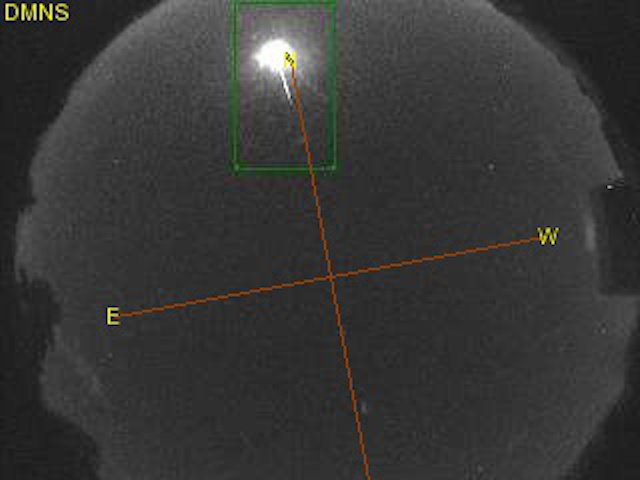
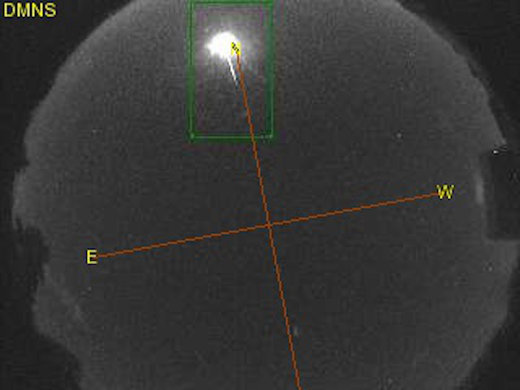
© Chris Peterson, Cloudbait Observatory, Research Associate, Denver Museum of Nature and Science
If you happened to be up early Monday and saw a bright flash of light in the northern sky then you probably witnessed a very large meteor exploding as it entered Earth's atmosphere.

The event happened at 3:23 a.m. and was captured by two cameras in Colorado, one mounted on the roof of the Denver Museum of Nature and Science and the other at the Cloudbait Observatory in Guffey.

"By combining the data from both cameras, I can determine that the fireball exploded over Cheyenne, Wyo., at a height of 105 km (roughly 65 miles)," said Chris Peterson with Cloudbait Observatory. Peterson describes the meteor as being unusually large with a brightness similar to the full Moon and having a large breakup in mid-flight, leaving enough material to continue burning afterward.

"Usually explosions like this are terminal, completely disrupting the body and leaving nothing to continue," said Peterson. It's not known if the meteor was part of the Southern Delta Aquarid meteor shower, currently in progress, or if it had a different origin.

CBS4 Photojournalist Rob McClure happened to see it and said it lasted about 10 seconds.

Peterson is looking for anyone else who witnessed the meteor. You can click here to file a report.

Video footage is available here.