
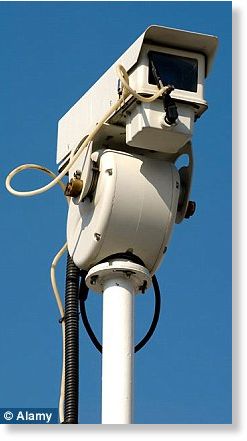
© AlamyObsessive surveillance: A huge number of CCTV cameras are in public places
Police are allowed in some circumstances to install hidden surveillance cameras on private property without obtaining a search warrant, a federal judge said yesterday.
CNET has learned that U.S. District Judge William Griesbach ruled that it was reasonable for Drug Enforcement Administration agents to enter rural property without permission -- and without a warrant -- to install multiple "covert digital surveillance cameras" in hopes of uncovering evidence that 30 to 40 marijuana plants were being grown.
This is the latest case to highlight how advances in technology are causing the legal system to rethink how Americans' privacy rights are protected by law. In January, the Supreme Court rejected warrantless GPS tracking after previously rejecting warrantless thermal imaging, but it has not yet ruled on warrantless cell phone tracking or warrantless use of surveillance cameras placed on private property without permission.
Yesterday Griesbach adopted a recommendation by U.S. Magistrate Judge William Callahan dated October 9. That recommendation said that the DEA's warrantless surveillance did not violate the Fourth Amendment, which prohibits unreasonable searches and requires that warrants describe the place that's being searched.
"The Supreme Court has upheld the use of technology as a substitute for ordinary police surveillance," Callahan wrote.












Comment: Surprise? No. Just another prime example of how politicians capitalise on disaster with some climate change propaganda thrown in for good measure. Straight out of the book of Obama's chief of staff Rahm Emanuel who said, "You never want a serious crisis to go to waste."