Puppet MastersS


Dollars

Chase, once considered "the good bank," is about to pay another massive settlement

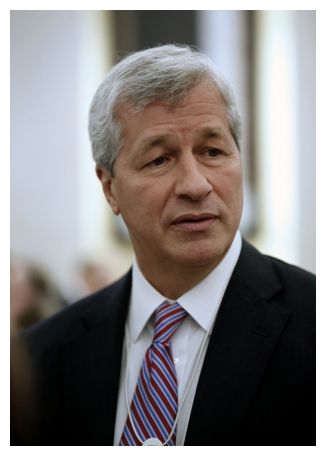
Jamie Dimon
© Jason Alden/Bloomberg via Getty ImagesJames "Jamie" Dimon, chief executive officer of JPMorgan Chase & Co.
During the financial crisis, while Dr. Evil-ish Wall Street villains like Goldman and Lehman Brothers were getting all the bad press, pundits continually referred to J.P. Morgan Chase as the "good bank."

The myth of Chase as the finance sector's one upstanding rock of rectitude reached its zenith in July of 2009 with an embarrassingly hagiographic piece in the New York Times entitled, "In Washington, One Bank Chief Still Holds Sway." In that one, the paper breathlessly praised Jamie Dimon for emerging from "the disgrace of his industry" to become Barack Obama's "favorite banker."

Chase and Jamie Dimon kept that rep for a good long time. As late as 2011, Dimon's name was being floated around Washington very seriously as a potential replacement for Tim Geithner's Treasury Secretary post. Even when Dimon showed up on the Hill last year to testify (read: obfuscate) about the infamous "London Whale" episode, Senators on the banking committee - who, as writer George Zornick noted, had collected a cumulative $522,088 in donations from Chase - slobbered all over Dimon and shelved the important London Whale matter to ask the great genius's advice on how to fix the economy.

Well, there's some more news about the "good bank" - Chase is about to pay yet another ginormous settlement for cheating and stealing from the public. According to the Wall Street Journal, the Federal Energy Regulatory Commission (FERC) will fine Chase "close to $1 billion" for manipulating energy prices in Enron-esque fashion in Michigan and California. The story is interesting in itself - and we'll write more about it later - but for now, it's just the fact of yet another massive settlement for this bank that's so interesting.

Arrow Down

Kissinger: 'Terrorists are really people that reject the international system'

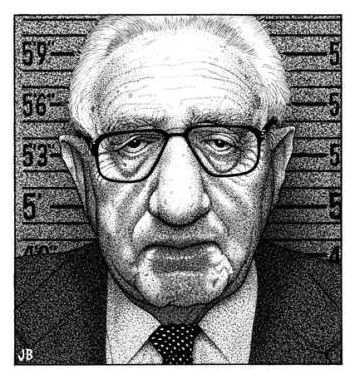
Kissinger
© JB
Then again, it might be exactly what you thought it would be.

The clip below is from a 2007 AKBank convention in Instanbul, Turkey held right before the annual Bilderberg Meeting which took place there that same year. In it, former National Security Advisor and Secretary of State, (as well as member of the Bilderberg Group, Council on Foreign Relations, Trilateral Commission, and Bohemian Grove among others) Henry Kissinger can be seen giving the following speech:
In the Middle East, we live in a different world. The nations do not represent historic entities in the same sense that European nations did. Turkey of course does, and Iran in a considerable extent does. But in the region in between, the borders were drawn by the victors of World War I on the basis largely of what would facilitate their influence. So therefore, the identities of these countries, and of their borders, can be challenged more easily.

What we in America call terrorists are really groups of people that reject the international system, and they're trying to regroup it to a radical Islamic fundamentalists kind.
Clearly Kissinger is saying that, because many Middle Eastern countries do not have what appears to be in his view the 'historical significance' of older countries, they are wide open for attack, regime change and re-ordering.

Eye 1

Best of the Web: Why doesn't the government use its mass surveillance to bust the big criminals ... the banksters?

Image
If the Government Is Going to Spy ... Why Doesn't It Do Something
Useful?

The big banks have committed massive crimes and manipulated virtually every market.

The failure to prosecute fraud is preventing a sustainable economic recovery.

As such, prosecuting Wall Street fraud is arguably an issue of national security.

The government is collecting everything ... and spying on just about everything we do.

We are passionately opposed to mass surveillance. But - if the government is doing so - why can't it gather info on the crimes of the big banks ... so we can prosecute them?

Dollar

Best of the Web: Global Oligarchy: Richest 300 persons on Earth have more money than poorest 3 billion

Image
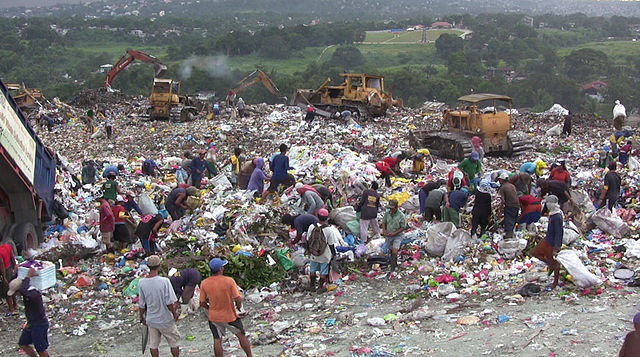
© WikipediaPoor rummage through garbage to survive in the Philippines
As we repeatedly focus on wealth inequality in the United States (i.e.; just four hundred persons in the US have as much in assets and income as the bottom 50% of Americans), a video points out the even more extreme global wealth disparity.

There are many reasons for this. Take for example institutional sources that contribute to this trend. The World Bank, for interest, oversees "loans" to developing nations. But by creating long-term indebtedness, these struggling counties end up owing at least $600 billion dollars in interest on loans whose principals have, in essence, already been paid off in actual dollars.

These usorious interest rates end up in the hands of the bankers and the shareholders of the financial institutions that are inter-related with the World Bank through the nations that govern it, particularly the United States which calls the shots. Criticisms of the World Bank focus on how it creates financial conditions that result in debt dependency of the nations that borrow from it, therfore negatively impacting the economic prospects of the vast majority of its residents.

Bad Guys

Psychopathic state can't handle the truth: British lawmaker disciplined for "apartheid Israel" comments

Image
© Andrew Kelly / ReutersA woman waves an Israeli flag.
A British lawmaker who described Israel as an "apartheid state" whose future is in doubt after "inflicting atrocities on Palestinians" was suspended by his party on Thursday.

David Ward, a member of the Liberal Democrats, the smaller grouping in Britain's two-party coalition government, was reprimanded after making a series of remarks about Israel.

He refused to apologise after sending a message on Twitter on Saturday which read: "Am I wrong or are am I right? At long last the #Zionists are losing the battle - how long can the #apartheid State of #Israel last?"

Earlier this year, the 60-year-old wrote on his website that he was "saddened that the Jews, who suffered unbelievable levels of persecution during the Holocaust, could within a few years of liberation from the death camps, be inflicting atrocities on Palestinians".

Gear

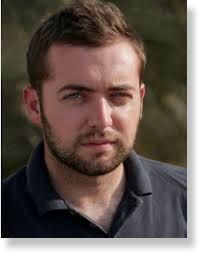
Michael Hastings, journalist who exposed U.S. military and Obama administration cremated despite family wishes to have body

Image
© Unknown
Former Rolling Stone journalist Michael Hastings has been cremated and sent home in a urn despite the fact his family wanted his body.

Hastings died on June 18th after his Mercedes crashed into a tree and had burst into flames in the Hancock Park neighborhood of Los Angeles, causing speculation to arise that Hastings, who was working on a major exposé of the CIA, could have been set up.

Kimberly Dvorak of San Diego 6 who spoke directly with friends of Hastings family said, "A close family friend did confirm that Michael's body was sent home in an urn, meaning he was cremated and it wasn't the request of the family....in fact the family wanted Michael's body to go home."

It is very suspicious that now Michael Hastings body is unable to be a part of any evidence that can possibly contradict the LAPD's claim that there was no foul play in the journalist's death.


Hours before the car crash Hastings had sent out an email to family and friends claiming that he was onto a big story and needed to "off the rada[r] for a bit."

Comment: Read the following articles to learn more:
Another whistleblower dead: journalist Michael Hastings
Michael Hastings and the war on journalism
Reporter Michael Hastings sent panicky email hours before sudden car crash death


Document

Fabrication of the Boston Bomber myth is complete: Rolling Stone defends Boston bomb suspect cover

Image
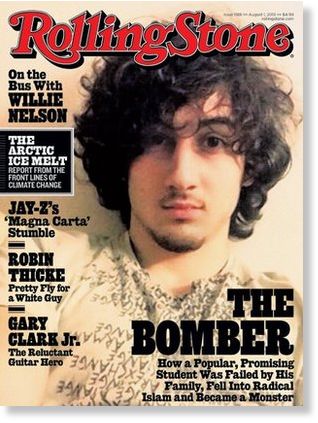
© Rolling StoneRolling Stone's Facebook page has been inundated with angry comments
Rolling Stone magazine has defended its new cover story featuring Boston bomb suspect Dzhokhar Tsarnaev, which has prompted uproar.

The magazine said a profile of Mr Tsarnaev suited its "commitment to serious and thoughtful coverage".

But the mayor of Boston said the publication's cover "rewards a terrorist with celebrity treatment".

A number of US retail chains have announced they will not stock the edition.

Mr Tsarnaev, 19, pleaded not guilty last week to all charges in connection with the 15 April bombings, which killed three people, including an eight-year-old boy.

Janet Reitman, Rolling Stone's contributing editor, spent two months interviewing Mr Tsarnaev's friends and family for the forthcoming issue's article.

'Disgusting'

In a statement appended to the top of the story, the magazine's editors said on Wednesday their "hearts go out to the victims of the Boston Marathon bombing".

"The cover story we are publishing this week falls within the traditions of journalism and Rolling Stone's long-standing commitment to serious and thoughtful coverage of the most important political and cultural issues of our day," it said.

Comment: The arguments surrounding whether or not Dzhokhar Tsarnaev should be on the cover of the Rolling Stone are distracting from the real issues of the story, which SOTT.net has covered extensively:

Strategy of Tension - Boston Marathon bombing
Lambs to the Slaughter: Boston lockdown for manhunt of bombings 'suspect
'
Baghdad to Boston - Terrorism Strikes the American Homeland
It's all a hoax!' Boston Bombings and "Crazy Conspiracy Theories"
Why there were no 'actors' at the Boston Marathon bombings
Ink Blot Tests and 'actors' at the Boston bombings
Dzhokhar Tsarnaev's "thick Russian accent" in court


Dollar

Post-Scarcity Economics

Image

We live like gods, and we don't even know it.

We fly across oceans in airplanes, we eat tropical fruit in December, we have machines that sing us songs, clean our house, take pictures of Mars. Much the total accumulated knowledge of our species can fit on a hard drive that fits in our pocket. Even the poorest among us own electronic toys that millionaires and kings would have lusted for a decade ago. Our ancestors would be amazed. For most of our time on the planet, humans lived on the knife-edge of survival. A crop failure could mean starvation and even in good times, we worked from sun up to sundown to earn our daily bread. In 1600, a typical workman spent almost half his income on nourishment, and that food wasn't crème brûlée with passion fruit or organically raised filet mignon, it was gruel and the occasional turnip. Send us back to ancient Greece with an AK-47, a home brewing kit, or a battery-powered vibrator, and startled peasants would worship at our feet.

And yet we are not happy, we expected more, we were promised better. Our economy is a shambles, millions are out of work, and few of us think things are going to get better soon. When I graduated high school, in 1975, I assumed that whatever I did, I would end up somewhere in the great American middle class, and that I would live better than my father, who lived better than his. Today, my son doesn't have nearly the same confidence. Back in those days, you could go off to India for seven years, sit around in an ashram, smoke pot and seek spiritual fulfilment, and still come home and get a good job as a copywriter at Ogilvy and Mather. Today kids need a spectacular resume just to get an unpaid internship at IBM. Our children fear any moment not on a career path could ruin their prospects for a successful future. Back in the 1970s, pop stars sang songs about of the tedium and anomie of factory work. Today the sons of laid-off autoworkers would trade anything for that security and steady wage.

Stock Down

How Austerity Has Failed

Image
© Lionel Bonaventure/AFP/Getty ImagesBritish Prime Minister David Cameron and European Commission President José Manuel Barroso, Brussels, May 2012
Austerity has failed. It turned a nascent recovery into stagnation. That imposes huge and unnecessary costs, not just in the short run, but also in the long term: the costs of investments unmade, of businesses not started, of skills atrophied, and of hopes destroyed.

What is being done here in the UK and also in much of the eurozone is worse than a crime, it is a blunder. If policymakers listened to the arguments put forward by our opponents, the picture, already dark, would become still darker.

Comment: It might be that austerity has not failed. It may have succeeded for the elites who implemented it by weakening labor in Europe, discouraging the public (always a good thing from their point of view), and strengthening predatory capitalism. Result: cheaper labor, a discouraged and depressed public (less likely to demand better conditions), a weakened social insurance system in Europe, and more profits for corporations.


Whistle

Former Sen. Gordon Humphrey: Sweden should take Edward Snowden

Image
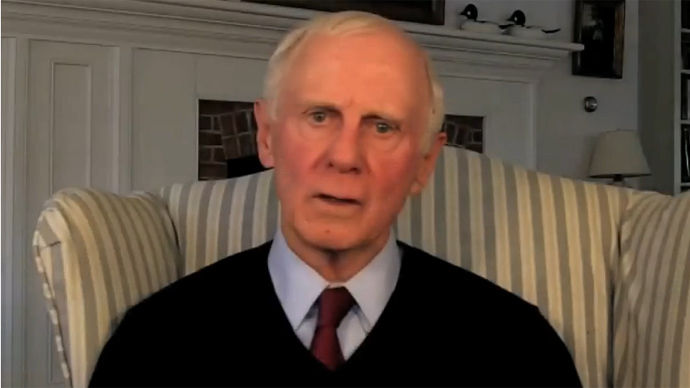
Former U.S. Senator Gordon Humphrey
Sweden should stand up to the United States and offer Edward Snowden asylum, former GOP Sen. Gordon Humphrey said in an e-mail to POLITICO.

"Respectfully, I say to Sweden, 'America has done wrong in this instance. Stand up to her. Grant Edward Snowden asylum. You will do the people of the United States a great favor to resist their government in this matter and at this moment," Humphrey wrote Wednesday morning.

Humphrey said Sweden would be the "ideal country" for the NSA leaker because it is only a one hour flight from the Russian border and "no overflight is necessary of countries likely to cooperate with the U.S. in forcing down an aircraft carrying Mr. Snowden to asylum."

Additionally, Humphrey said Sweden "has a reputation for high-mindedness" and "a strong tradition of justice."