Puppet MastersS


Bad Guys

Will Turkey use recent terrorist attack to justify a 'serious escalation' of the Syrian conflict?

Turkey shelling Kurds
© Bulent Kilic / AFPTurkish tanks stationed at a Turkish army position near the Oncupinar crossing gate close to the town of Kilis, south central Turkey, fire towards the Syria border, on February 16, 2016
In March 2014 tape recordings of a meeting between the Turkish then Foreign Minister Davutoglu, the chief of the Turkish intelligence MIT Hakan Fidan and others leaked to the public. They talked about a false flag attack on Turkey to be used as a justification form a Turkish attack on Syria. The new was mostly ignored by the "western" main stream media. As I wrote about the tape:

The major points from my view:
  • Turkey has delivered 2,000 trucks of weapons and ammunition to the insurgents in Syria.
  • There are plans for false flag attacks on Turkey or Turkish property to justify an attack from Turkey on Syria.
  • The Turkish military has great concerns going into and fighting Syria.
  • The general atmosphere between these deciders is one of indecisiveness. Everyone seems to be unclear what Erdogan wants and is waiting for clear orders from above.
  • Shortly before the meeting the U.S. military presented fresh plans for a no-fly zone over Syria.

Comment: Further reading: Turkey predictably blames Syrian Kurds for Ankara attack, independent analysts say it was ISIS


Bad Guys

Turkey predictably blames Syrian Kurds for Ankara attack, independent analysts say it was ISIS

Turkey terrorist attacks
© Umit Bektas / ReutersForensic experts arrive near the site of last night's explosion in Ankara, Turkey, February 18, 2016
Turkish Prime Minister Ahmet Davutoglu has accused forces linked with the Syrian Kurdish YPG militia of the terrorist attack in Ankara on Wednesday. Ankara promised to continue to shell the YPG, with the Syrian Kurds denying all allegations and saying Islamic State is behind the attack.

In a live television speech, Prime Minister Davutoglu said Turkey has identified the perpetrator of the Ankara bombing attack, in which 28 people were killed and 61 were injured on Wednesday, as a Syrian national with links to the Syrian Kurdish YPG militia. Davutoglu added the alleged attacker received assistance from the Kurdistan Workers Party (PKK), which is outlawed by Ankara.

Davutoglu said the attack showed the Syrian Kurdish YPG is a terrorist organization and that Turkey expects cooperation from its allies against the group.

Comment: Further reading:


Bad Guys

Erdoğan proclaims Turkey's terror state the 'voice of global conscience'

erdogan isis
© Kaniwar
"Turkey has become the voice of the global conscience in the Syrian crisis and has given a lesson in humanity to the whole world," ambitiously claimed Recep Tayyip Erdogan, referring to the European refugee crisis, conveniently neglecting to mention the cost of this virtue - 3 billion Euros.

"In this process, where the oppressors and oppressed people's supporters are divided, Turkey has become the voice of the global conscience," Erdogan said on Wednesday during his speech to district governors at the Presidential Palace in Ankara.

The Turkish leader was referring to the European refugee crisis, highlighting the West's incapability of slowing the flow of refugees from Syria.

Comment: Further reading: Has Washington hatched a new Machiavellian plan for Syria and Iraq?


Quenelle - Golden

Syrian Army liberates one of the last terrorist strongholds in Latakia region

Syrian army
© Sputnik/ Ilya Pitalev
Syrian government forces broke through the militants' defense and gained control over the town of Kessab, one of the last terrorist strongholds in the country's Latakia region, according to Lebanon's media.

Syrian government forces have gained control over the town of Kessab, one of the last terrorist strongholds in the country's Latakia region, Lebanon's Al Mayadeen television reported Thursday.

Comment: Further reading:
Syrian forces backed by Russian airpower have made major advances across the battlefield along multiple fronts.

Around Aleppo, Syrian forces have cut supply lines from Turkey that were for years, supplying terrorists operating inside the country. Just east of a growing encirclement of the city of Aleppo, a secondary encirclement of so-called "Islamic State" (ISIS) forces is forming as the offensive to relieve Kuweris Airbase has evolved into a northern advance toward Al Bab - a critical logistical hub used by US-NATO-GCC backed terrorists during the initial invasion of Aleppo in 2012 and onward.

Deeper within the interior of Syria, Syrian forces have advanced eastward into the Al Raqqa Governorate, approaching the Tabaqa Airbase. The airbase is a crucial waypoint toward seizing back the city of Al Raqqa itself, which has become the defacto capital of ISIS.

Syria: At the Gateway of Greater War


Dollar Gold

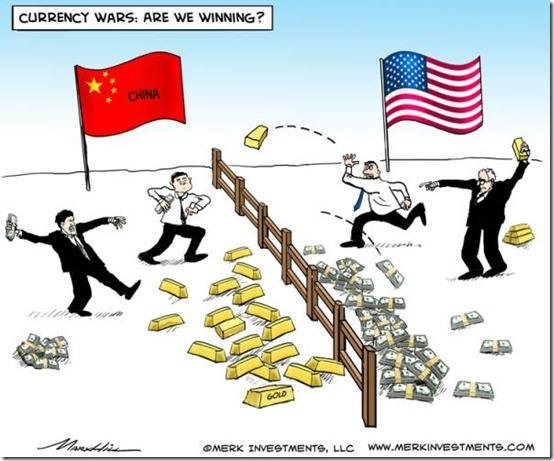
Currency Wars: China leads global U.S. debt dump

US China currency wars
© MERK INVESTMENTS
China dumped billions of America's debt in December.

The largest owner of U.S. debt, China sold $18 billion of U.S. Treasury debt in December.

And it's not alone. Japan sold even more: $22 billion. In the past year, Mexico, Turkey and Belgium have also lowered their holdings of U.S. debt, all of which have led to a record annual dump by central banks.

Many countries are suffering from the global economic slowdown, forcing central banks to pull out all the stops to help buttress their economies.

Central banks in Japan and Sweden have resorted to negative interest rates to spur banks to lend more; the European Central Bank is buying bonds issued by its member countries; the People's Bank of China is injecting cash into its financial system.

Arrow Down

Start preparing for the fall of the Saudi Kingdom

Obama and Saudi King
© SUSAN WALSH/AP
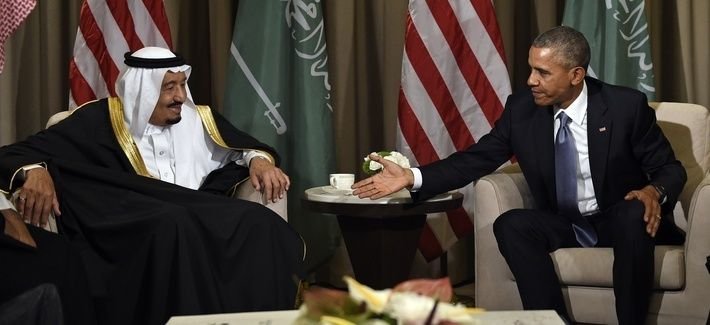
For half a century, the Kingdom of Saudi Arabia has been the linchpin of U.S. Mideast policy. A guaranteed supply of oil has bought a guaranteed supply of security. Ignoring autocratic practices and the export of Wahhabi extremism, Washington stubbornly dubs its ally "moderate." So tight is the trust that U.S. special operators dip into Saudi petrodollars as a counterterrorism slush fund without a second thought. In a sea of chaos, goes the refrain, the kingdom is one state that's stable.

But is it?

Comment: See also... Russia, Syria and the anglo-American existential gas war in the Middle East


Heart - Black

Former IPCC czar in hot water again over sexual harassment allegations

Rajendra Pachauri
© Kris Krüg for PopTech/FlickrRajendra Pachauri in 2011.
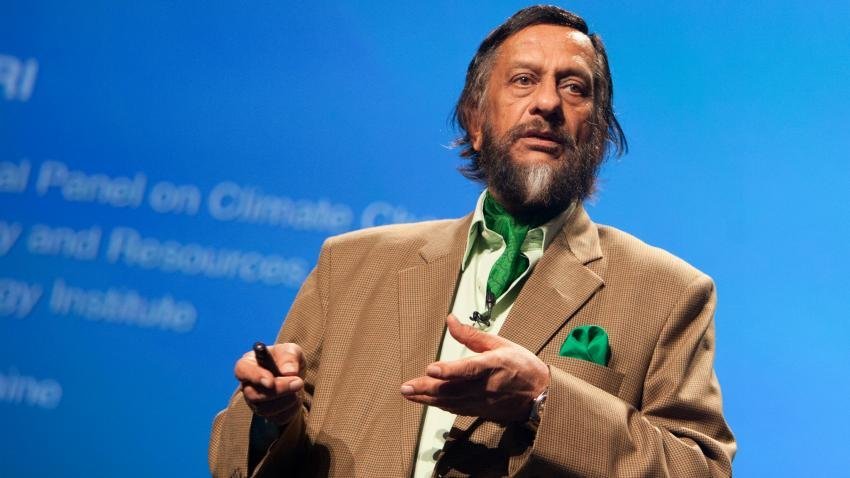
The former chair of the Intergovernmental Panel on Climate Change (IPCC), Rajendra Pachauri, is once again in the crosshairs of the Indian media and women's rights activists. The reason: his recent promotion at The Energy Research Institute (TERI) in New Delhi despite allegations that he sexually harassed a female colleague.

Pachauri, 75, served as TERI's director and director-general from April 2001 until his promotion on Monday to executive vice chairman. He is facing charges of sexual harassment made against him in February 2015 by a 29-year-old TERI employee who has since resigned from her position. Pachauri denied the allegations and stepped down from IPCC last year. Last May, an internal TERI investigation concluded that his alleged actions constituted harassment, according to Indian media outlets. TERI has not commented on these reports, and it has taken no disciplinary action against him.

Light Sabers

Syria: At the Gateway of Greater War

Syria War 1
© Unknown
Syrian forces backed by Russian airpower have made major advances across the battlefield along multiple fronts.

Around Aleppo, Syrian forces have cut supply lines from Turkey that were for years, supplying terrorists operating inside the country. Just east of a growing encirclement of the city of Aleppo, a secondary encirclement of so-called "Islamic State" (ISIS) forces is forming as the offensive to relieve Kuweris Airbase has evolved into a northern advance toward Al Bab - a critical logistical hub used by US-NATO-GCC backed terrorists during the initial invasion of Aleppo in 2012 and onward.

Deeper within the interior of Syria, Syrian forces have advanced eastward into the Al Raqqa Governorate, approaching the Tabaqa Airbase. The airbase is a crucial waypoint toward seizing back the city of Al Raqqa itself, which has become the defacto capital of ISIS.

Vader

Obama at the Syrian crossroad

obama syria
© Pete Souza/White House
President Barack Obama, with Vice President Joe Biden, attends a meeting in the Roosevelt Room of the White House, Dec. 12, 2013.
President Obama must decide if he will let the Syrian civil war come to an end with Russian-backed President Assad still in power or if he will escalate by supporting a Turkish-Saudi invasion, which could push the world to the brink of nuclear war

With the Russian-backed Syrian army encircling Aleppo, cutting off Turkish supplies to rebels and advancing on the Islamic State's capital of Raqqa, a panicked Saudi Arabia and Turkey have set up a joint headquarters to direct an invasion of Syria that could lead to a vast escalation of the war. And there's only one man who could stop them: President Barack Obama.

It is probably the most important decision Obama will make in his eight years in office since a Turkish-Saudi invasion risks a direct showdown between Russia and NATO, since Turkey is a member of the alliance.

The U.S. traditionally has held tremendous power over client states like Turkey and Saudi Arabia. So, an order from Washington is usually enough to get such governments to back down. But Ankara and Riyadh are being led by reckless men whose continued existence in power might well depend on stopping a Syrian government victory - helped by Russia, Iran and the Kurds - and a humiliating defeat of the Turkish-Saudi-backed Syrian rebels, who include some radical jihadist groups.

Comment: Inasmuch as the POTUS is only a figurehead, whether to back off or escalate the Syrian situation is a decision being made at much deeper levels.


Info

Russian Defense Ministry denies reports on dispatching S-300 systems to Iran on Feb 18

S-300 missile system
© Donat Sorokin/TASS
Russia's Defense Ministry has denied reports on the alleged dispatch of the S-300PMU-2 Favorit missile systems from Astrakhan to Iran on February 18.

Earlier, media outlets announced that the first batch of the S-300 systems would be dispatched to Iran on Thursday. The reports claimed that the Iranian defense minister was expected to be present at the ceremony held behind closed doors.

"The beginning of deliveries of the first consignment of Favorit missile systems cannot take place since the Iranian side has not paid the price enshrined in the contract as of February 16," a high-ranking representative of the Russian Defense Ministry told TASS on Wednesday commenting on these media reports.

"Therefore, the presence of the Iranian defense minister in Astrakhan at the mythical ceremony of dispatching the first Favorit systems to Tehran is out of the question," he added.