OF THE
TIMES
The first thing to know about the latest controversy over the Iran nuclear deal is that the Obama administration did not pay $400 million in "ransom" to secure the release of three American detainees. Yet that's the story critics are peddling in another attempt to discredit an agreement that has done something remarkable — halted a program that had put Iran within striking distance of producing a nuclear weapon.
The truth is that the administration withheld the payment to ensure Iran didn't renege on its promise to free three detainees — a Washington Post journalist, a Marine veteran and a Christian pastor. That's pragmatic diplomacy not capitulation.
The controversy erupted whenThe Wall Street Journal reported that the United States delivered $400 million in cash to Iranian officials after Tehran released the American detainees. It has provided an irresistible opportunity for Iran-bashing and Obama-bashing.


The Western narrative of the nature of the ongoing conflict in Iraq similarly matches up only poorly with facts on the ground, especially as it concerns the role of sectarian identity and persecutions on every side. ... With a few exceptions, P.M.F. units have not engaged in widespread abuse of Sunni populations during this war against ISIL. ... There are also hundreds of Sunnis in majority-Shia units and a few thousand Sunnis who fight alongside these units but are not yet officially registered and do not receive salaries. Further, these units do not engage in any more violations than the forces the American-led coalition supports. Some, such as Saraya Salam (formerly known as the Mahdi Army), are in fact the least sectarian and most disciplined of the various military and paramilitary units fighting in Iraq today.In sum, yes, human rights violations do occur. In context, they pale in comparison to the types of lawlessness we saw on the part of U.S. occupying forces, and they pale in comparison to Daesh. Lastly, the "Shia/Sunni" conflict is a myth.
...
The biggest danger in Baghdad is ISIL. If Shia vigilantes in the security forces wanted to target all these unarmed and vulnerable Sunnis, they could — but they do not. The Anbar provincial council is based in Baghdad's Mansur district and protected by Shia-majority security forces.
The P.M.F. are a majority-Shia force fighting to liberate majority-Sunni areas from ISIL on behalf of Sunnis. Surely, abuses have taken place. Houses and mosques have been destroyed and there have been extrajudicial killings. But these violations pale by comparison to events of the Iraqi civil war during the American occupation. Iraq may have actually transcended the Sunni-Shia paradigm in a way that will seem counterintuitive to Washington-based analysts. Today, the threat is inter-Sunni violence, inter-Shia violence, inter-Kurdish violence, and Arab-Kurdish violence.
...
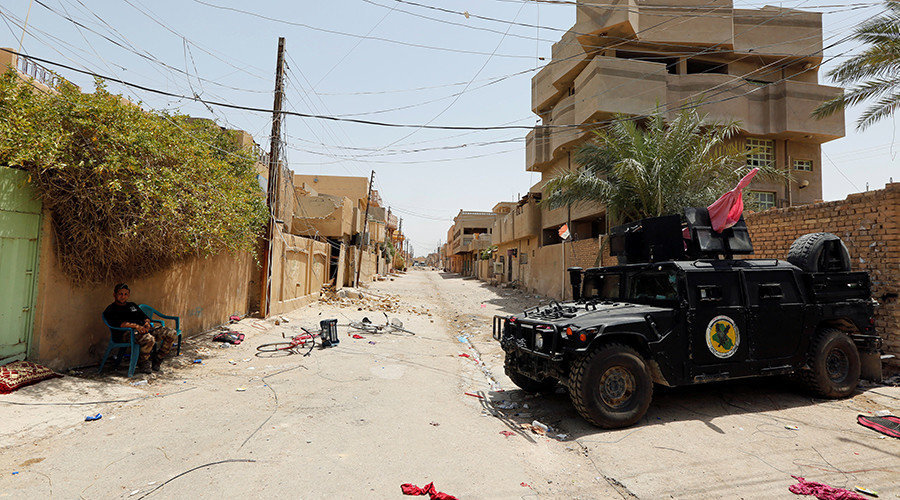
Moreover, the persecution of Sunnis in Iraq that exists, while inexcusable, is not indiscriminate. Based on my interviews and research, men who fled from ISIL-held areas early on and sought shelter in government areas, including in majority-Shia areas, are not suspected of ties to the jihadist group and are left to live their lives. However, those who remained behind or fled more recently are sometimes persecuted under the often unfair assumption that they sympathized with terrorists. From the point of view of security services, these are men who have chosen to stay in Falluja for the last two years, unlike the many Fallujans who fled ISIL early on and sought safety in Baghdad. Security services have a right to worry that some ISIL fighters had infiltrated the ranks of the fleeing civilians. In a significant improvement over what Iraqis call the period of "sectarianism" that ended in 2008, the violations today involve far less killing but instead the destruction of homes and villages in revenge for a perception that residents supported ISIL. The P.M.F. are imperfect, as is every security force in the Middle East. Given the role of Falluja as a safe haven for those beheading Shia and supporting insurgents, it is surprising how restrained the P.M.F. have been. Outside observers can debate about whether the Iraqi government should have prioritized the liberation of Falluja, but Baghdad does not have that luxury. Falluja is 50 kilometers away from the capital and not far from the key shrine city of Karbala. It also straddles the highway to Amman that is a key trade route.

Comment: This should be interesting. If Putin is true to form, he will be several steps ahead of the game. Both sides will find themselves between the rock (Putin) and the hard place (status quo for unbending reasons).