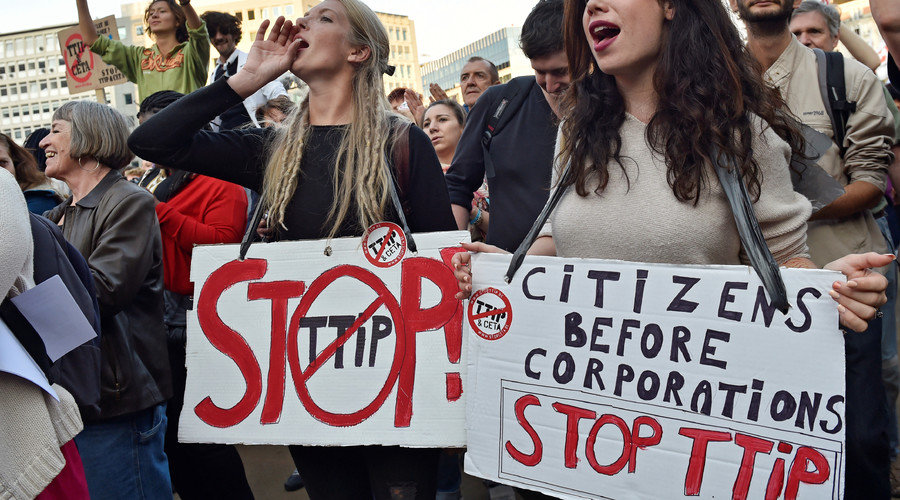
© Eric Vidal / Reuters Thousands of people demonstrate against the Transatlantic Trade and Investment Partnership (TTIP), Brussels, Belgium.
The growth of
free trade has not had a positive effect for all in the developed economies, according to a World Bank document quoted by the BBC.
According to an internal
memo from the Washington-based organization seen by the British broadcaster,
the side effects "may have led to rising wage inequality."The document, written by World Bank economists, says "trade has played a powerful role in creating jobs and contributing to rising incomes in advanced economies," but also highlights its cons.
"Recent evidence from the US suggests that adjustment costs for those employed in sectors exposed to import competition from China are much higher than previously thought. While trade may have contributed to rising inequality in high income economies, so has technological change and the weakening of institutions that used to represent the interests of labor," the report said.
"Given overall efficiency gains, the dislocation effects of trade in advanced economies must be addressed through stronger safety nets and enhanced skills and flexible labor markets," it added.
World Bank president Jim Yong Kim explained why people in the developed economies are angry with the free trade.
"I hear them and they are saying that
my life is not better than my parents and my children's life does not look like it's going to be better than mine," he said in a BBC interview.















Comment: Greece is also having problems with EU austerity measures and the refugee crises: