Puppet MastersS


Radar

The Strait of Hormuz crisis: Why the US may be heading toward a strategic disaster

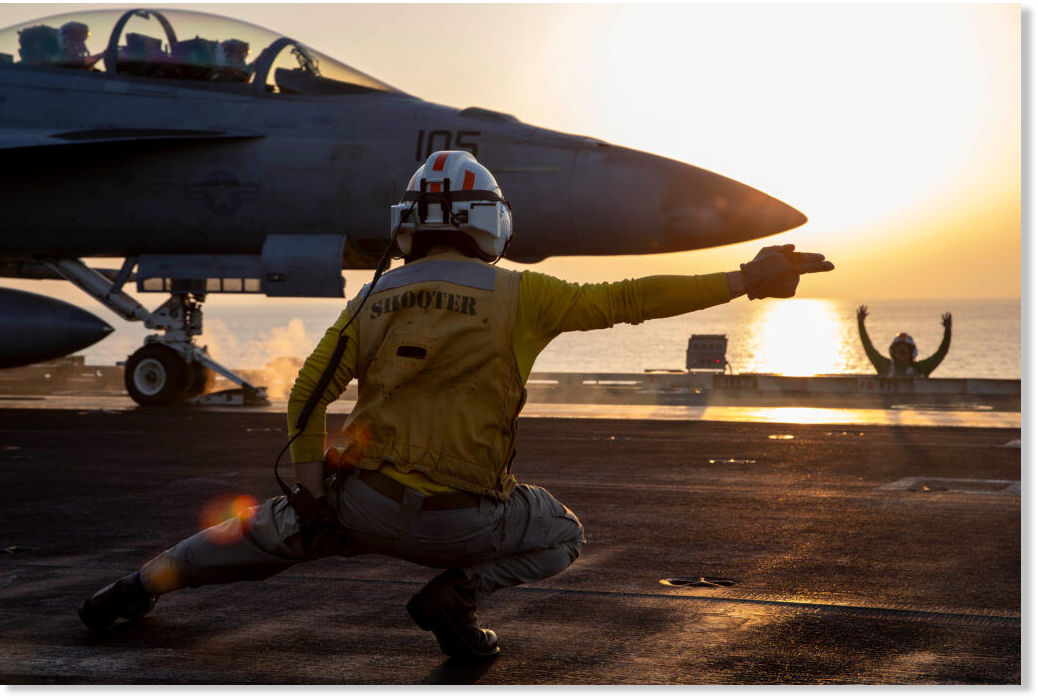
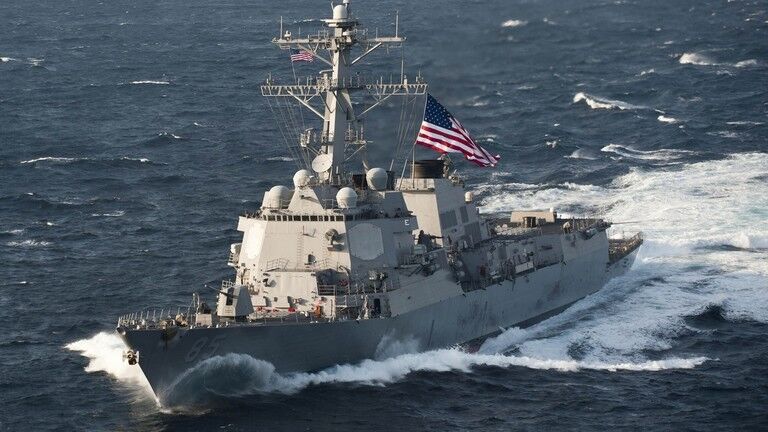
US military ship
© Smith Collection/Gado/Getty Images
US forces could capture a key Iranian island, but this would lead to a whole host of new problems.

When the US and Israel choose the logic of coercive pressure on Iran, they inevitably step into more than just another Middle Eastern crisis. They enter one of the most dangerous knots in world politics.

Here, military geography is directly bound up with global energy flows, the internal resilience of states, and the limits of American power projection. The war that began in late February 2026 has already crossed the line beyond which it can no longer be described as a localized air campaign and has started to affect global markets, US alliances, and the very architecture of security in the Persian Gulf.

Under normal conditions, around a fifth of global liquid hydrocarbon consumption passes through the Strait of Hormuz, along with a fifth of global LNG trade. At the same time, Iran's island-based oil export infrastructure remains one of the key arteries of the country's economy. Judging by media reporting and official US notices, the dynamics of the first weeks of the conflict already show that actual developments have diverged significantly from what the initiators of the escalation likely expected. If the plan had been working in full, the US would not have had to scramble to assemble an international coalition to restore shipping, admit that military escorts remain too risky for now, or face refusals from allies to join an operation in the Strait of Hormuz. The mere fact that even after large-scale strikes, the question of safe passage for commercial vessels remains unresolved, and that allies are in no hurry to share the military burden, points to a fairly well-grounded conclusion: The situation has clearly not unfolded according to the desired script.

Attention

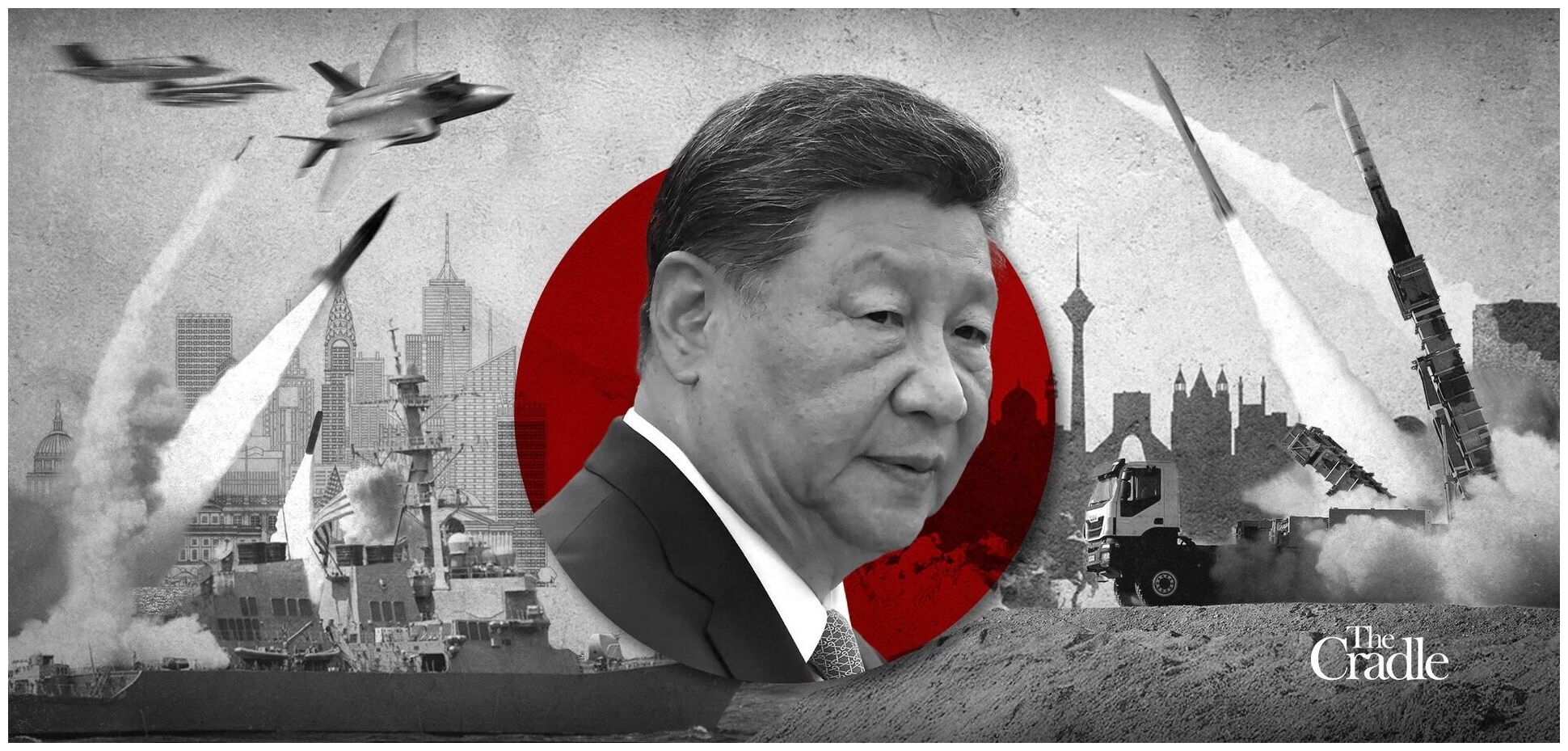
How Iran and China shaped the war chessboard

China's dual-track response to the US-Israeli war on Iran reflects a broader geopolitical and economic strategy that stretches from the battlefield to the global financial system.
Iran and China
© The Cradle
China is officially responding on two parallel tracks to the Epstein Syndicate - or US-Israeli - war on Iran via a diplomatic spokesman and a military spokesman.

Translation: China sees the war both as an extreme political/diplomatic tension and a military threat.

China's military spokesman, a People's Liberation Army (PLA) colonel, speaks with metaphors. It was he who said explicitly that the US is "addicted to war", with only 250 years of History and only 16 years of peace.

He clearly positions the US as a global threat. And clearly, also as a moral (italics mine) threat.

Chinese President Xi Jinping is firmly focused on establishing a long-lasting connection between Marxism and Confucianism.

The key contribution of Confucius to political thinking is the precise use of language. Only the one who speaks with precise metaphors and moral weight is able to govern a nation.

So China is carefully developing a steady moral and ethical criticism of the American war of choice on Iran. Stressing how this is the attack of a nation that has lost its moral compass.

The Global South totally understands the message.

Additionally, facts on the battlefield show how China has also changed the rules of war in Iran.

The Iranian grid is now fully connected to the BeiDou satellite system. That explains how Iran now strikes with precision, and every move by the US-Israeli combo faces a China-tech Digital Wall (over 40 BeiDou satellites in orbit). That accounts for excellent Iranian missile accuracy and increased resistance to jamming.

As part of their 25-year Comprehensive Strategic Partnership, China has also supplied Iran with long-range radars, integrated with satellite systems. The key takeaway is Iran's now much shorter response time compared to the 12-day war.

Russia has helped on a parallel track, allowing Iran to apply in spades what Russia learned in Ukraine about western systems such as Patriot and IRIS-T. It's not only about mass-drone saturation tactics; it's learning the Russian way of coordinating drone swarms with ballistic missile volleys. That's exactly what's in - devastating - effect in the latest stages of Operation True Promise IV.

Oil Well

Iran War & Fuel Rationing - are 'Energy Lockdowns' on the way?

Fuel Rationing
© Off-Guardian Org
The war in Iran is having the impact that most people with any sense knew it would have: The price of oil is going up, and the supply of oil is going down.

Of course, whether or not the latter of these is actually true we will never know, and it's beside the point. Oil companies will natural take the slightest excuse to price gouge and contrive scarcity for the basest of profit motives.

It also serves a political motive as well, since we know the global political machinery is -

against free travel
against fossil fuels and
against people being able to afford basically anything.

Which is of course another reason - we could say the ultimate real reason - why the head of BP is screaming about fuel rationing...
UK should brace for fuel rationing over Iran war crisis, former BP chief warns Starmer

Vader

Flashback In 2002, the U.S. Military conducted an Iran war simulation. Iran won

aircraft carrier
As tensions escalate in the Persian Gulf region, it's worth recalling a 2002 Pentagon war game in which a U.S. Marine Corps played the part of an enemy commander waging a bloody defensive campaign against a much more powerful U.S. force.

Lt. Gen. Paul Van Riper's own hodgepodge of troops, ships and planes was similar in organization and capability to Iran's actual forces. Van Riper's success in blunting a simulated American assault could reveal how Tehran might fight in the real world.

"The exercise was called Millennium Challenge 2002," Blake Stilwell wrote for We Are the Mighty.
It was designed by the Joint Forces Command over the course of two years. It had 13,500 participants, numerous live and simulated training sites, and was supposed to pit an Iran-like Middle Eastern country against the U.S. military, which would be fielding advanced technology it didn't plan to implement until five years later.

The war game would begin with a forced-entry exercise that included the 82nd Airborne and the 1st Marine Division. When the blue forces issued a surrender ultimatum, Van Riper, commanding the red forces, turned them down. Since the Bush Doctrine of the period included preemptive strikes against perceived enemies, Van Riper knew the blue forces would be coming for him. And they did.

But the three-star general didn't spend 41 years in the Marine Corps by being timid. As soon as the Navy was beyond the point of no return, he hit them and hit them hard. Missiles from land-based units, civilian boats, and low-flying planes tore through the fleet as explosive-ladened speedboats decimated the Navy using suicide tactics. His code to initiate the attack was a coded message sent from the minarets of mosques at the call to prayer.

In less than 10 minutes, the whole thing was over and Lt. Gen. Paul Van Riper was victorious.

Map

The battle for Iran's neighbors: Why Washington's isolation strategy is faltering

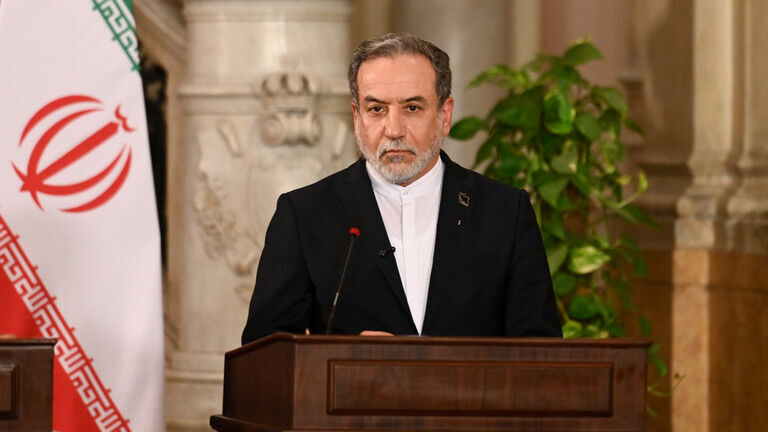
Iranian Foreign Minister Abbas Araghchi
© Sayed Hassan/Getty ImagesIranian Foreign Minister Abbas Araghchi
Since the start of hostilities against Iran, the United States has employed not only military strikes but political, diplomatic, economic, and informational tactics aimed at strategically weakening and isolating Tehran on the global stage. This approach aligns with Washington's traditional 'multi-layered pressure' model where military action is coupled with efforts to create an unfavorable geopolitical environment for adversaries.

Iran is a nation with a population of around 90 million people, a vast territory, a well-developed system of state mobilization, and a complex ethnopolitical structure. In the eyes of the US and Israel, Iran's ethnic diversity - the country is home to Persians, Azerbaijanis, Kurds, Arabs, Baluchis, and other ethnic groups - makes it vulnerable to internal conflicts. However, this very diversity also contributes to a resilient political and cultural system that has been formed after the Islamic Revolution of 1979. Consequently, the current military conflict with Iran presents a daunting challenge for the US from both the military and political perspective, a challenge that may have been underestimated.

Star of David

In the midst of Iran war, Israel still torments Gaza: Cuts food aid deliveries to 10 percent of required amount

food aid deliveries gaza
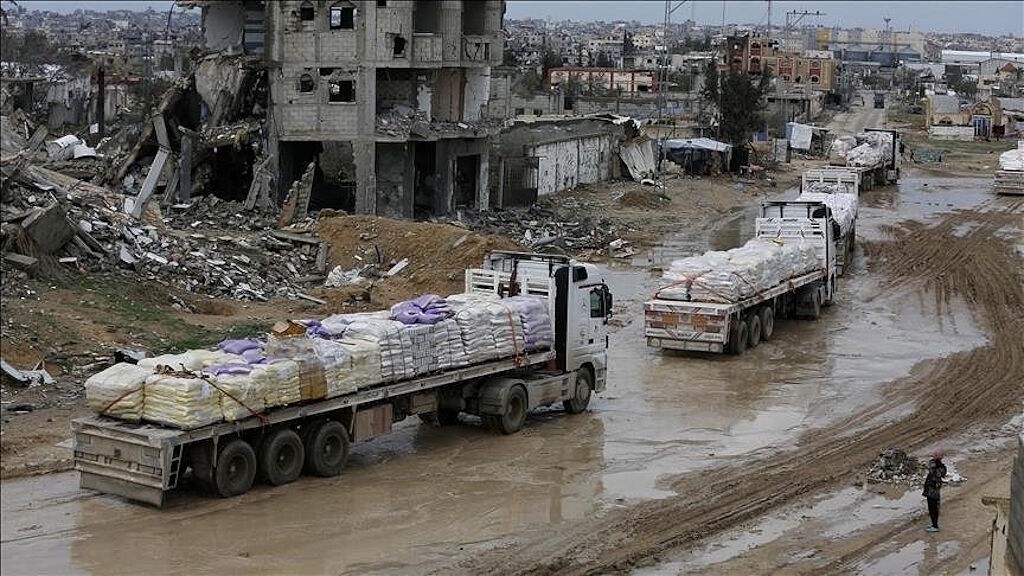
© Anadolu AgencyFood aid being trucked into Gaza
As another famine threatens, Israeli troops killed two Palestinian families on Sunday, including a pregnant mother carrying twins

Israel is strangling Gaza, allowing only a fraction of the needed humanitarian aid and commercial supplies to enter the strip amid the ongoing war against Iran, Palestinian officials warned on 16 March.

The Israeli military has allowed just 640 aid trucks out of the 6,000 expected under existing arrangements, according to Ismail al-Thawabta, director general of the Government Media Office in Gaza.

This amounts to just 10 percent of what Israel had previously committed to allow entry, exacerbating the humanitarian crisis in the strip created by Israel throughout its two-year genocide of Palestinians and raising the specter of another famine.

Gold Seal

Principled: Trump-appointed counterterrorism director Joe Kent resigns in protest over US war with Iran

Joe Kent, Director of the National Counterterrorism Center resigns iran war
Joe Kent, Director of the National Counterterrorism Center
In a massive break from President Trump and MAGA, Joe Kent, Director of the National Counterterrorism Center (NCTC), announced his immediate resignation on Tuesday, citing irreconcilable opposition to the ongoing U.S. military operations against Iran.

Kent declared he could not "in good conscience support the ongoing war in Iran," stating unequivocally that Iran posed "no imminent threat to our nation" and that the conflict was initiated "due to pressure from Israel and its powerful American lobby." The move comes weeks into active strikes targeting Iranian nuclear sites, leadership, and infrastructure, with Iranian retaliation underway and global oil markets feeling the strain.

Explosion

Afghanistan accuses Pakistan of killing 400 in attack on Kabul hospital

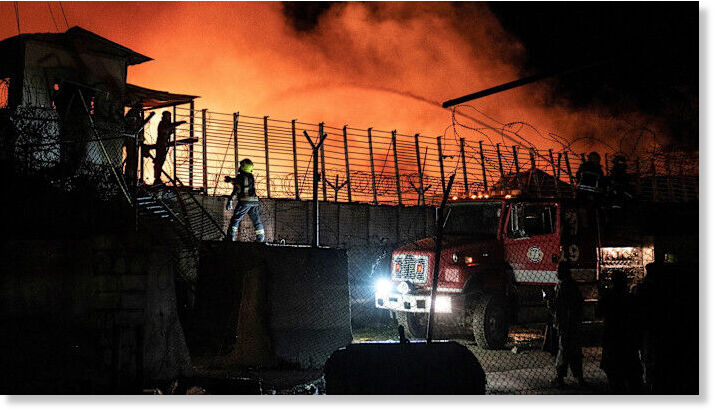
Hundreds feared dead in strike on Kabul hospital
Afghanistan has accused Pakistan's military of launching an air strike on a hospital treating drug users in the capital, Kabul, killing at least 400 people.

Pakistan dismissed the claim as "false and aimed at misleading public opinion", saying it only targeted military installations in Kabul and the province of Nangahar on Monday.

The attack on Kabul's Omar Addiction Treatment Hospital took place at about 9pm local time (16:30 GMT), according to Hamdullah Fitrat, the deputy spokesman for Afghanistan's Taliban government.

The hospital is a 2,000-bed facility, and the raid destroyed large sections of the building, he wrote on X.

"Unfortunately, the death toll has so far reached 400, while around 250 others have been reported injured. Rescue teams are currently at the scene, working to control the fire and recover the remaining bodies of the victims," he added.

Local television stations posted footage showing firefighters struggling to extinguish flames among the ruins of a building.


Comment: Perhaps tellingly the current sharp escalation commenced as the latest round of war between Iran and the US/Israel kicked off about two and half weeks ago. Coincidence or not? Afghanistan shares a border with Iran in the west.

See also this report from February 28: Pakistan carries out airstrikes inside Afghanistan as 'open war' on border continues

See in addition: Pakistan did 'dirty work' for the West in supporting terrorists - defense minister


Flashlight

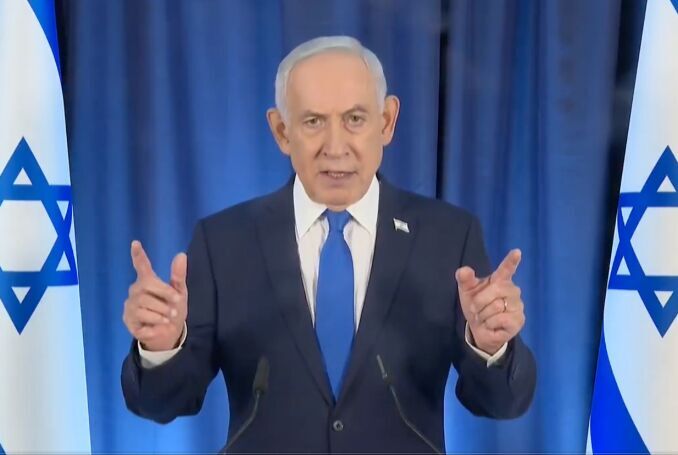
Where is Netanyahu and why are questions spreading online?

netanyahu
Questions about Benjamin Netanyahu's whereabouts are spreading online after Iranian threats and unusual public appearances during the ongoing war.

Key Developments
  • Iran's Revolutionary Guards said they would continue pursuing Netanyahu "if the criminal and child-killer Netanyahu is still alive."
  • Netanyahu's last widely noted public appearance appears to date to early March during the ongoing war with Iran.
  • Some recent videos posted on Netanyahu's X account appear to be pre-recorded statements filmed against neutral backgrounds.
Iranian Statement Fuels Speculation

Questions about the whereabouts of Israeli Prime Minister Benjamin Netanyahu intensified after a statement by Iran's Islamic Revolutionary Guard Corps (IRGC).

The IRGC said in a statement on Saturday that it would continue pursuing the Israeli leader as part of its retaliation campaign. "If the criminal and child-killer Netanyahu is still alive, we will continue pursuing him until he receives his punishment," the statement said.

Colosseum

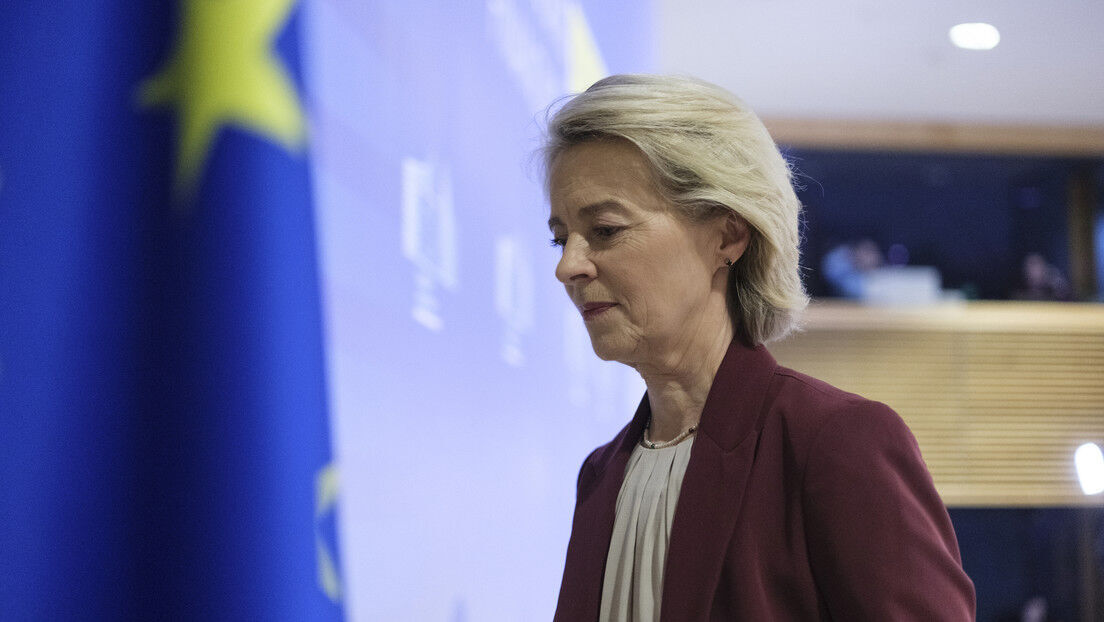
Ursula's house of cards: The EU can no longer count on the old reliable unwritten rules for me, but not for thee

European Commission President Ursula von der Leyen
© Thierry Monasse / Gettyimages.ruEuropean Commission President Ursula von der Leyen
The 'rules-based order' has failed in its mission - helping the West do whatever it wants

When European Commission President Ursula von der Leyen had to come up with a speech for EU ambassadors, she tried on a punk rock routine similar to the one that scored former central banker and current Canadian Prime Minister Mark Carney a standing ovation at Davos. But one key difference made it a tone-deaf flop: she forgot to bring her mirror.

Carney's critical point was a confession - that it's the people running Western democracy who are the problem. The same ones the US has been successfully cuckolding for years through their own complicity. "We participated in the rituals, and we largely avoided calling out the gaps between rhetoric and reality," Carney said.

Queen Ursula instead tried to pawn off blame entirely on the system itself - saying that the "rules-based system that we helped to build with our allies" could no longer be counted on to defend EU interests. And that they all need to consider "whether our doctrine, our institutions, and our decision making - all designed in a postwar world of stability and multilateralism - have kept pace with the speed of change around us" or if it's "a hindrance to our credibility as a geopolitical actor."