Puppet MastersS


Bullseye

Intel IG admitted under oath to changing whistleblower rules for anti-Trump Ukraine op in 2019: 'The timing is suspicious'

Michael Atkinson
© Mark Wilson/Getty ImagesMichael Atkinson, former Intelligence Community Inspector General
Atkinson's own 2019 testimony, now public, confirms the ICIG did change the rules and that Davis and The Federalist weren't 'conspiracy theorists,' but rather, the only real journalists around.

Former Intelligence Community Inspector General (ICIG) Michael Atkinson admitted under oath that he personally ordered a secret rewrite of the whistleblower complaint form in August 2019 that was used as the basis for a phony impeachment operation against President Donald Trump, going so far as to admit changing the form looked "suspicious."

Newly unveiled testimony from October of 2019 shows that Atkinson conceded the change he ordered to the whistleblower complaint form "looks suspicious" but said the timing was merely "unfortunate."

"So the timing is unfortunate. It looks suspicious, I get that," Atkinson testified. Atkinson said that after several media inquiries highlighted that the then-current form required first-hand knowledge of wrongdoing in order for a complaint to meet the urgency threshold to be sent to Congress, he ordered his staff to secretly change the rules so that second-hand hearsay complaints could be a legitimate basis for expedited processing.

Comment:


Document

Iran's President Massoud Pezeshkian's letter to the American people

Iran President Pezeshkian
© Getty ImagesIran President Masoud Pezeshkian
In the name of God, the Compassionate, the Merciful

To the people of the United States of America, and to all those who, amid a flood of distortions and manufactured narratives, continue to seek the truth and aspire to a better life:

Iran — by this very name, character, and identity — is one of the oldest continuous civilisations in human history. Despite its historical and geographical advantages at various times, Iran has never, in its modern history, chosen the path of aggression, expansion, colonialism, or domination. Even after enduring occupation, invasion, and sustained pressure from global powers — and despite possessing military superiority over many of its neighbours — Iran has never initiated a war. Yet it has resolutely and bravely repelled those who have attacked it.

The Iranian people harbour no enmity toward other nations, including the people of America, Europe, or neighbouring countries. Even in the face of repeated foreign interventions and pressures throughout their proud history, Iranians have consistently drawn a clear distinction between governments and the peoples they govern. This is a deeply rooted principle in Iranian culture and collective consciousness — not a temporary political stance.

Comment: Masterfully written, explicitly clear with heart, wisdom...and warning.


Magnify

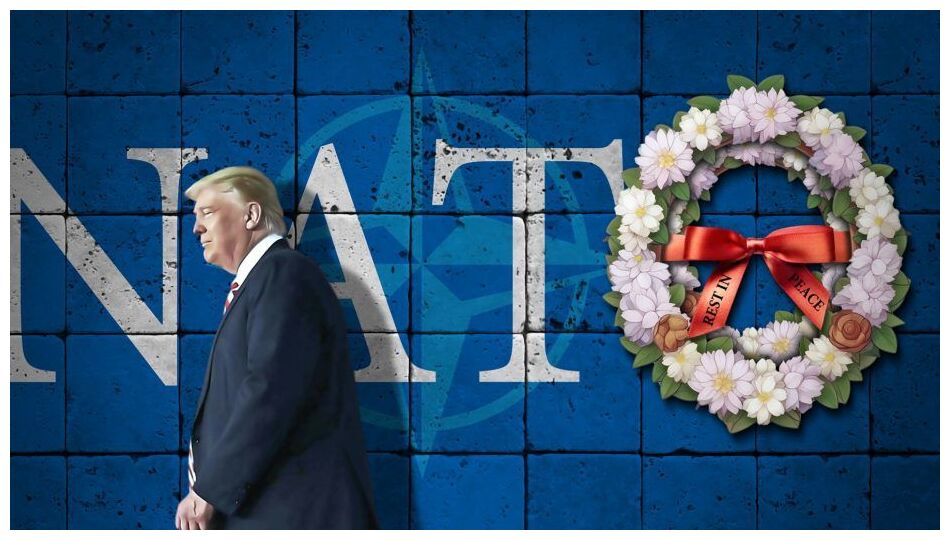
NATO's slow fracture: How Trump's Iran War exposed the instrument of hegemony

EU US NATO
© UnknownThe fracturing of EU • US • NATO
NATO survives as a bureaucratic structure, but the instrument of American hegemony — the mechanism through which Washington coerced compliance — is no longer operational.

The Alliance as Billing Arrangement

The myth was always more durable than the machinery. NATO presented itself as a collective security architecture; in practice, it functioned as a billing arrangement for American imperial overhead, in which European governments paid in treasure, territory, and political will for the privilege of hosting Washington's forward operating positions. The Iran war has not broken the alliance. It has simply made the arrangement too expensive to maintain the fiction. When Spain closed its airspace to U.S. flights on 31 March 2026, and Italy denied Sigonella to transiting bombers, it was not a minor rift or hesitation. It was the first visible moment in decades in which the instrument of European subordination refused to execute commands. NATO, as a mechanism of American coercion, has encountered limits.

Russian Flag

Kremlin reacts to Orban's defeat in Hungarian election

Kremlin
© Fandrik/Getty ImagesThe Kremlin • Moscow, Russia
Moscow hopes to establish dialogue with the next prime minister, Dmitry Peskov has said.

Russia expects to maintain "pragmatic" relations with Hungary after Peter Magyar's Tisza party defeated Prime Minister Viktor Orban's Fidesz in the general election.

Magyar's center-right opposition Tisza party secured over 53% of the vote in Sunday's vote, which gives it a qualified majority in the country's 199-seat parliament.

Orban, who conceded defeat, had charted an independent course, ruffling more than a few feathers in Brussels. During his time in office, he consistently opposed the EU's sanctions against Russia and military aid to Ukraine, vetoing the bloc's planned €90 billion loan package for Kiev. His government had advocated pragmatic relations with Moscow, especially in terms of energy supplies.

Fidesz also strongly opposed EU-imposed policies regarding migration and LGBTQ rights.

Comment: Weighing in on Orban's defeat, Musk claims Soros manipulation:
The pro-EU Tisza party's victory over Prime Minister Viktor Orban in the Hungarian election means that the country has essentially been taken over by the Soros network, Elon Musk has said.
Alex and Elon
© Allison Robert/Getty Images/KJNAlex Soros • Elon Musk
In a post on X on Monday, Musk lashed out at Alexander Soros - the son of Hungarian-American billionaire George Soros and chair of the Board of Directors of the Open Society Foundations (OSF) - who celebrated Orban's fall as "a resounding rejection of entrenched corruption and foreign interference."

Musk responded to a post by an X user who listed figures who cheered the result - among them, former US President Barack Obama, UK Prime Minister Keir Starmer, Ukrainian leader Vladimir Zelensky, and various EU officials - and wrote: "This should tell you everything." Musk replied with a "100%" emoji.

Musk's comments came after Peter Magyar's conservative Tisza party secured 138 seats in the 199-seat Hungarian parliament with 53.6% of the vote, while Orban's right-wing Fidesz took just 55 seats with 37.8%, with an extremely high voter turnout of almost 80%.

Though conservative in profile, Tisza has pledged to dismantle core pillars of Orban's policies - drawing once again closer to the EU and NATO.

Orban - who will see his 16-year tenure as prime minister come to an end - has long clashed with Budapest-born Soros, accusing him of fomenting 'woke' ideologies, "liberal internationalism," and an intention to turn native Europeans into a minority through an "invasion of immigrants."
The Soros-founded Open Society Foundations has a strong footprint in Hungary. Between 2016 and 2023, the network spent almost $90 million to fund Hungarian-based organizations, and in the year prior to the 2022 parliamentary elections, it gave a record $17 million, according to research by the Center for Fundamental Rights.
Hungary received nearly double the OSF's average of $19 million per country across Europe and the post-Soviet region, with at least 153 organizations benefiting from Soros's financial support, according to the report.

The OSF was essentially forced to leave Hungary in 2018 after Orban passed the so-called 'Stop Soros' anti-migration legislation. Critics have argued that despite the move, the OSF continues to influence Hungary's domestic political scene through alternative routes.


Footprints

After Swalwell and Gonzales resignations, who's next?

Eric Swalwell
© Getty ImagesEric Swalwell, US Representative, CA 15th District
Two members of the House of Representatives announced their resignations on Monday as they faced the threat of expulsion for allegations of sexual misconduct. But rather than putting an end to Congress' internal drama, the resignations may be the beginning of a slew of expulsion battles on the House floor.

Rep. Eric Swalwell, D-Calif., who had been a front-runner to become governor of California, announced his plan to resign on Monday afternoon, saying in a statement that "false" allegations of sexual misconduct had "distracted" from his duties.

An hour later, Rep. Tony Gonzales, R-Texas, who has admitted to an affair with an aide who later committed suicide by self-immolation, also announced his resignation.

Some in the House say they want these forced departures to serve as a template going forward.

Comment: A good start, but small fry. When the likes of Pelosi, Schiff, Schumer, Graham and Omar are perp-walked out of Congress, then we'll know the legislature is serious. Until then . . . .


Attention

Empire of Piracy blockades Iran and China

Watching News
© Strategic Culture Foundation
All hail the almighty return of Pirates of the Caribbean, now upgraded to Pirates of the Persian Gulf.

The spectacular collapse of the Islamabad diktats - Barbaria came to dictate, never to negotiate - has been followed by a coercion psy ops on steroids: Jesus! (literally, as he posted it on Truth Social) threatening every single ship now paying the Strait of Hormuz toll booth.

As every grain of sand from the Gobi to the Sahara already knows, this is all about China.

So the question needs to be posed again. CENTCOM has now merged into INDOPACOM, a new pyrate hydra. Will INDOPACOM have the balls to harass a Chinese supertanker which sailed through the Strait of Hormuz after paying the toolbooth in yuan?

In his trademark delusional supremacy mode, US Treasury Secretary Bessent said that China will no longer be able to get oil from Iran.

This Baboon of Barbaria gimmick in fact translates as economic warfare against not only China but an array of mostly Asian nations, disturbing global energy flows, trade, and major shipping transporting all manner of goods from the West down to the East and from East to West. An oil blockade targeting not only China but also a great deal of the multipolar world.

Before the start of the American blockade, ships from only five nations could transit through the Strait of Hormuz: China, Russia, India, Iraq and Pakistan. Once again: will INDOPACOM dare to seize or sink ships from four nuclear powers?

South Korea went a step ahead and sent a special envoy for direct negotiations with Tehran to guarantee safe passage through Hormuz and buy more cheaper oil and gas. As it stands, at least 26 South Korean tankers remain stranded.

Now compare Bessent with Russian Foreign Minister Sergey Lavrov, in Beijing, after talking to Chinese Foreign Minister Wang Yi and being received in person by President Xi:

"Russia can, without a doubt, compensate for the shortfall in resources that has arisen."

Roughly 13% of China's oil imports come from Iran - approximately 1.38 million barrels a day. In parallel, Power of Siberia-1 - operating at full capacity - delivers 38 billion cubic meters of gas a year of gas, and the ESPO oil pipeline is hitting record highs.

Power of Siberia-2 may only become operational next year. Russia already supplies as much as 20% of China's oil. "Compensate", in Lavrov's terms, means pushing spare capacity to the limit. But that's doable.

Iran for its part can count on an alternative pipeline and the Jask oil terminal, with capacity for 1 million barrels a day, which completely bypasses the Strait of Hormuz.

So far, 8 Chinese tankers transited via Hormuz since the blockade was announced. Moreover, China has as many as 1.3 billion barrels in inventories, enough to cushion some losses from Iran for months. And China will continue - in theory - to receive oil from tankers departing from other non-Iranian Persian Gulf ports (they will still need to pay the toll booth).

The big question is how long Iran - and China, for that matter - will tolerate the shadow fleet being interdicted by INDOPACOM without a ballistic response.

Gavel

Appeals Court rules Boasberg 'abused discretion' in Trump deportation fight

boasberg
© Saul Loeb/AFP via Getty ImagesChief Judge James Boasberg of the U.S. District Court for the District of Columbia.
The Trump administration won a court victory in an immigration case Tuesday when an appeals court found U.S. District Judge James Boasberg engaged in a "clear abuse of discretion" last year.

The 2-1 decision by the U.S. Court of Appeals for the District of Columbia Circuit comes more than a year after Boasberg first held the Trump administration in criminal contempt.

Boasberg held the Trump administration in contempt when it did not comply with his order to turn around planes carrying deported illegal aliens from Venezuela. The planes were going to El Salvador.

Comment: Boasberg has made a career out of making court-clogging rulings against the Trump administration that he knows will eventually be overturned. That's his form of TDS 'resistance'. He also sat on the FISA bench, handing out sweeping permissions for surveilling Trump campaign workers, dragging them into various judicial hells, and did the same to Jan. 6 protesters. Activist judge like him do not belong on the bench. . The whole Boasberg crew is pretty sketchy:


Warning

The "Blitzkrieg" Failure: Why the U.S.-Israeli aggression against Iran is doomed, and how Trump can save face

Trump
© UnknownUS President Donald Trump
What was presented in Washington and Tel Aviv in late February 2026 as a "limited operation" to destroy Iran's nuclear infrastructure had, by early April, turned into a full-blown regional catastrophe.

The aggression of the United States and Israel against the Islamic Republic — which U.S. President Donald Trump promised would be a "blitzkrieg" — has resulted in a strategic fiasco for the war's initiators. Instead of Tehran's rapid capitulation, the world is witnessing the opposite process: not only has Iran withstood the bombings, but it has seized the initiative, striking key assets of U.S. allies in the Persian Gulf and Israel itself. This article analyzes the reasons for the crushing failure of the U.S.-Israeli adventure, critiques Trump's shortsighted policies, and forecasts how the White House occupant can now extract himself from the "escalation trap" he has set for himself.

Comment: Excellent unpacking of Iranian leverage and strategic assessment for ending the war.


Bizarro Earth

The world names it the gravest crime. Why don't NATO and the EU?

scales and chain
© RT composite/ZenitX.grinvalds/Getty ImagesScales and Chains
To understand the horror of the slavery is to challenge the core of the modern Western world.

On March 25, the UN General Assembly adopted a resolution proposed by Ghana declaring the transatlantic slave trade the "gravest crime against humanity," despite opposition from Western states. The measure secured support from 123 countries, including Russia and China, while the US, Israel, and Argentina voted against it, and 52 nations - among them the UK and EU members - abstained.

Why do the US, Israel, and Argentina stand against the recognition of the absolute horror of the enslavement of Africans? In fact, acknowledging this crime would expose them to the collapse of their own historical narratives. The US, in voting against, is rejecting its own indictment, built on the paradox of a proclaimed freedom resting atop an enslaving system it never truly reconciled with. To recognize this injustice is to open the door to reparations, and a reconfiguration of the social contract - something that today's America, still shaped by persistent inequalities, refuses to confront.

Israel, for its part, seems to operate within a memorial logic where the centrality of the Holocaust, rightly established as an absolute crime, becomes challenged when other historical tragedies emerge. Its refusal is therefore not only political, but also identity-driven and strategic, aimed at preserving a form of moral monopoly.

Comment: In the era of man, all countries retain bias. None desire condemnation yet all produce it. Does it do any service, whatsoever, to flay open the past - decades to centuries ago? What does it change? There is no such thing as 'historical justice'. Hindsight is not 20/20. Today's people are not those people.


Dollars

All wars are banker's wars: Iran and the bankers' endgame

master controller money and war
© Unknown
"The powers of financial capitalism had another far reaching aim, nothing less than to create a world system of financial control in private hands able to dominate the political system of each country and the economy of the world as a whole."
— Prof. Caroll Quigley, Georgetown University, Tragedy and Hope (1966)
In February 2026, the United States and Israel launched surprise airstrikes on Iran. The officially proffered reasons — preventing Iran's acquisition of a nuclear weapon and forestalling its aggression — have not held up under scrutiny. As James Corbett documented in recent Corbett Report episodes, the nuclear pretext appears to be recycled propaganda, and the scale and timing of the strikes raise deeper questions about motive.

The thesis that "All Wars Are Bankers' Wars" was popularized by Michael Rivero in a 2013 documentary by that name. His accompanying article begins with a quote from Aristotle (384-322 BCE):
"The most hated sort [of moneymaking], and with the greatest reason, is usury, which makes a gain out of money itself, and not from the natural use of it. For money was intended to be used in exchange, but not to increase at interest.
Rivero then traces how private banking interests have financed and profited from conflicts on both sides for centuries from the founding of the Bank of England in 1694 to fund William III's wars to modern regime-change wars.

Comment: Non-participatory Iran, and partners, 'has run the world's only fully interest-free banking regime'...a threat to standard monetary manipulation and select government coffers. Warning: Financial 'awakenings' ahead.