Puppet MastersS


Sherlock

Coverage of India-Pakistan crisis by mainstream media is strangely objective. What's going on?

indian guards
© Reuters / Mukesh GuptaIndia's Border Security Force (BSF) soldiers patrol along the fenced border with Pakistan
I've been trying to make up my mind about how concerned I should be about events in Kashmir. Nothing causes pause for thought like two nuclear powers launching airstrikes against one another.

There's something about the human mind, or at least mine, which causes it to immediately jump to the worst case scenario, especially when it's fuelled by ignorance.

So, this is what my brain does when it hears that India and Pakistan have been firing missiles at each other and shooting each other's planes out of the sky.

First it accesses everything it knows about the situation in Kashmir, which can be summed up as "India and Pakistan don't like each other very much, and they both have nuclear missiles."

Quenelle

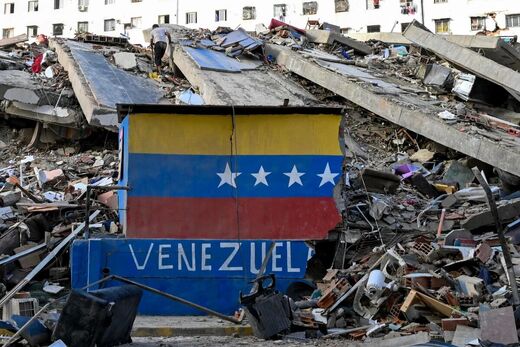
Maduro 1: Abrams: 0. Unfortunately, this match is far from over...

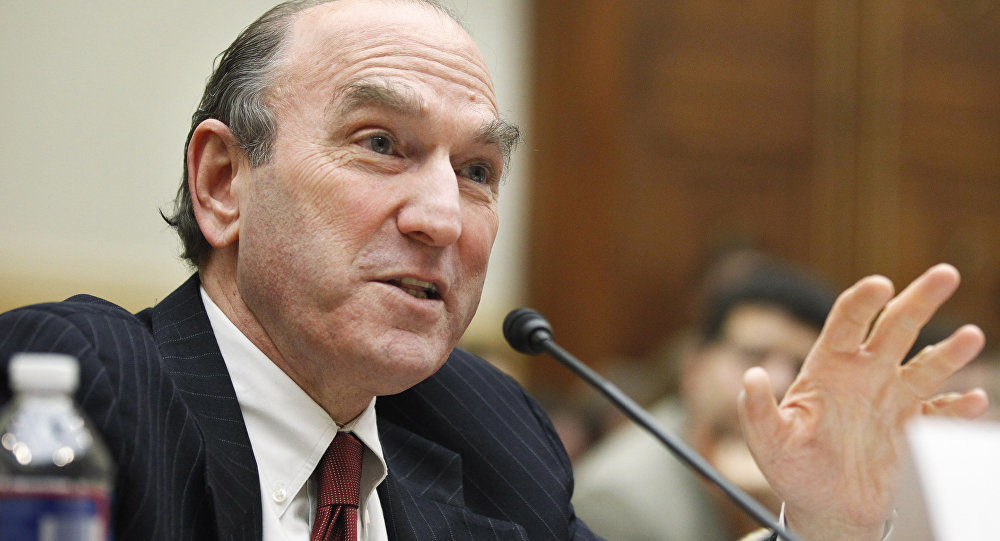
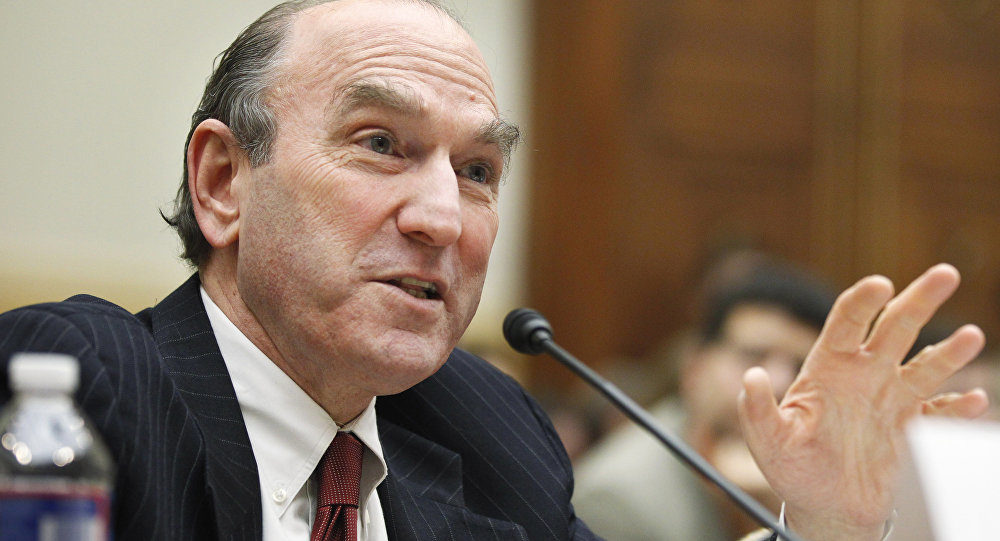
Elliott Abrams
The true face of Elliot Abrams
Maduro wins the first round

The standoff between Venezuela and the AngloZionist Empire last week-end has clearly ended in what can only be called a total defeat for Elliott Abrams. While we will never know what was initially planned by the demented minds of the Neocons, what we do know is that nothing critical happened: no invasion, not even any major false flag operation. The most remarkable facet of the standoff is how little effect all the AngloZionist propaganda has had inside Venezuela. There were clashes, including some rather violent ones, across the border, but nothing much happened in the rest of the country. Furthermore, while a few senior officers and a few soldiers did commit treason and join forces with the enemy, the overwhelming majority of the Venezuelan military remained faithful to the Constitution. Finally, it appears that Maduro and his ministers were successful in devising a strategy combining roadblocks, a concert on the Venezuelan side, and the minimal but effective use of riot police to keep the border closed. Most remarkably, "unidentified snipers" did not appear to shoot at both sides (a favorite tactic of the Empire to justify its interventions). I give the credit for this to whatever Venezuelan (or allied) units were in charge of counter-sniper operations along the border.

Outside Venezuela this first confrontation has also been a defeat for the Empire. Not only did most countries worldwide not recognize the AngloZionist puppet, but the level of protest and opposition to what appeared to be the preparations for a possible invasion (or, at least, a military operation of some kind) was remarkably high. While the legacy corporate Ziomedia did what it always does (that is whatever the Empire wants it to do), the Internet and the blogosphere were overwhelmingly opposed to a direct US intervention. This situation also created a great deal of internal political tensions in various Latin American countries whose public opinion remains strongly opposed to any form of US imperial control over Latin America.

Heart - Black

Genocide survivors protest criminal Elliot Abrams' place on US Holocaust Memorial Museum committee

elliot abrams
© AP Photo/ Manuel Balce Ceneta
A group of genocide survivors and their relatives have begun circulating a petition calling for Elliot Abrams, currently the US special envoy to Venezuela, to be removed from his committee position at the US Holocaust Memorial Museum, citing his support for genocidal regimes.

The group of 12 have addressed the United States Holocaust Memorial Council and the Committee on Conscience in a letter in which they identify themselves as "survivors, witnesses and family members lost to genocide, mass murder and other extreme violence perpetrated by the governments of Nazi Germany and the Central American military dictatorships backed by the United States in the 1980s and 90s. Like you, we have come together in the name of advancing values like those contained in the Council's core mission of preventing genocide."

The committee of 45 members under chair Lee Feinstein has as its stated mandate to "alert the national conscience, influence policy makers and stimulate worldwide action to confront and work to halt acts of genocide or related crimes against humanity."

The group writes that in that spirit, "[w]e cannot fathom how Abrams - a proven supporter of the some of the world's most nefarious perpetrators of genocide and mass murderers for nearly 40 years - could be a member of your committee."

Abrams' reemergence on the US policy scene has sparked outrage among those who remember - and abhor - his history as a defender and supporter of violent regimes.

Comment: Some victims are more important than other victims, at least according to emotionally retarded individuals like Abrams and, presumably, other members of the Holocaust Museum's leadership.


Arrow Down

Lindsey Graham still trying to sabotage Korean peace deal, wants "complete denuclearization" by any means necessary

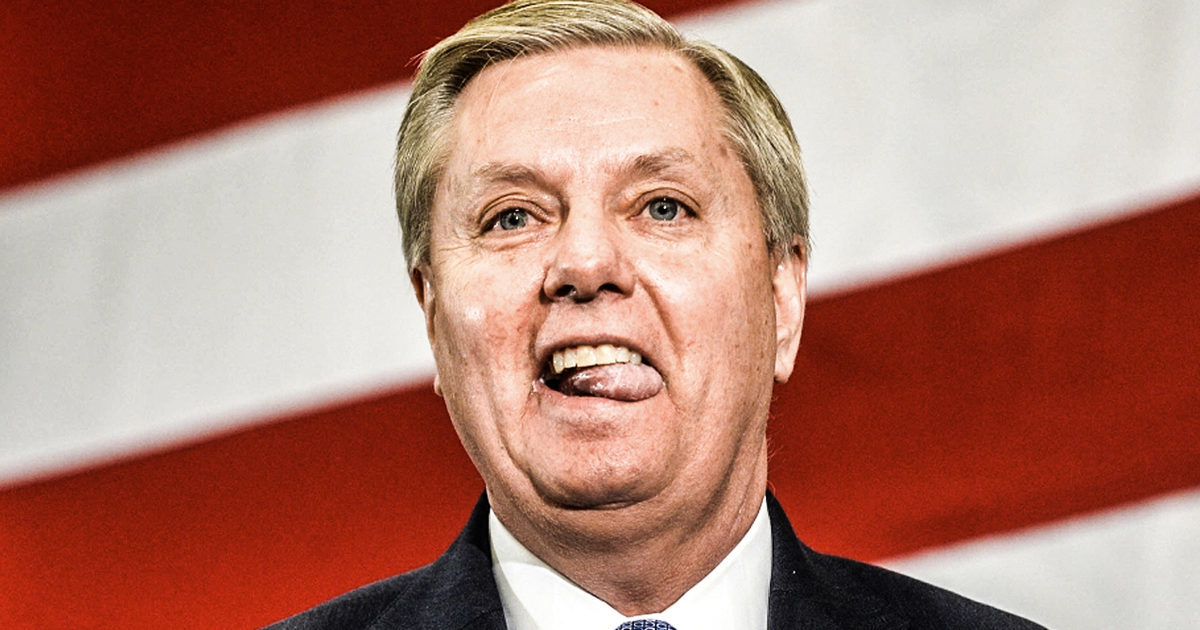
lindsey graham
Sen. Lindsey Graham applauded President Donald Trump on Thursday for walking away from the table during his summit with North Korean leader Kim Jong Un rather than agreeing to any deal short of "complete denuclearization" -- an outcome he believes the US must achieve by any means necessary.

The South Carolina Republican said he is "encouraged there are plans to continue talking" with North Korea after Trump failed to secure a formal pledge of any kind during the summit with Kim in Hanoi, Vietnam, but Graham but also warned that the clock is ticking for negotiators to convince Pyongyang to peacefully surrender its entire nuclear arsenal.


Comment: Talk about arrogance. Graham expects complete surrender, not an actual negotiated deal. He either doesn't seem to realize that "any means necessary" could lead to the destruction of South Korea in the process, or he just doesn't care. Probably the latter.


"There is only one good deal: the complete denuclearization of North Korea in return for security guarantees and economic assistance," Graham tweeted. "We must not go back to the status quo," he added. "If negotiations fail, it would be time to end the nuclear threat from North Korea -- one way or the other."

Later Thursday, Graham referred to Kim as "Rocket Man," a nickname given to the North Korean leader by Trump in 2017, while speaking at the Conservative Political Action Conference in Maryland.

"Speaking of Rocket Man, he couldn't be here and if he doesn't get a deal with Trump he won't be anywhere much longer. The President is on the way back. Here's a question, why is Rocket Man talking to Trump when he's never talked to anybody else? Because he knows Trump means business," he told the audience.


Comment: Yep, and it's people like you who are creating unreasonable demands.


Comment: See also:


Megaphone

Here's why US-North Korea talks will continue to fail

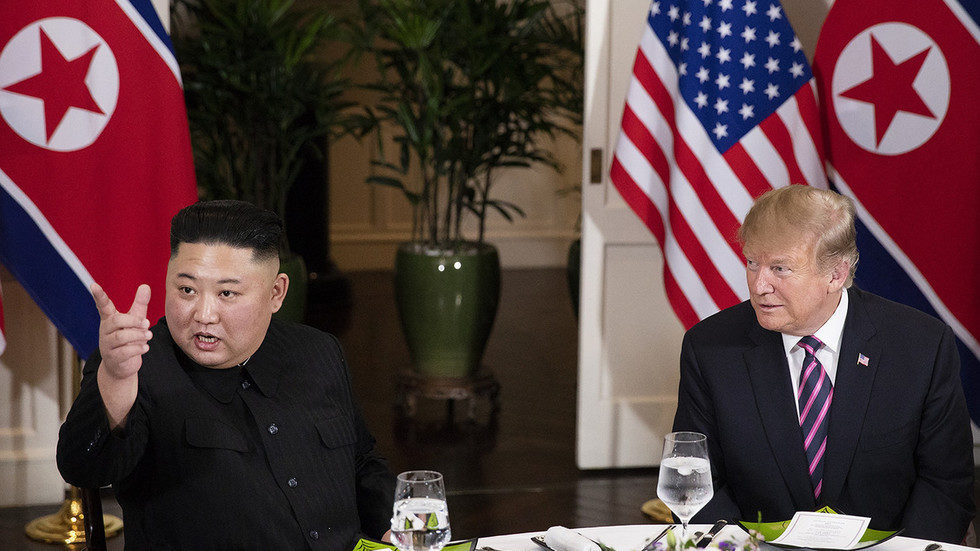
Kim Trump
© Global Look Press / Joyce N. BoghosianKim Jung-Un and Donald Trump
US President Donald Trump's failure to make any meaningful progress with North Korea was an expected outcome of the recent summit, but not for the reasons the mainstream media and regular talking-heads want you to believe.

The so-called summit with North Korean leader Kim Jong-un in Hanoi this week was a predictable flop. According to the US President himself, he ended up walking away from the summit because "it was all about sanctions."

"Basically they wanted the sanctions lifted in their entirety, and we couldn't do that," US President Donald Trump stated.

As Trump also eloquently noted, "sometimes you have to walk, and this was just one of those times." Though, that being said, he did explain that it "was a friendly walk." Apparently, the two leaders exited the venue of their talks without even attending a planned lunch together. I'm not sure how friendly the walk can be if you walk in the opposite direction from each other, but if there's one thing I know about Trump it's that he is a friendly guy.

Comment: According to reports, North Korea was willing to begin the process of denuclearization on the immediate partial removal of sanctions, and yet the US wasn't even willing to concede that. If this is true, and we have no reason to believe it is not, is it any wonder Kim walked away? Also check out SOTT radio's: Behind the Headlines: Western Order Break-Up? New Middle East? New Korea?


Bad Guys

Analysts weigh in on Trump-Kim Hanoi summit: 'Huge letdown' due to lack of knowledge

Hanoi, Vietnam before Trump Kim summit
© Sputnik / Taras Ivanov
Donald Trump has little understanding of real geopolitics, experts say on the failed summit with North Korea's Kim Jong-un. Yet, the disappointment in Vietnam talks is more likely to be a stop, but not the end of negotiations.

"The whole world was holding its breath for the expected news coming out of the summit... and, eventually, there's a huge letdown," Victor Gao, director of the China National Association of International Studies, said on the meeting between the American and North Korean leaders in the Vietnamese capital.

"The disappointment is a real one" after the much-hyped talks ended not only without a signed deal, but even without any hint on the date of the future meeting between Trump and Kim, he added.
The sides aren't on the same page as to what exactly is denuclearization and how to proceed to the final result.
Washington and Pyongyang "need to reconsider the situation and come up with more realism and pragmatism to resume the discussions" if they want to achieve any progress at all, he pointed out.

Jet4

Indian media: Eight Indian fighters took on 24 Pakistani jets in unprecedented dogfight

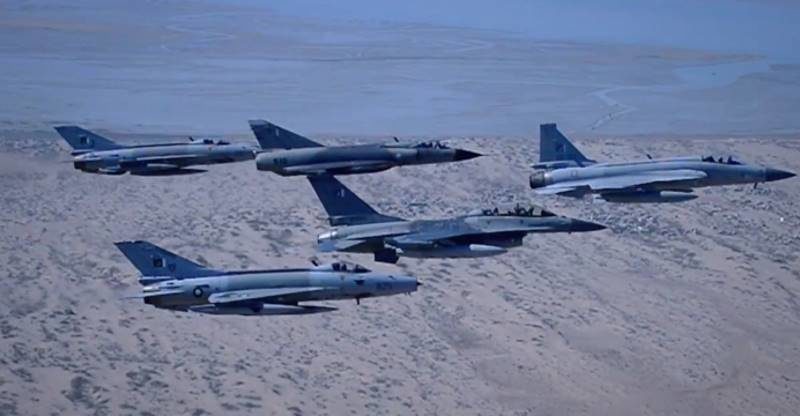
pakistan air force
© Bilal KhanPakistan Air Force
According to the NDTV broadcaster, the Indian Air Force's planes prevented the Pakistani fighters from delivering precision strikes against ground targets on India-controlled disputed Kashmir region

Eight fighter jets of the Indian Air Force took on 24 Pakistani jets in an unprecedented air combat over the India-controlled disputed Kashmir region, India's NDTV television reported on Thursday.

According to the TV Channel, the Pakistani Air Force strike group included eight F-16s, four Mirage-3 aircraft and four Chinese-made JF-17 "Thunder" fighters. The other aircraft were escort fighters to protect the Pakistan strike formation from any retaliation.

"The large Pakistani attack formation was detected at 9.45 am, when they came within 10 km of the Line of Control," the TV Channel reported.

The Pakistani aircraft were intercepted by eight jets of the Indian Air Force, which included four Sukhoi Su-30MKIs, two upgraded Mirage 2000s and two MiG 21 planes, the TV Channel reported.

Comment: India's military forces put on high alert:
Announcing that a Pakistani warplane downed Wednesday had targeted military sites, India's air force, navy and army declared they're on high alert and are poised to defeat further threats.

India's military gave their take on the downing of the Pakistani warplane in its airspace on Thursday.

Major General Surinder Singh Mahal said the jet dropped bombs which struck Indian military sites, but did not cause significant damage.

"The fact is that Pakistan targeted military installations but we thwarted their plans. The bombs were unable to cause any significant damage due to swift IAF action," the major general declared.

In response, the country's weapons systems have been readied and mechanized forces placed on stand-by.


In the event of further aggression, Rear Admiral D.S. Gujral assured a "resolute, swift and strong response" by the Indian Navy, which has been "deployed in a high state of readiness and remains poised in three dimensions, on land, sea and in the air.

While expressing relief that Pakistan had agreed to release an Indian pilot who was captured after being shot down in Pakistani airspace Wednesday, Air Vice Marshal R.G.K. Kapoor dismissed Islamabad's claims that it was a peace gesture.

"We see it as a gesture in consonance with the Geneva Conventions," he said.
Pakistan has closed its airspace bringing disruption to civilian travel:
Islamabad has prolonged the closure of its airspace until March 1 after two days of military exchanges between India and Pakistan in the contested Kashmir region, leaving thousands of people stranded at airports.

The entire Pakistani airspace will remain closed for all civil aircraft until Friday 1pm GMT, the country's Civil Aviation Authority tweeted on Thursday.

Islamabad closed its airspace on Wednesday, while India also shut down airports on its side of the UN-mandated Line of Control.


Hostilities between the nuclear-armed countries escalated on Tuesday after the Indian Air Force attacked sites in Pakistan, claiming that its jets targeted terrorist camps.

Pakistan in return claimed to have shot down two Indian war planes. India confirmed the loss of one bomber but said it had downed a Pakistani aircraft as well. Islamabad denied the allegations.

The airspace closure in Pakistan and Indian parts of Kashmir disrupted air traffic as many airlines were forced to delay, divert or even cancel flights.


Light Sabers

US-North Korea summit flop details: Kim offered to shut facilities for Trump's partial removal of sanctions

trump brow hanoi summit
Update 3: In what might be Beijing's first hint about how the Hanoi summit's failure will impact trade talks, the editor of an English-language Communist Party mouthpiece insinuated in a tweet that Beijing is unhappy with the US's negotiating tactics, and that Trump should have "serious talks" with Kim about lifting sanctions in exchange for partial denuclearization.


Comment: Global Times reports:
Summit fails, but not all progress is lost

[...]

The two are deadlocked again over an old problem: The US demands North Korea denuclearize first, while the latter insists on prioritizing the lifting of sanctions. The two cannot reach an agreement on working simultaneously to achieve the same goal.

The détente between Pyongyang and Washington failed to help the two countries get rid of deep mutual distrust. That the Trump-Kim summit ended with no fruition indicates it's difficult to advance the denuclearization process of the peninsula. It can't be fulfilled in a short time.

Expectations for the setting up of liaison offices and the declaration of a formal end to the Korean War have fallen apart. What's most important for the two countries is to cherish the results achieved so far and not back down from one setback.

[...]

Some Americans will criticize Trump for the alleged failure of his North Korea policy. If there is still no new progress on peninsula denuclearization, the president will face increasing pressure.

With the approach of the US presidential election, these pressures will force him to take a tough attitude toward Pyongyang again.

China and South Korea should play a role in safeguarding the achievements made so far concerning the issue. Pyongyang announced it would permanently halt nuclear and missile tests before the US and South Korea suspended joint military exercises. Beijing should help Pyongyang stick to its current moderate line while Seoul should firmly resist any Washington attempt to coerce North Korea with threats of resuming joint drills. South Korea should take a responsible role in maintaining the peace of the Korean Peninsula.

It's particularly important to be optimistic at this critical moment. The Korean Peninsula was in great uncertainty in the latter half of 2017, but now there are neither nuclear tests nor joint military exercises.

Trump and Kim have met twice. Even if no deal was reached, both vowed not to cease negotiations. This is a big change.

No power should disrupt the reconciliation process on the peninsula. China will never accept any retrogression. This is our bottom line to which we will firmly stick. We hope South Korea will continue to cooperate with us. The US and North Korea shouldn't frustrate the whole region and the international community.
RT reports:
North Korea demanded the partial lifting of sanctions that "that hamper the civilian economy and the livelihood of our people," specifically parts of five UN resolutions from 2016 and 2017. There are 11 resolutions in total imposing sanctions on North Korea.

[...]

The North Korean official said Washington demanded "one more" measure beyond dismantling Yongbyon, which went too far for Pyongyang.

[...]

While Ri did not say what the "one more" US demand was, South Korean media have busily speculated that it might have included Pyongyang's biological and chemical weapons, reportedly at the urging of Trump's hardline national security adviser John Bolton.

[...]

The US president's statement suggests it was he, not Kim, who walked out of the talks. It remains unclear why Trump was referring to sanctions in their entirety and Ri spoke of partial relief.

On his way back from Vietnam, Trump spoke with South Korean President Moon Jae-in and Japanese Prime Minister Shinzo Abe and told them he would continue talking with North Korea, White House press secretary Sarah Sanders told reporters.
See also: And check out SOTT radio's: Behind the Headlines: Trump Wags the Iran Riot Dog, Kim Talks Korean Peace


Snakes in Suits

The art of ... no deal? Why Washington struggles to reach agreements

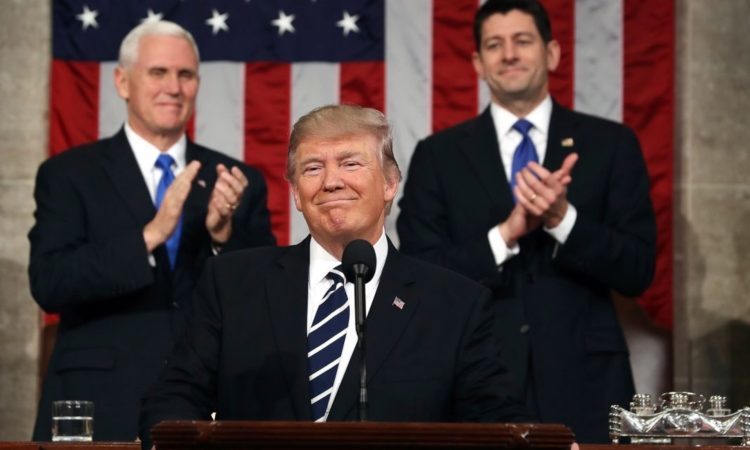
Trump Pence
The much-anticipated second summit between Donald Trump and Kim Jong-un was cut short this week, with both leaders leaving Vietnam early before an expected signing ceremony. Sometimes you just have to walk away, Trump said.

The negotiations ultimately floundered when it came to the question of lifting US sanctions on North Korea. Kim wanted partial sanctions relief in return for its "realistic proposal" to halt nuclear and missile tests and dismantle a nuclear facility at Yongbyon, but Trump was not prepared to compromise.

Murray Hunter, an associate professor at the University Malaysia Perlis, told RT the result was a "catastrophic failure"given the "high expectations" the White House had put on the meeting. So, what does it really take to reach a deal with the United States?

Bad Guys

Trump should offer full withdrawal of troops for complete denuclearization of Korean peninsula

trump i kim
© Evan Vucci / Associated Press
For years, most Asia analysts couldn't imagine a more fearsome possibility than a nuclear North Korea. Presidents going back to George H.W. Bush have declared that Pyongyang must not be allowed to develop nuclear weapons-to no avail.

Yet as Pyongyang tested intercontinental ballistic missiles, President Donald Trump came along and threatened "fire and fury" if the Democratic Peoples' Republic of Korea (DPRK) did not disarm. Presidential sidekick Senator Lindsey Graham dismissed fears of a U.S. attack on the North, opining that any war would be "over there" rather than "over here."

But then Trump showed a willingness to talk, ending what had seemed like a slide toward war. After the Singapore meeting, he declared, "I want to bring our soldiers back home." For years before being elected, Trump had railed against the South Koreans as well as the Europeans for underinvesting in their defense and unnecessarily relying upon America. He has since reiterated those criticisms as president.