Puppet MastersS


Light Sabers

North Korea will denuclearize for lifting of sanctions - Trump claims he won't press for a deadline - UPDATE: No agreement reached between Trump and Kim at summit

Trump Kim Jong
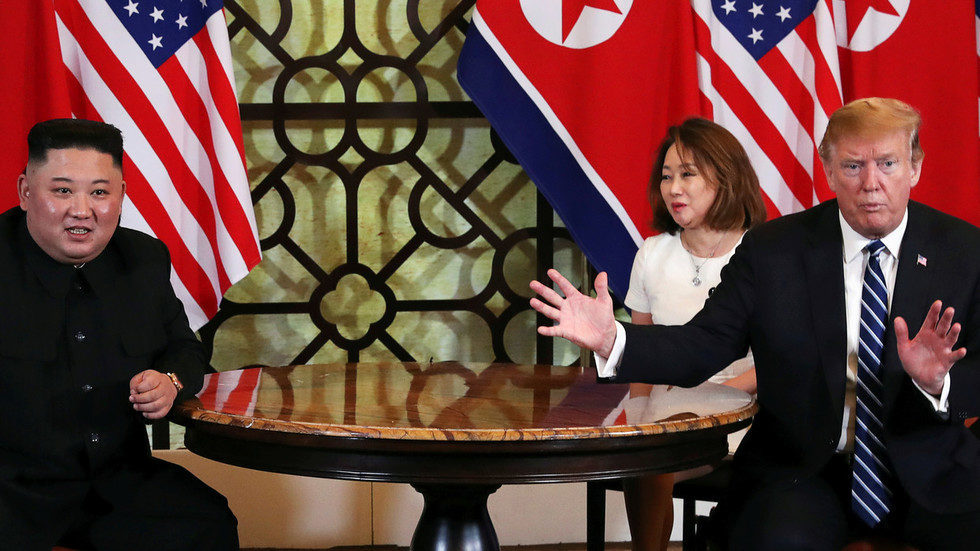
© REUTERS/Leah MillisU.S. President Donald Trump during meeting with North Korean leader Kim Jong Un in the Metropole hotel in Hanoi, Vietnam February 28, 2019.
The Trump administration reportedly won't demand that North Korea disclose all the particulars of its nuclear program for now, dropping the request ahead of the second US-North Korea summit, which kicked off in Vietnam.

The move, which some have argued robs President Donald Trump's push for the "complete and irreversible" de-nuclearization of any merit, was reported by NBC News, which cited current and former US officials. The officials said that it does not mean that Washington will not seek the full disclosure of all alleged ballistic missile sites and nuclear polygons in the future, but that it has decided to shelve the demand for now.

With the second summit between Trump and North Korean leader Kim Jong-un in full swing, little is known about the agenda of the talks. It has been speculated profusely that the negotiations will focus on the Yongbyon Nuclear Scientific Research Center, considered to be the main pillar of the North Korean nuclear program.

Comment:
See also: And check out SOTT radio's: Behind the Headlines: Trump Wags the Iran Riot Dog, Kim Talks Korean Peace

Update (Feb. 28): No deal was reached as both sides walked away from the summit:
Kim purportedly offered to dismantle a nuclear facility at Yongbyon in exchange for sanctions relief, but Washington demanded more comprehensive denuclearization that included multiple nuclear development-related sites. The two-day summit was aborted early after Kim and Trump failed to make headway on the contentious issue.
Trump admitted that he called Chinese president Xi Jinping for help in the negotiations with N. Korea, signaling that the discussions were not going well:
I actually called him just recently to say hey, you know, whatever you can do on this. But he's been very helpful at the border, and he's been very, very helpful, I think, with North Korea generally. Could he be a little more helpful? Probably, but but he's been very helpful.
Despite there being no deal Trump said that he was promised by Kim that he wouldn't test weapons or anything nuclear-related:
"He said the testing will not start," Trump said of Kim. "He said he's not going to do testing of rockets or missiles or anything having to do with nuclear. And all I can tell is that's what he said, and we'll see."
Trump also explained why he froze military drills on the Korean peninsula:
"I gave that up quite a while ago because it costs us $100 million every time we do it. We fly these massive bombers in from Guam," Trump said.

"Exercising is fun and it's nice they play their war games - and I'm not saying it's not necessary, because on some levels it is - but on other levels it's not. But it's a very, very expensive thing."
The narrative coming from Team Trump is that Kim and North Korea "didn't do enough". From Mike Pompeo:
"We didn't get to something that ultimately made sense for the United States of America. I think Chairman Kim was hopeful that we would [reach an agreement]. We asked him to do more. He was unprepared to do that, but I'm still optimistic"
Ultimately "doing more" involves Kim agreeing to denuclearize completely. But as even Tulsi Gabbard points out, it's hard to blame Kim for refusing that "deal":

tulsi korea


Dollars

Zimbabwe struggles to convince doubters as it launches new currency

bond notes Zimbabwe
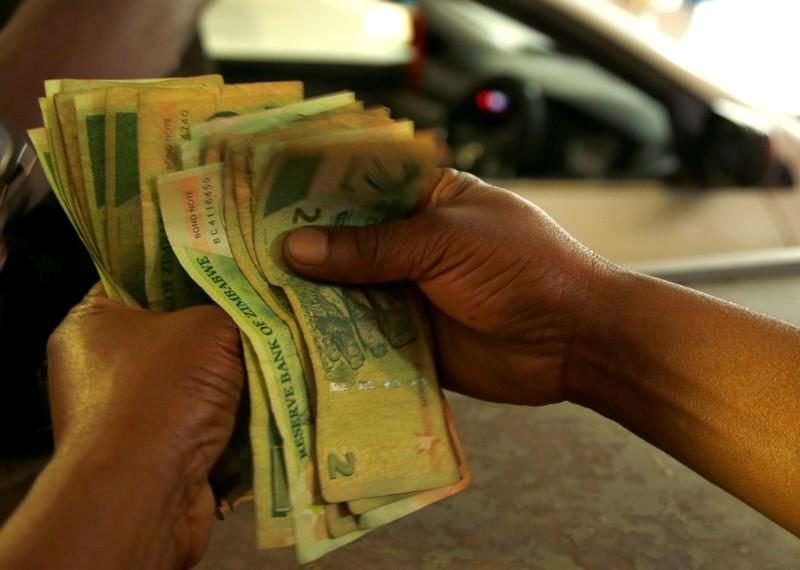
© REUTERS/Philimon BulawayoA petrol attendant counts bond notes at a filling station in Harare, Zimbabwe, January 28, 2019
Zimbabwe's government has a trust problem as it introduces a discounted currency in a bid to reverse chronic cash shortages that left people struggling to get hold of basic goods.

Businesspeople and economists welcomed last week's decision to abandon an unrealistic dollar peg for the country's surrogate bond notes and electronic dollars, which were merged into a new currency called the Real Time Gross Settlement (RTGS) dollar.

But they expressed doubts about whether the government has the fiscal and monetary discipline to stick to its commitment to lower the budget deficit and keep inflation in check.

Eye 2

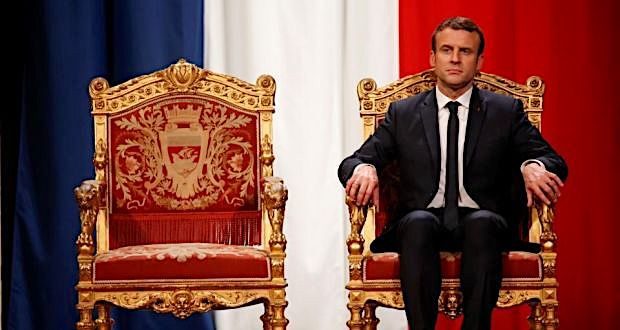
Emmanuel Macron condemns all Yellow Vest protesters as responsible for violence

macron on throne
© Charles Platiau/AFP/Getty
French President Emmanuel Macron has warned Yellow Vest protesters who take part in violent demonstrations are by default "complicit" in fuelling the unrest that has shaken France for more than three months.

The grassroots movement started online as a peaceful protest against rising fuel costs, but has tapped into broader frustration at the sense of a squeeze on household purchasing power. He said during a debate with senior officials from eastern France: "Now it has to be said that those who join violent protests are complicit in the worst [acts]! We cannot, in a reasonable way, ban the protest but there needs to be a clear message from everyone against violence.

"I believe in a democracy that fosters debate but I do not believe in a democracy that fosters disorder."

He said it was a "miracle" no police officers had been killed.

Ten people have died in connection with the protests, most in road accidents related to Yellow Vest blockades.

Comment:


Broom

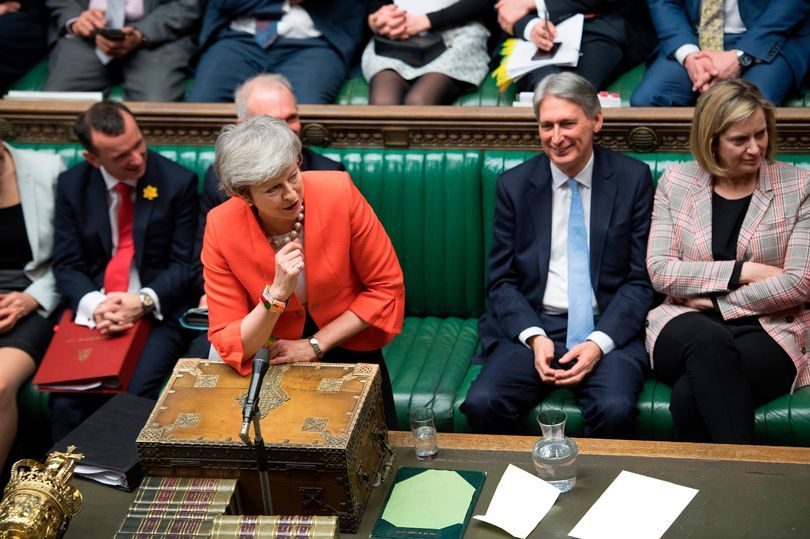
UK MPs award themselves above inflation pay rise

may parliament
© Xinhua / Barcroft Images
MPs will get an inflation-busting pay rise of more than £2,000 this April, bringing their total salary to almost £80,000.

Parliament's expenses watchdog today confirmed the salary for MPs will rise from £77,379 to £79,468 from 1 April 2019.

The 2.7% rise is the same as the average rise in public sector earnings in July 2018, the Independent Parliamentary Standards Authority (IPSA) said.

Critics said the rise had the "whiff of hypocrisy and double standards", and it comes as Parliament is paralysed over Brexit, with rowing MPs unable to thrash out an EU withdrawal plan.

Comment: Metro provides a timeline of MP salary increases, making this the sixth pay rise in six years:
MP salaries through the years

April 2010​ - ​£65,738
April 2011 - £65,738
April 2012 - £65,738
​April 2013 - ​£66,396
​April 2014 - ​£67,060
​May 2015 - ​£74,000 [It's notable that this was the year the Conservative party won the majority and came into power]
​April 2016 - ​£74,962
April 2017 - £76,011
April 2018 - £77,379
See also:


Eye 2

Democratic lawmaker asks for answers on travel costs during historic government shutdown

Pelosi
© J. Scott Applewhite/APSpeaker of the House Nancy Pelosi takes questions from reporters as she arrives at the Capitol, the morning after President Donald Trump used his executive power to deny a military aircraft to her and other members of Congress for a secret visit to troops abroad, in Washington, Jan. 18, 2019.
The top Democrat on the committee that oversees government operations wants the receipts for government travel by top administration officials during the historic shutdown earlier this year.

Homeland Security and Governmental Affairs Committee ranking member Sen. Gary Peters, D-Michigan, says he "remains concerned that a culture of wasteful spending persists" in the administration and wants to know how much taxpayer money was used to pay for trips or the cost of canceling travel during the shutdown.

"Given this Administration's record of wasteful travel spending, I am concerned about the extent of travel at taxpayer expense during the government shutdown, and whether funds were being used appropriately," he wrote in a letter to Office of Management and Budget Director Mick Mulvaney.

Peters wants information on how much the government paid in fees or lost from canceling travel during the shutdown, including the president's canceled trip to the Davos Economic Forum in Switzerland. He's also asking for justification for new trips scheduled during the shutdown, like the White House retreat to Camp David during the first week of January.

Comment: See also Nancy Pelosi is so 'concerned' about government shutdown, she's on holiday at luxury Hawaiian resort


Snakes in Suits

'Shame on you!' 'No, shame on you!' Michael Cohen's testimony becomes a partisan farce

M.Cohen
© Reuters /Jonathan ErnstMichael Cohen testifies before Congress
Donald Trump's former attorney Michael Cohen appeared before Congress on Wednesday to give testimony related to alleged "collusion" between Trump and Russia - but the hearing quickly descended into a partisan political "circus".

The hearing had barely begun before Republican congressman Mark Meadows tried to put a stop to it, announcing in a "point of order" that it should be postponed because Cohen's prepared testimony was not handed over 24 hours in advance. Lawmakers were upset that media got the testimony before them.

Republicans were also quick to point out the attendance of former advisor to Hillary Clinton and Democratic strategist Lanny Davis, who is now working for Cohen, saying that his testimony was really about getting revenge for Clinton after she lost the 2016 election to Trump.

Comment: More from RT, 2/27/2019: Michael Cohen predicts revolution if Trump loses in 2020
Trump consigliere turned federal informant Michael Cohen shared his fear that there will "never be a peaceful transition of power" if his former boss loses the 2020 election during a congressional hearing some called a 'circus.'

"You don't know him! I do!" Cohen insisted...before predicting Trump would refuse to step down even if he was defeated in 2020. "He is a racist. He is a con man. He is a cheat," declared Cohen, who pleaded guilty to charges he lied to Congress. Cohen failed to deliver anything tangible to the salivating Democrats on the committee, admitting he had no "real examples" of collusion and instead filling his time on the stand with public displays of repentance over his ten years of service to Trump.
"Everybody's job at the Trump organization is to protect Mr. Trump. Every day most of us knew we were coming in and we were going to lie for him on something. And that became the norm, and that's what's happening right now in this country," Cohen intoned. "This destruction of our civility to one another is just out of control."
"This is the same Michael Cohen who has admitted that he lied to Congress previously," Trump campaign spokesperson Kayleigh McEnany pointed out. "Why did they even bother to swear him in this time?"

Trump has accused Cohen of "lying in order to reduce his prison time" and has previously called his former lawyer - who rejoined the Democratic Party in October - a "rat" and a "weak person." Those hurt by Cohen's turncoating shouldn't have been surprised, however: the now-disbarred lawyer revealed he only joined the GOP after former Republican National Committee chair Steve Wynn learned he was a Democrat, while he was serving as vice chairman of the RNC's Finance Committee.

The congressional hearing, which coincided with Trump's Hanoi summit with North Korean leader Kim Jong-un, was originally scheduled for earlier this month but postponed because of "ongoing threats" against Cohen's family, according to his lawyer, Democrat operative Lanny Davis.

Cohen is due to report to federal prison to begin his three-year sentence on March 6. He was disbarred earlier this week.
Additional from Zero Hedge, 2/27/2019: Cohen Slapped with Criminal Referral Mid-testimony Over FARA Violation
Former Trump attorney Michael Cohen was hit with a criminal referral for violating the Foreign Agents Registration Act (FARA) by Rep. Mark Meadows (R-NC).

Meadows pressed Cohen over his apparent failure to list contracts with foreign companies that paid him for access to the Trump administration, including Novartis, which paid Cohen $1.2 million to act as a consultant on the Trump administration, as well as $150,000 from South Korea's Korea Aerospace Industries (KAI) and a payment from Kazakhstan BTA bank.


Shortly after the exchange, Meadows tweeted: "I just entered a referral for criminal investigation of Michael Cohen, who violated the Foreign Agents Registration Act by illegally lobbying on behalf of foreign entities without registering," adding "Cohen talks about "blind loyalty." His real blind loyalty? It's to the almighty dollar."
See also:


Arrow Up

Ukraine: Comedian Volodymyr Zelensky leads the polls in presidential race

Volodymyr Zelensky
© AFPUkraine presidential candidate Volodymyr Zelensky
Pacing back and forth, Volodymyr Zelensky rehearses his lines as a director instructs him on how to smile and shake someone's hand. Zelensky, 41, is running to become Ukraine's next president. But he is not shooting a campaign video.

In what he hopes will be a case of art imitating life, Zelensky stars in a popular TV series, Servant of the People, in which he plays a history teacher who is elected president after his rant about government corruption goes viral.

Zelensky has become one of the most recognized faces in Ukraine's entertainment industry in his more than two decades as a comedian, actor and producer. And while he plays a president on TV, he has no actual political experience.

But with five weeks to go until voters head to the ballot box on March 31, a recent poll suggests Zelensky is the front-runner, with more support than the incumbent, Petro Poroshenko, or another candidate, former Prime Minister Yulia Tymoshenko.

Educated as a lawyer, Zelensky is also a savvy businessman who many Ukrainians see as a self-made man, one whose wealth is the result of hard work.


Comment: More from France24: 2/8/2019: Ukrainian 'clown' Zelensky leading polls of presidential vote
The March 31 vote was supposed to be a battle between two of Ukraine's most experienced politicians: incumbent Petro Poroshenko and former prime minister Yulia Tymoshenko. But around 20 percent of Ukrainians now say they plan to vote for comedian and film actor Zelensky, putting him several points ahead of his main rivals in opinion polls last week.

The 41-year-old entertainer has tapped into popular discontent with the political class and has largely relied on the internet to get his message across. To some, his approach is reminiscent of the populist strategies that swept US President Donald Trump to power.

Supporters, however, see him as an alternative to an old guard that they say has never been able to follow through on promises to tackle corruption and improve living standards.

Poroshenko came to power in 2014 on the back of a pro-Europe, anti-graft popular uprising, while Tymoshenko was a face of the Orange Revolution that promised a new, fairer Ukraine -- in 2004.

"Zelensky is seen as a 'none of the above' candidate. Also he's fresh, he's modern, he's young, he's trendy," political analyst Vadym Karasyov told AFP. "People are tired of (old) ideas and the usual politicians."

But Karasyov said there was a difference between using the actor's candidacy to protest against the political elite, and actually wanting him to take charge of the country. Despite Zelensky's leading position in polls some experts say his bid remains a long shot because many of his supporters are young and will not bother turning out on election day.

There are also a record number of candidates in the race, adding to the vote's unpredictability.

Foreign diplomats have privately raised questions about his candidacy. "He was too general -- no concrete ideas. It was frightening if you consider that he is a presidential candidate," a Western diplomatic source told AFP following a meeting with Zelensky. "He lacks knowledge, but is very keen to learn," said reformist MP Sergiy Leshchenko, who also attended another briefing.

Like the other frontrunners, Zelensky says he wants the country to maintain a pro-Western trajectory.

Zelensky comes from the industrial city of Krivy Rig in central Ukraine. A father-of-two, he has a law degree but made his career on stage. He is artistic director of a studio theatre called Kvartal 95, reportedly part of a business conglomerate that has had business dealings in Russia.


Attention

McDonnell: Amendment for second Brexit referendum could happen early

John McDonnell
© Kirsty O’Connor/PAShadow Chancellor John McDonnell
Labour will vote for a second referendum on Brexit when Theresa May tries to get her deal through parliament in the next fortnight, John McDonnell has said.

The shadow chancellor said the Labour leadership would either support or put forward an amendment calling for a public vote when MPs are asked to back the government's withdrawal agreement, which is likely to take place on 12 March.

Speaking on ITV's Peston on Wednesday night, he said Labour was looking to push for another referendum at the earliest opportunity. He said: "When the meaningful vote comes back - and we are told maybe that might be on 12 March - there are rumours today that it could be next week ... That's the time when we will have to put the amendment up."

McDonnell stressed that Jeremy Corbyn's party would also continue to press for its own Brexit vision and was still calling for a general election. The chances of a second Brexit referendum have increased significantly since Labour said it would support calls for a public vote.

Comment: See also:


Laptop

Kremlin: Cyber hacks on Russia - 'Vast number of attacks staged from US soil'

computer hands
© Sputnik/Kirill Kalinnikov
Russia regularly faces a "vast number" of attacks staged by US hackers, the Kremlin's spokesman Dmitry Peskov said while questioning a recent report about an alleged US cyber assault on a St. Petersburg-based company.

"Various Russian entities ... and individuals are constantly subjected to a vast number of cyber-attacks staged from the US soil," Peskov told Russian journalists, answering a question about a recent report by the Wall Street Journal, which delved into one such assault reportedly staged by the US military against a Russian firm.

At the same time, the president's spokesman casted a doubt on the report itself, which stated that the US Cyber Command successfully "shut down" what Washington calls a "Russian troll factory" behind the perceived interference into the US elections. The article is based almost entirely on unnamed sources and is thus difficult to verify, the spokesman noted. "One has to treat this data with caution," he said.


Question

Has Kim made gains at Hanoi summit even though he walked away from the deal?

trump kim jong un north korea vietnam
© Evan Vucci/Associated PressPresident Trump meets North Korean leader Kim Jong Un on Wednesday as their second summit begins in Hanoi.
As Kim Jong Un and President Donald Trump took their seats across from each other at the negotiating table, the North Korean leader confidently told reporters he had a gut feeling the two would conclude their second summit with some sort of an agreement.

His gut proved wrong. A few hours later, he was speeding back to his Hanoi hotel, with no deal at all.

Gauging Kim's calculus in a negotiation is never easy, but the ending to his two days in Hanoi with Trump seemed like a major disaster. Kim came to Hanoi seeking sanctions relief, which Trump said he simply could not give. Before Thursday's sudden rupture, Kim even seemed to be on the verge of something that had eluded his father and grandfather - a declaration by the U.S. president of the end of the Korean War.

That, too, was not to be. But Kim won't be going home empty-handed.

Comment: Interesting developments. We can only wait to see how matters fall out. Was it a ploy by Kim to weaken Trump in the midst of his domestic woes to gain more concessions, should there be another meeting?

ABC speculated on February 27:
"Yongbyon is the heart of North Korea's nuclear program," Hecker said, explaining that completely dismantling the reactor there would be critical and would mean North Korea would never be able to make plutonium there again.

The White House did not respond to a request for comment.

The Trump administration is hoping to get a significant concession from North Korea on Yongbyon, but it's unclear if the U.S. can offer something in exchange that Kim would accept. North Korea wants sanctions relief, and U.S. officials have advised the president against taking such a step at this stage in negotiations. North Korea has offered to freeze activity at Yongbyon in past rounds of negotiations with previous U.S. administrations.

Current and former U.S. officials note that North Korea has other sites with similar capabilities, however, and they are raising concerns that Pyongyang won't negotiate on all aspects of its weapons programs if it's not forced to disclose them.

In recent months researchers have discovered that North Korea has as many as 20 undisclosed ballistic missile sites, according to Beyond Parallel, a project sponsored by the Center for Strategic and International Studies, a defense think tank. One of the sites is the Sino-ri Missile Base about 130 miles north of the demilitarized zone between North Korea and South Korea, where about 28,000 U.S. troops are stationed.

North Korea hasn't launched a missile test since engaging diplomatically with the U.S. last year, but it has continued to otherwise refine and advance its nuclear weapons program in the months since Trump first met with Kim last June in Singapore, U.S. officials have said.

Secretary of State Mike Pompeo, who had been leading negotiations until he named a special envoy to focus on the effort, has grown increasingly concerned about the prospects of reaching a deal with North Korea that gets rid of its nuclear threat, current and former senior U.S. officials said.
ZeroHedge updates:
Update 3: In what might be the first hint about how the Hanoi summit's failure could impact trade talks, the editor of an English-language Communist Party mouthpiece insinuated in a tweet that Beijing is unhappy with the US's negotiating tactics, and that Trump should have "serious talks" about lifting sanctions in exchange for partial denuclearization.


In other words, if Beijing believes the US should meet Pyongyang half way, what are the chances that President Xi will have an abrupt change of heart about the US's negotiating position in the trade talks?

* * *

Update 2: During a midnight news conference that was ostensibly intended as a debriefing (but, given the timing, clearly motivated by the North's desire to undermine President Trump), North Korean Foreign Minister Ri Yong Ho contradicted Trump's narrative about what prompted him to abruptly walk away from the talks in Vietnam.

According to Ri, the North offered a "realistic proposal": In exchange for partial sanctions relief (Trump claimed that Kim had demanded "all sanctions lifted in their entirety" presumably including both US and UN sanctions). Namely, that Kim had proposed the dismantling of its plutonium and uranium processing facilities at Yongbyon in the presence of US experts, in exchange for partial relief.

Ri insisted that the North's position would "never change," though he noted that the US had proposed another round of talks in the future.


In another blow to Trump, Vice Foreign Minister Choe Son Hui said he suspected that Kim may have "lost the will" to continue negotiating with the US.
  • *I HAVE A FEELING KIM MAY HAVE 'LOST THE WILL': N. KOREA'S CHOE
  • *NORTH KOREA SAYS U.S. 'MISSED AN OPPORTUNITY' IN HANOI TALKS
  • *N.KOREA SAYS ITS DENUCLEARIZATION/SANCTIONS STANCE WON'T CHANGE
  • *N. KOREA SAYS U.S. INSISTED ON STEPS BEYOND N. KOREA'S PROPOSAL
  • *N.KOREA OFFERED PARTIAL DENUKE STEPS FOR SOME SANCTIONS RELIEF
We imagine Trump won't allow this embarrassing contradiction from a leader with whom he said he "fell in love" after their first round of talks (largely due to Kim's "beautiful letters") to go unchallenged.


* * *

Update: As analysts try to parse what the summit chaos in Vietnam means for US-China trade talks, Beijing has chimed in to offer some clues of its own.

In a statement that mirrored what President Xi said about a US-China deal, Beijing said the US and North Korea must "meet each other half way" on a nuclear deal.

Meanwhile, some have proposed that the collapse of the summit could strengthen Beijing's hand in the trade talks, as Trump might feel pressured to go easy on China to try and win a deal with North Korea.


* * *

Even arm chair observers probably understood long before the Hanoi summit had even been scheduled that the gulf between the American and North Korean positions on denuclearization was probably too wide to overcome (after nearly a year of talks, the two sides are no closer to a deal). Yet, President Trump had apparently hoped that the pomp and circumstance of another historic summit would soften Kim Jong Un up. But despite all the talk about North Korea being "ready to denuclearize" and both leaders hyping up the possibility that a deal would be struck, alas, no deal was forthcoming, and Trump is now headed back to Washington empty handed.

Talks between the two world leaders broke down Thursday afternoon as President Trump abruptly walked away from the table and canceled a planned lunch and signing ceremony (it's still not clear what the two leaders had hoped to sign, though scheduling the ceremony before a deal had been struck did seem risky). With the talks in disarray, Trump moved up a news conference where he and Secretary of State Mike Pompeo took questions from the press.

Trump told reporters that he had asked Kim to commit to full denuclearization before the US agreed to sanctions relief, and that "he was unprepared to do that."


Trump told reporters that the talks collapsed after the North refused to yield from its demand that the US completely remove all of the U.S.-led international sanctions - including the sanctions approved by the UN security council - in exchange for the shuttering of the North's Yongbyon nuclear facility. Trump and Pompeo refused to make a deal without the North committing to giving up its secretive nuclear facilities outside Yongbyon, as well as its missile and warheads.

According to Trump, the talks ended amicably enough, with a commitment to keep the talks alive, and Kim also promised that he would not resume nuclear and missile tests - the basis for the detente between the two countries - and Trump said he would take Kim at his word.


Trump added that he'd "much rather do it right than do it fast."
"It was about the sanctions," Trump said. "Basically, they wanted the sanctions lifted in their entirety, and we couldn't do that. They were willing to denuke a large portion of the areas that we wanted, but we couldn't give up all of the sanctions for that."

"I'd much rather do it right than do it fast," Trump added, echoing his remarks from earlier in the day, when he insisted that "speed" was not important. "We're in position to do something very special."
Full press conference: