Science & TechnologyS


Gear

Spanish patient receives the first 3D-printed rib cage

Image
© csironewsblog.wordpress.com
In the world's first operation of such kind, a cancer suffering patient was successfully implanted with a 3D printed titanium sternum and rib implant.

The implant was done for a Spanish patient, 54, diagnosed with a chest wall sarcoma (a form of cancer in which a tumor grows inside or around the rib cage). He needed a part of his rib cage including a sternum to be removed.

There was a risk that a traditionally manufactured implant could potentially come loose over time, increasing the risk of complications and re-operations, so the man's surgeons decided to turn to 3D printing.

The technology allows for the creation of an implant that accurately replicates the size and form of the patient' rib cage.

In order to bring their idea to life, the surgeons contacted Australian medical device company Anatomics. The Spanish team also made a high-resolution computer tomography scan to plan the surgery in details as to allow Anatomics to create an accurate implant that would match the removed part.

The details of the joint Spanish-Australian project initiated by Spanish surgeons were disclosed in a press-release by the office of the Australian science and industry minister, Ian Macfarlane, on Friday.


Sun

Pakistan: Building the world's largest solar farm

solar farm
© www.arynews.tvPakistan putting the sun to work.
China is helping Pakistan build the largest solar farm in the world. The Chinese company Xinjiang SunOasis took only three months to install a 100-Megawatt (MW), 400,000-panel pilot power project—marking the first solar power plant in Pakistan. The plant started selling electricity to the grid last month, according to China Dialogue. When complete in 2017, the solar farm could have 5.2 million photovoltaic cells, producing as much as 1,000 MW of electricity.

The Quaid-e-Azam Solar Power Park is a $130 million project on nearly 500 acres of land in the Cholistan desert in Punjab. And it's just the first part of a larger project, the $46 billion China-Pakistan Economic Corridor. When the entire project is complete in 2017, the site could have 5.2 million photovoltaic cells, "producing as much as 1,000 MW of electricity—equivalent to an average sized coal-fired power station—and enough to power about 320,000 households," says China Dialogue.

Comment: See also China's growing stake in Pakistan


Arrow Up

Glimmer of hope for honeybee population as U.S. court cancels approval for sulfoxaflor insecticide

honeybee
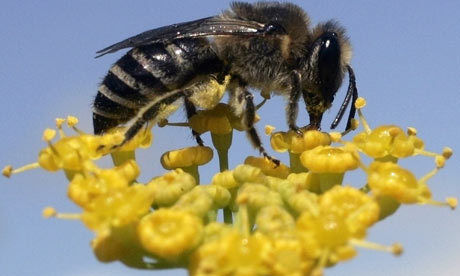
A bee collects nectar from a flower in a garden in Pontevedra. Photograph: Miguel Vidal/Reuters
A U.S. appeals court ruled on Thursday that federal regulators erred in allowing an insecticide developed by Dow AgroSciences onto the market, canceling its approval and giving environmentalists a major victory.

The ruling by the U.S. Court of Appeals for the Ninth Circuit, in San Francisco, is significant for commercial beekeepers and others who say a dramatic decline in bee colonies needed to pollinate key food crops is tied to widespread use of a class of insecticides known as neonicotinoids. Critics say the Environmental Protection Agency is failing to evaluate the risks thoroughly.

The lawsuit was filed in 2013 against the EPA by a number of organizations representing the honey and honey beekeeping industry. The groups specifically challenged EPA approval of insecticides containing sulfoxaflor, saying studies have shown they are highly toxic to honey bees.

Comment:
A large and growing body of science has attributed alarming bee declines in recent years to several key factors, including exposure to the world's most widely used class of insecticides, neonicotinoids. In 2013, the European Union banned the three most widely used neonicotinoids based on the weight of scientific evidence indicating that these pesticides can kill bees outright and make them more vulnerable to pests, pathogens and other stressors. However, these pesticides are still widely used in the U.S. despite massive bee losses that threaten vital food crops, from almonds in California to apples in Washington.

Beekeepers report losing 42.1 percent of the total number of colonies managed over the last year


Ice Cube

Gargantuan glacier the size of California and Texas found on the Red Planet

Image
© American Geophysical Union
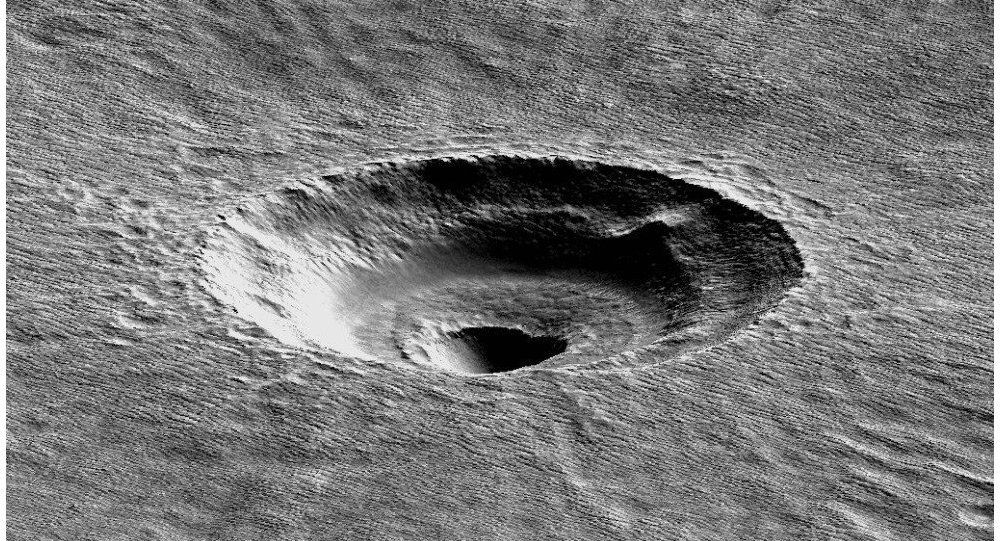
Just below the surface of Mars, a gargantuan glacier of ice the size of the country of Sumatra exists between the equator and the Red Planet's north pole, and astrogeophysicists say it's the likely result of snowfall some tens of millions of years ago.

Water's presence on Mars has fluctuated over the life of the planet, due to the planet's eccentric degree of the axial rotation, otherwise known as its unstable obliquity. The two Martian moons, Phobos and Deimos, are not large enough to keep the axis point steady, and the resultant chaotic wobbling has caused many ice ages on Mars. At present, Mars is a dry, cold and dusty rock. But evidence points towards an intricate system of seas, rivers and lakes existing there in a far distant past. If ice exists on Mars, scientists can postulate that life may have existed in warmer times, pointing to the prevalence of life just about anywhere on Earth with water. Life may even subsist in some form today deep beneath the Martian surface, some scientists believe.

While Mars has visible, gleaming icecaps on its poles, scientists are starting to note a pattern of subterranean ice forming under the surface between those polar icecaps. As a result, details are emerging about the history of Martian climates that can help scientists determine what regions of the Martian landscape could have possibly been inhabited.

Moon

China aims to land probe on the 'dark side' of the moon

moon
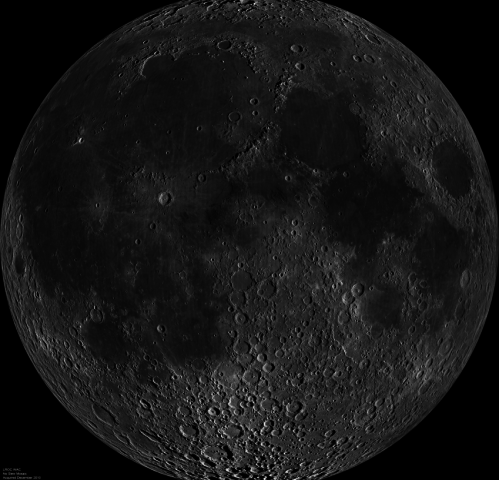
© NASAThis is a composite image of the lunar nearside taken by the Lunar Reconnaissance Orbiter in June 2009, note the presence of dark areas of maria on this side of the moon.
China's increasingly ambitious space program plans to attempt the first-ever landing of a lunar probe on the moon's far side, a leading engineer said.

The Chang'e 4 mission is planned for sometime before 2020, Zou Yongliao from the Chinese Academy of Sciences' moon exploration department told state broadcaster CCTV in an interview broadcast on Wednesday.

Zou said the mission's objective would be to study geological conditions on the moon's far side, also known as the dark side.

That could eventually lead to the placement of a radio telescope for use by astronomers, something that would help "fill a void" in man's knowledge of the universe, Zou said.

Radio transmissions from Earth are unable to reach the moon's far side, making it an excellent location for sensitive instruments.

Satellite

Ceres' mysterious bright spots shine in stunning detail in new NASA photos

Ceres
© NASA/JPL-Caltech/UCLA/MPS/DLR/IDA
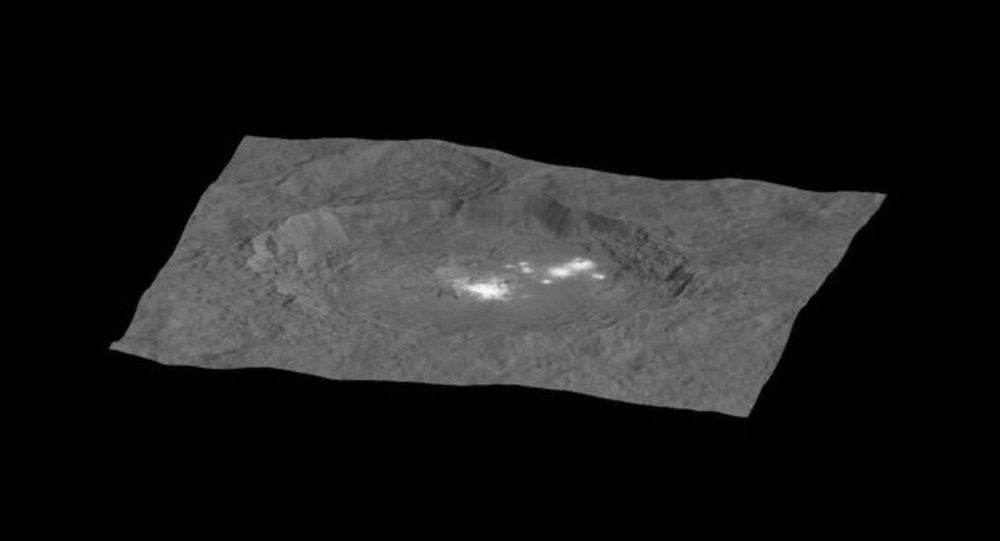
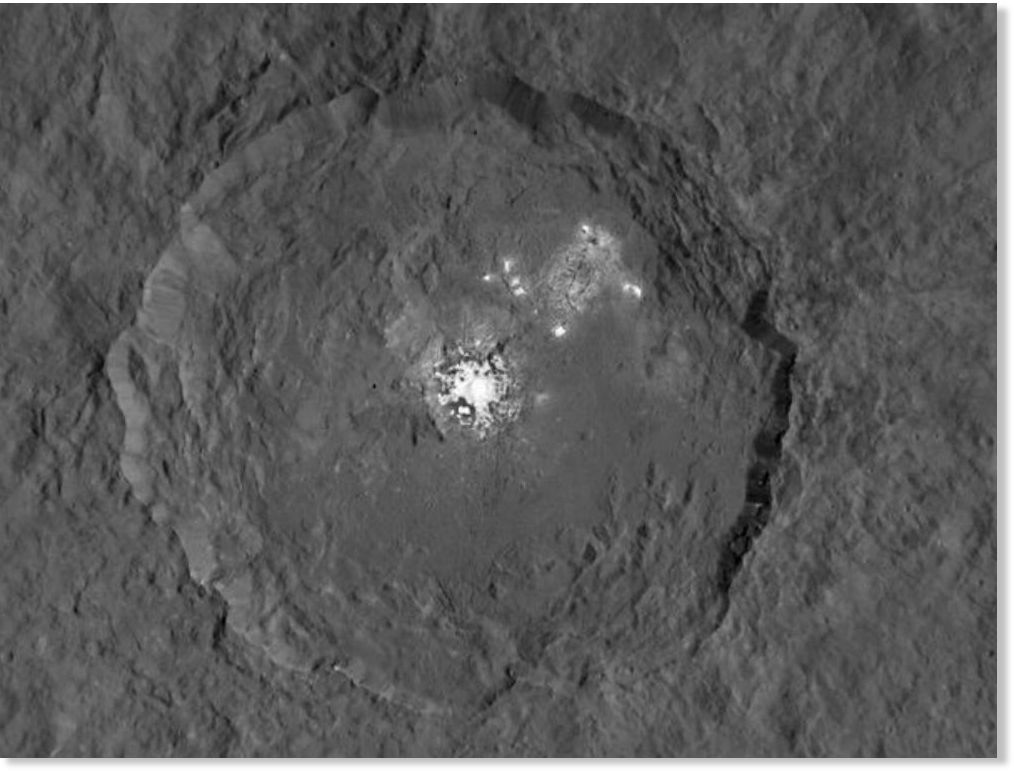
New photos of the Occator crater phenomenon on the dwarf planet Ceres in our solar system's asteroid belt sent back from NASA's Dawn orbiter show in striking detail the mysterious lights that have baffled the astronomy community worldwide.
Image
© NASA/JPL-Caltech/UCLA/MPS/DLR/IDA/PSI Occator Crater on dwarf planet Ceres, seen from orbit of 915 miles.

Better Earth

True size map shows a more accurate vision of the earth's spatial layout

world map
Did you know that California is more than four times the size of Portugal? Or that you could fit China, the U.S. and India into the continent of Africa, with room to spare?

Prepare yourself for a whole new kind of geography lesson.

The True Size Map shows countries as many travelers would say they are meant to be seen: in their "true," relative sizes. The inventors of the handy online tool point out that most maps are based on the Mercator projection, a schema that distorts the scale of many countries because it enlarges nations as they get farther from the Equator. While helpful in some cases, this doesn't give travelers a totally accurate vision of the Earth's spatial layout. True Size's answer to map-making, however, will seriously put your trip into perspective.

Info

Carbon dating found to be highly unreliable for organic matter over 30,000 years old

Kongsfjorden fjord
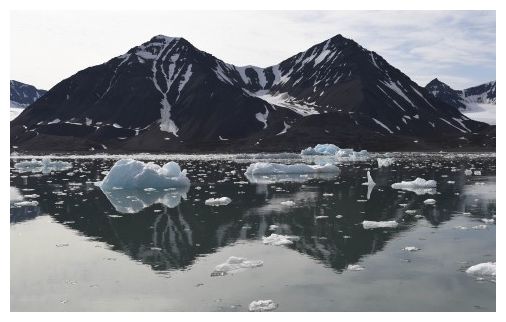
© Agence France-PresseThe Kongsfjorden fjord in Norway. Scientists have for over half a century.relied on carbon dating to gauge the age of organic matter and help determine when some events happened.
Radiocarbon dating, which is used to calculate the age of certain organic materials, has been found to be unreliable, and sometimes wildly so - a discovery that could upset previous studies on climate change, scientists from China and Germany said in a new paper.

Their recent analysis of sediment from the largest freshwater lake in northeast China showed that its carbon clock stopped ticking as early as 30,000 years ago, or nearly half as long as was hitherto thought.

As scientists who study earth's (relatively) modern history rely on this measurement tool to place their findings in the correct time period, the discovery that it is unreliable could put some in a quandary.

For instance, remnants of organic matter formerly held up as solid evidence of the most recent, large-scale global warming event some 40,000 years ago may actually date back far earlier to a previous ice age.

"The radiocarbon dating technique may significantly underestimate the age of sediment for samples older than 30,000 years," said the authors of the report from the Chinese Academy of Sciences and Germany's Leibniz Institute for Applied Geophysics.

"Thus it is necessary to pay [special] attention when using such old carbon data for palaeoclimatic or archaeological interpretations," they added.

Their work was detailed in a paper in the latest issue of the journal Earth and Planetary Science Letters.

For over 50 years, scientists and researchers have relied on carbon dating to find the exact age of organic matter.

Prior to that, they had to depend on more rudimentary and imprecise methods, such as counting the number of rings on a cross-section of tree trunk.

Heart

Australian study: Hypertension may be auto-immune condition

hypertension high blood pressure
Hypertension could be an autoimmune disease, a breakthrough study finds, with scientists saying the discovery leads to new ways to treat the condition.

The condition of elevated blood pressure affects about 4 million adult Australians, and for some it can prove difficult to control with conventional medication.

"It's estimated that because hypertension is so common and because it's the major cause of heart attacks, strokes and the major cause of kidney failure, it's estimated that hypertension is actually the single most important biomedical risk factor as a cause of death and disability worldwide," Associate Professor Grant Drummond from Monash University said.

While lifestyle factors such as obesity, high stress and poor diet are associated factors with the disease, the exact cause is not yet known.

But Associate Professor Drummond and fellow researchers from Monash University now believe it could be an autoimmune disease.

The scientists found that stimulating the immune system in mice could cause hypertension, while dampening down this immune response could restore their blood pressure back to normal levels.

Associate Professor Drummond said the discovery could potentially open up a whole new way of treating the condition.

"We've found in our laboratory models that stimuli that cause hypertension actually cause an increase in the activation of B cells and an excessive production of antibodies," he said.

"And what we've further found is that these antibodies seem to get lodged within the walls of arteries and that promotes an inflammatory response in those arteries, which ultimately leads to the arteries becoming scarred and stiffened.

"And of course stiff arteries are one of the hallmarks and causes of hypertension."

Comment: Inflammation is implicated in many auto-immune diseases. Research should be looking further upstream for the cause. Diet would be a good place for mainstream medicine to start:


Arrow Down

Scientists to reanimate 30,000-year-old 'giant virus' found in Siberia

Virus
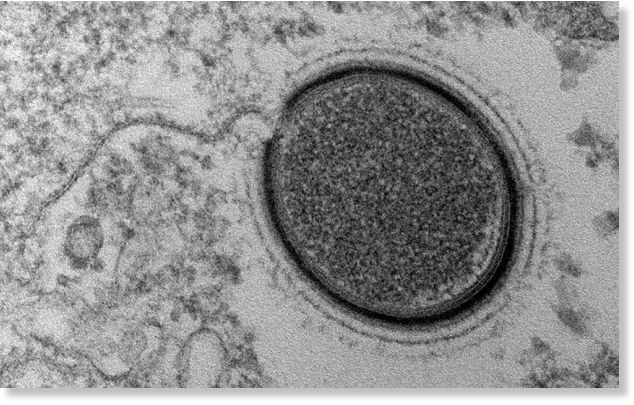
© Getty ImagesCells of the Mollivirus sibericum. The virus has been buried deep in the Siberian permafrost for over 30,000 years, is thought to be the newest representative of what are loosely known as "giant viruses".
Scientists said they will reanimate a 30,000-year-old giant virus unearthed in the frozen wastelands of Siberia, and warned climate change may awaken dangerous microscopic pathogens.

Reporting this week in the flagship journal of the US National Academy of Sciences, French researchers announced the discovery of Mollivirus sibericum, the fourth type of prehistoric virus found since 2003 - and the second by this team.

Before waking it up, researchers will have to verify that the bug cannot cause animal or human disease.

To qualify as a "giant", a virus has to be longer than half a micron, a thousandth of a millimetre (0.00002 of an inch).

Mollivirus sibericum - "soft virus from Siberia" - comes in at 0.6 microns, and was found in the permafrost of northeastern Russia.

Climate change is warming the Arctic and sub-Arctic regions at more than twice the global average, which means that permafrost is not so permanent any more.

"A few viral particles that are still infectious may be enough, in the presence of a vulnerable host, to revive potentially pathogenic viruses," one of the lead researchers, Jean-Michel Claverie, told AFP.