

© Maxwell Palau/StarDude AstronomyAstrophotographer Maxwell Palau captured this view of a total lunar eclipse from San Diego, California, on Oct. 8, 2014.
This month's highly anticipated "supermoon eclipse" may be a magical treat for skywatchers, but there's nothing supernatural about the event.
On Sept. 27, skywatchers throughout North and South America, Europe, Africa, western Asia and the eastern Pacific Ocean region will witness a total eclipse that happens to occur when the moon looks abnormally large and bright in Earth's sky. It will be the first supermoon eclipse since 1982, and the last until 2033.
This rare celestial phenomenon has its roots in the moon's elliptical orbit around Earth.

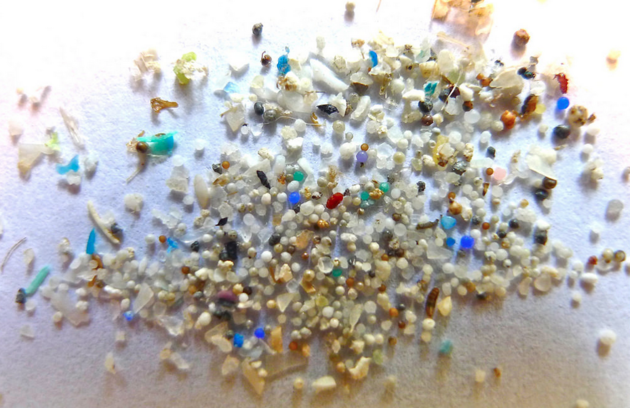












Comment: Microbeads are highly potent concentrators of toxins. Tiny marine creatures often mistake these particles for food, and when these creatures are eaten by other fish the chemicals then bio-magnify up the food chain. Top predators such as tuna and swordfish, which are consumed by humans, thus have high concentrations of these toxic microbeads.