Science & TechnologyS


Sun

Sunspots vanish, space weather continues

blank sun
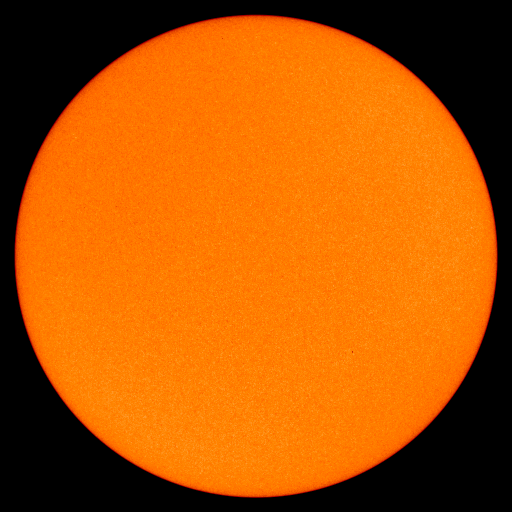
© SOHOThe sun has looked remarkably blank lately; a sign that Solar Minimum is coming.

Sunspots Vanish


So far in 2017, the big story in space weather is sunspots--or rather, the lack thereof. The sun has been blank more than 90% of the time. Only one very tiny spot observed for a few hours on Jan. 3rd interrupted a string of spotless days from New Years through Jan.11th. Devoid of dark cores, yesterday's sun is typical of the year so far.
Sunspots vanish 2017 January
© SDO/HMIThe Sun as of January 11th 2017
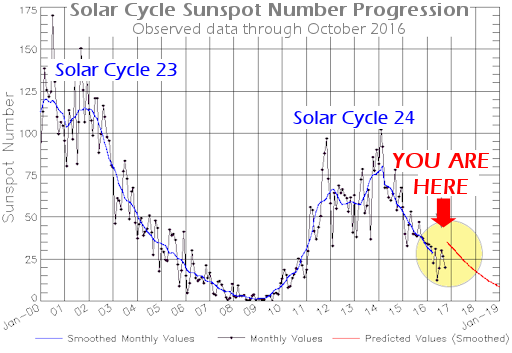
The last time the sun produced a similar string of spotless days was May of 2010, almost 7 years ago. That was near the end of the previous deep Solar Minimum. The current stretch is a sign that Solar Minimum is coming again. Sunspot numbers rise and fall with an ~11-year period, slowly oscillating between Solar Max and Solar Min. In 2017, the pendulum is swinging toward the bottom.


Solar Cycle Sunspot Number Progression Observed data through October 2016
The weakest solar cycle in a century.

Comment: Also see:


Hearts

And the beat goes on: Researchers use skin cells to make heart cells

heart from skin cells
© circulation research
A team of scientists from Massachusetts General Hospital and Harvard Medical School have used adult skin cells to regenerate functional human heart tissue.

The study, published in the journal Circulation Research, detailed that the team took adult skin cells, using a technique called messenger RNA to turn them into pluripotent stem cells, before inducing them to become two different types of cardiac cells.

Then for two weeks they infused the hearts with a nutrient solution, allowing them to develop under the same circumstances a heart would grow inside a human body.

After the two week period, the hearts contained well-structured tissue, which appeared similar to that contained in developing human hearts.

Comment: See also:


Info

This three-mile-high skyscraper design is coated in self-cleaning material that eats smog

A rendering for Arconic's three-mile-high skyscraper coated in EcoClean
© ArconicA rendering for Arconic's three-mile-high skyscraper coated in EcoClean.
2017 only just arrived, but one manufacturing company is already looking 45 years into the future.

Arconic, a materials science company, has envisioned a three-mile-high skyscraper built from materials that are either in-development or have already been brought to market, including smog-eating surfaces and retractable balconies.

The tower was concocted as part of the company's larger campaign known as "The Jetsons," an homage to the 1962 cartoon set in 2062. Arconic's engineers worked alongside futurists to imagine the technologies that will be most useful several decades from now.

Saturn

Saturn's spooky 'Death Star' moon captured in closest-ever NASA image

Saturn’s moon Mimas
© NASA / JPL-Caltech / Space Science Institute
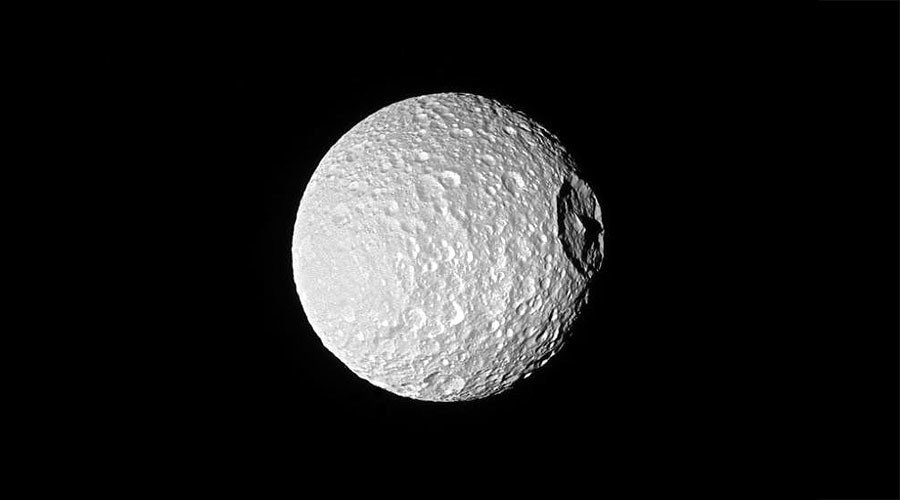
On its closest-ever flyby of Saturn's moon Mimas, NASA's Cassini spacecraft has captured what may be the most detailed image to date of the celestial body.

In a picture released on NASA's website, it's not hard to see how Mimas got its nickname - the enormous Herschel Crater dominates both its surface and the image, making the icy moon look like the Death Star, a fictional mobile space station / galactic super-weapon created by the Star Wars movie franchise.

The image was originally taken on October 22, 2016 at a distance of 185,000 kilometers (115,000 miles), yet NASA only released it this week.

Satellite

Hubble Spies Exocomets Diving into Young Star

exocomets diving into star
© NASA, ESA, and A. Feild and G. Bacon (STScI)Exocomets plunging toward a young star in the Beta Pictoris Moving Group located 95 light-years from Earth. A Jupiter-size planet is shown in the star's protoplanetary disk of dust and gas.
NASA's Hubble Space Telescope has detected several comets diving toward a young star about 95 light-years from Earth.

The star, known as HD 172555, is approximately 23 million years old and represents the third extrasolar system where astronomers have detected such comets, according to a statement from NASA. They are known as "exocomets" because they're outside Earth's solar system.

The presence of comets falling toward HD 172555 was determined based on observations of nearby gases, which astronomers say are the vaporized remnants of disintegrated comets after they have ricocheted off unseen Jupiter-size planets. The massive planet's gravity catapults the comets into the star in a process known as "gravitational stirring." Similar processes can be seen in our own solar system when sungrazing comets plunge into the sun.


Comment: Such cometary bombardment is not only the feature of an early star system, but can become a cyclical event. Check our 'Fire in the Sky' section for regular reports, and for the historical implications, check out Laura Kinght-Jaczyk's book Comets and the Horns of Moses and Comets and Catastrophes series.


Eye 1

Stem Cells Could Restore Vision After Eye Disease

Eye Human Close Up
© air009/Shutterstock.com
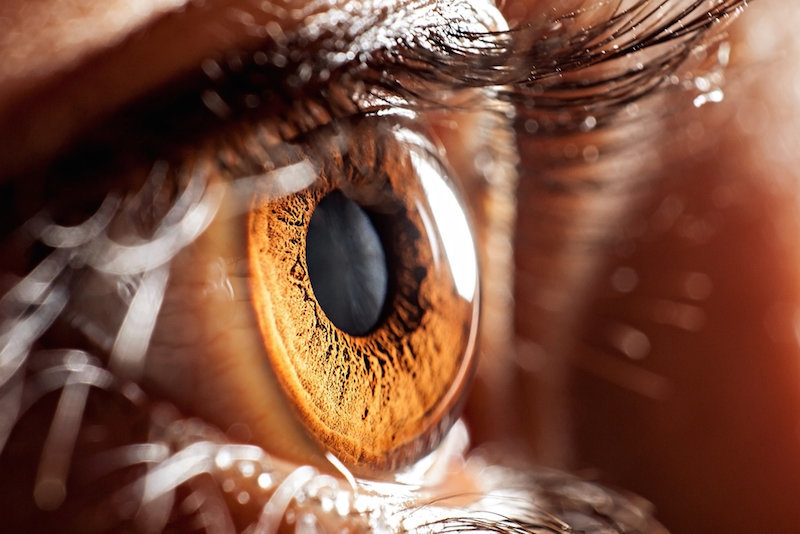
A new technique using stem cells can restore vision in mice that have end-stage eye disease, a condition that is thought to bring irreversible vision loss.

Researchers used stem cells to grow new retina tissue in a lab, and then transplanted that tissue into mice that had end-stage retinal degeneration. More than 40 percent of the mice gained the ability to see light as the result of the procedure, the researchers said.

This is the first time researchers have successfully transplanted the cells that sense light, the retina's light receptors, so that these cells connect to the host's nervous system and send signals to the host's brain, the researchers said.

"We were at first very excited to see that the transplants do robustly respond to light," Dr. Michiko Mandai, the first author of the paper and a deputy project leader at the RIKEN Center for Developmental Biology in Japan, told Live Science.

Comment: Related articles:


Attention

Baby Farms of the Future? Docs Warn of Ethical Issues from New Tech

sperm and egg
© ISTOCKPHOTO
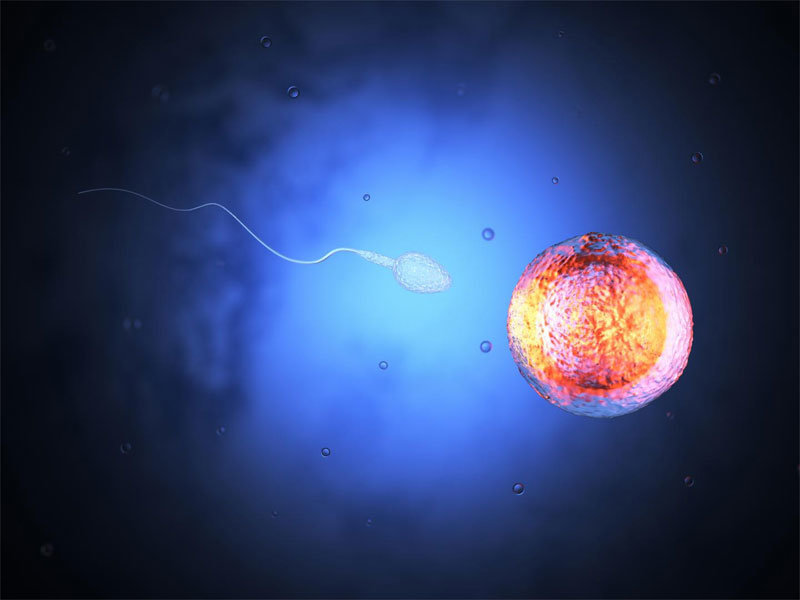
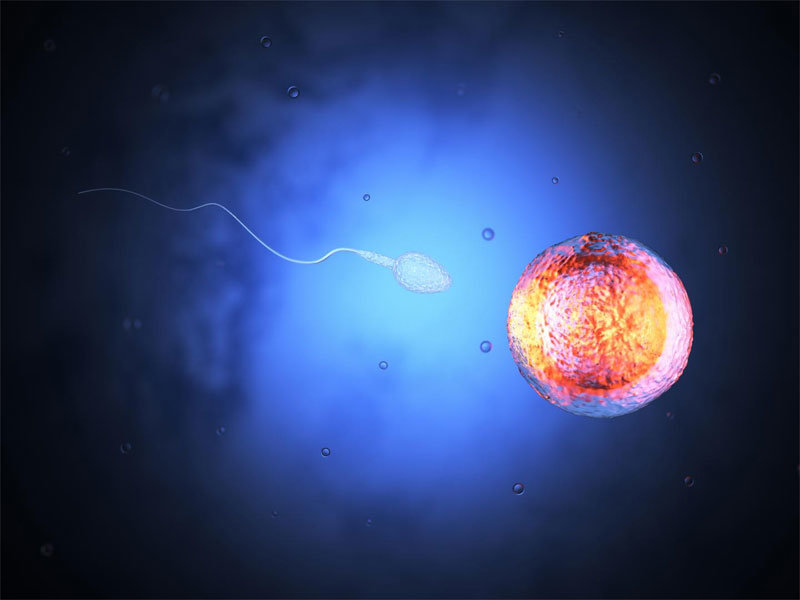
In the not-too-distant future, scientists may be able to create human sperm and egg cells in a lab dish. That possibility brings hope for treating infertility, but also poses significant ethical dilemmas — from "embryo farming" to designer babies, some researchers argue.

In a new paper, researchers at Harvard and Brown universities discuss the theoretical implications of creating sperm and egg cells in a lab dish, referred to as "in vitro gametogenesis," or IVG. It's currently feasible to perform IVG in mice, as has been shown in several remarkable experiments that were published in recent years, said the paper's authors, Dr. Eli Adashi, a professor of medical science at Brown University in Providence, Rhode Island; I. Glenn Cohen, a professor at Harvard Law School in Boston; and Dr. George Daley, dean of Harvard Medical School also in Boston.

IVG is not yet possible in humans — just from a scientific standpoint, many technical barriers remain before human gametes could be made from other human cells, the authors said. Even so, the technology could arrive sooner than we think, and so it may be wise to ponder some of the regulatory and ethical questions raised by IVG now, they said.

Comment: Related articles:


Bulb

Ancient Toy Inspires Low-Cost Medical Diagnostic Tool

Paper centrifuge
© Manu Prakash et. al., 2017
Modern medicine often feels like magic: A technician pricks your skin, draws a drop of blood and whisks it away into another room. Oftentimes, this gives the doctor enough information to make a diagnosis and prescribe a treatment. But for people in developing countries, these kinds of diagnostics can be more science fiction than reality.

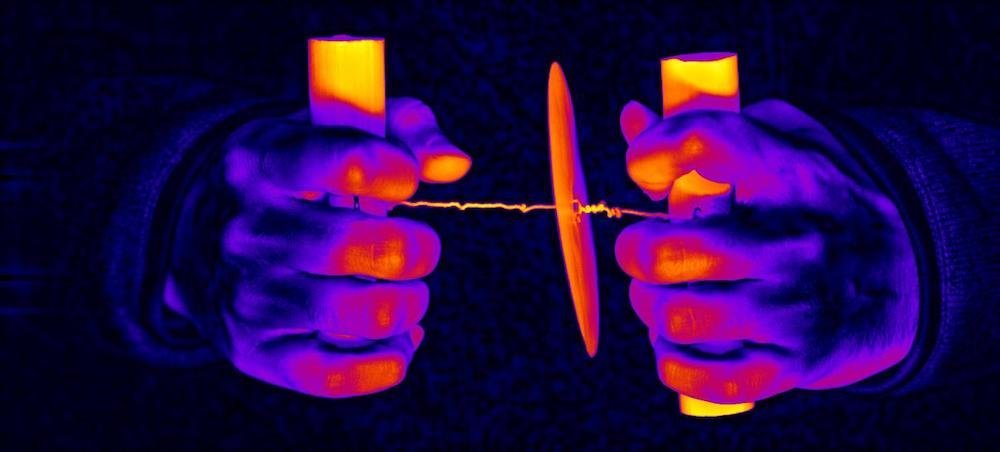
Modern medicine relies heavily on technology, like centrifuges, that are costly, bulky and require electricity. In many places around the world, this kind of equipment can be hard to come by. But in a new study published online today (Jan. 10) in the journal Nature Biomedical Engineering, researchers described an inexpensive, hand-powered centrifuge that's based on an ancient toy and could help doctors working in developing countries.

The centrifuge is the workhorse of modern medical laboratories. The device spins samples at high speeds to separate particles or cells based on size and density, effectively concentrating specific components. Most diagnostics "are like looking for a needle in a haystack," said Manu Prakash, lead researcher on the new study and an assistant professor of bioengineering at Stanford University. A centrifuge, Prakash said, puts all the needles in one place, making them easier to find.

Comment: Related articles:


Info

Researchers found interesting link from our ancestors why most are right handed

Right Handedness
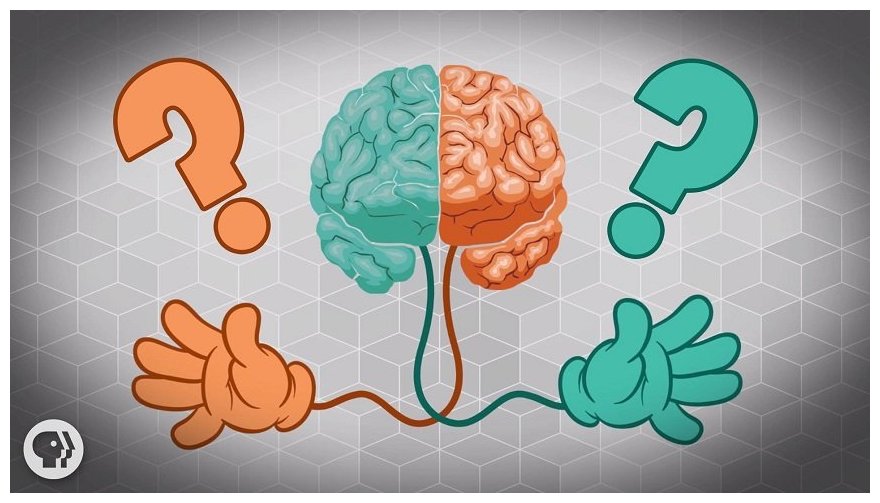
© It's Okay To Be Smart/YoutubeWe've got two perfectly good hands attached to two perfectly good arms, so why do most people prefer to use one over the other for common tasks?
It is thought that handedness have an important role in human growth, with an early study on the earliest indication of right-handedness in the fossil record coming off light on when and why this trait ascended. Fascinatingly, the clues were originating not in our ancient hands, but in our prehistoric teeth.

It is less well known that brain lateralisation, or the dominance of some cognitive processes in one side of the brain, is a distinctive feature of humans, and one associated with improved cognitive ability. Could handedness have played a role in brain lateralisation? Ancient stone tools made and used by our earliest ancestors reveal some clues.

Use of tools

The most primitive stone tools date to 3.3 million years ago, and were found in recent day Kenya, Africa. Early stone tool creation would have required a high level of skill. We know from experimentations have replicated tool-making procedures that the brain's left hemisphere, which is in charge for planning and performance, is active during this process.

While this bond is not straightforward in most cases, handedness and brain lateralization go hand in hand. So, why use teeth to explore handedness? The answer lies in the deficiency of matching left and right arm bones in the fossil data, particularly those belongs to our earliest ancestors. Teeth, on the other hand, tend to survive well in the fossil collections and can preserve scrapes, or "striations", that establish handedness.

Comet 2

New Comet: C/2017 A3 (Elenin)

MPEC nr. 2017-A75, issued on 2017, January 11, announces the discovery of a comet (magnitude ~18.2) by L. Elenin on CCD images obtained with 0.4-m f/2.4 reflector + CCD at the ISON-SSO Observatory, Siding Spring on Jan. 5.4 UT. The new comet has been designated C/2017 A3 (Elenin).

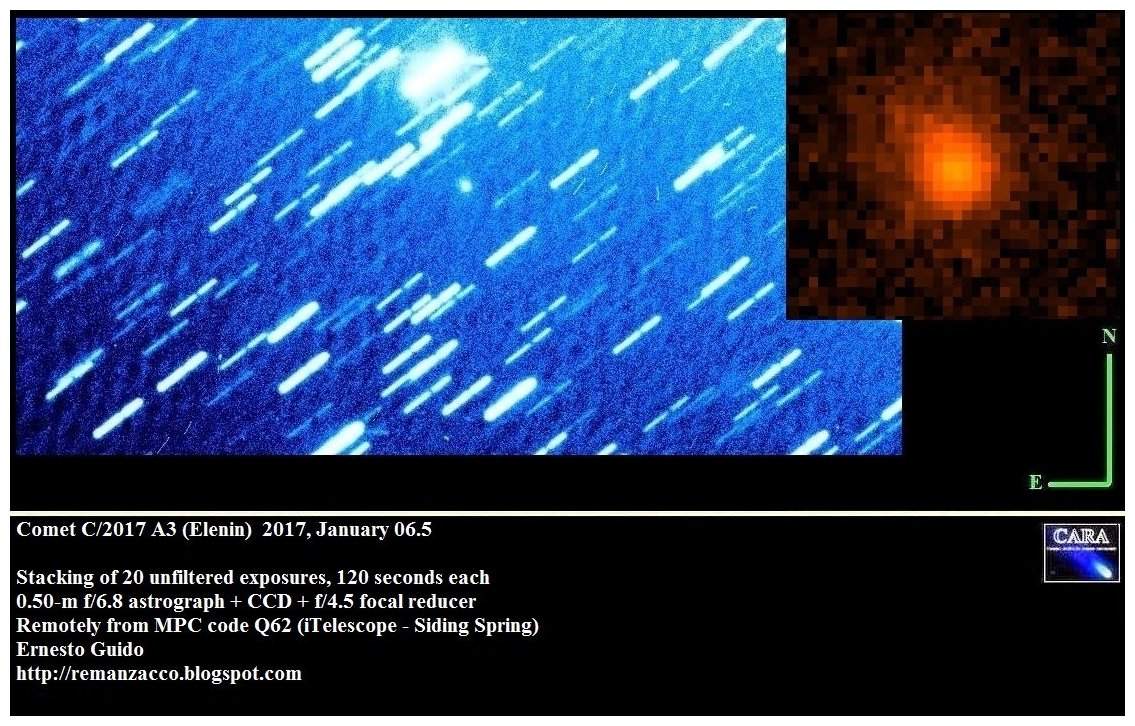
I performed follow-up measurements of this object, while it was still on the neocp. Stacking of 20 unfiltered exposures, 120 seconds each, obtained remotely on 2017, Jan 06.5 from Q62 (iTelescope network) through a 0.50-m f/6.8 astrograph + CCD + f/4.5 focal reducer, shows that this object is a comet with a compact coma nearly 10 arcsec in diameter elongated toward PA 40.

My confirmation image (click on it for a bigger version)
Comet C/2017 Elenin
© Remanzacco Blogspot
M.P.E.C. 2017-A75 assigns the following preliminary parabolic orbital elements to comet C/2017 A3: T 2017 Jan. 20.6; e= 1.0; Peri. = 301.87; q = 3.91; Incl.= 99.12