Science & TechnologyS


Telescope

Hayabusa asteroid probe may never return to Earth

Even though Japan's problem-plagued Hayabusa spacecraft is now on its return trip to Earth, it might never complete the journey. A catastrophic failure of its last remaining reaction wheel, which helps point the craft, might prevent it from reaching the Earth to drop a capsule into the atmosphere, mission members say.

Hayabusa was meant to collect samples from the asteroid Itokawa by firing pellets into the surface of the 535-metre-long rock and scooping up the resulting debris. But data from two landings in November 2005 suggest the pellets never fired because the craft's onboard computer sent conflicting signals to its collection instruments.

Bug

Study: young fire ants play dead when threatened

Just as a mouse pretends to be lifeless when being toyed with by a cat, fire ants play dead when threatened by danger, according to a new study.

"No one has ever reported this before, and it was a big shock to me," said Deby Cassill, an evolutionary biologist at the University of South Florida St. Petersburg. "Ants from an attacking colony will come up to inspect them, and they'll be curled up just like a dead ant. Then moments later they uncurl and walk away."

Document

Mushroom extract may stop breast cancer growth

LONDON, Apr. 15, 2008 - Extracts from a mushroom used for centuries in Eastern Asian medicine may stop breast cancer cells from growing and could become a new weapon in the fight against the killer disease, scientists said on Tuesday.

Laboratory tests using human breast cancer cells show the mushroom called Phellinus linteus has a marked anti-cancer effect, probably by blocking an enzyme called AKT. AKT is known to control signals that lead to cell growth.

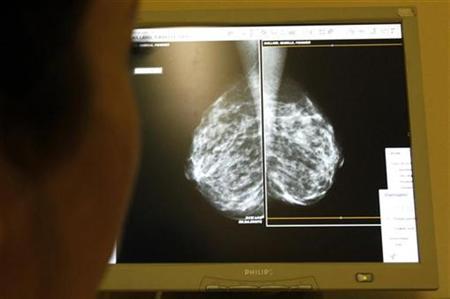
mammogram
©REUTERS/Eric Gaillard
A doctor exams mammograms, a special type of X-ray of the breasts, which is used to detect tumours as part of a regular cancer prevention medical check-up at a clinic in Nice, south eastern France January 4, 2008.

Eye 1

New cloning method 'used to make designer babies'

An American company has warned that unscrupulous scientists could be harnessing a new way of cloning human cells to create "designer" babies.

The technique combines two existing technologies and may eventually be more efficient than current cloning methods.

Dr Robert Lanza, chief scientific officer of biotechnology company Advanced Cell Technology (ACT) near Boston, said groups were already using similar technology to develop new sources of parent cells, stem cells, to treat serious diseases such as Parkinson's and stroke.

As for applying the method to human cloning: "It's unethical and unsafe, but someone may be doing it today," he said.

Display

Getting Wired For Terahertz Computing

University of Utah engineers took an early step toward building superfast computers that run on far-infrared light instead of electricity: They made the equivalent of wires that carried and bent this form of light, also known as terahertz radiation, which is the last unexploited portion of the electromagnetic spectrum.

"We have taken a first step to making circuits that can harness or guide terahertz radiation," says Ajay Nahata, study leader and associate professor of electrical and computer engineering. "Eventually -- in a minimum of 10 years -- this will allow the development of superfast circuits, computers and communications."

Ajay Nahata
©Lee Siegel
Ajay Nahata, a University of Utah professor of electrical and computer engineering, with equipment he uses to test devices aimed at harnessing terahertz radiation -- also known as far-infrared light or T-rays -- to run superfast computers of the future. In a new study, Nahata and his students created waveguides that successfully transmitted, bent, split and combined terahertz radiation.

Fish

Coral flourishing at Bikini Atoll atomic test site

CANBERRA, Apr. 15, 2008 - Coral is again flourishing in the crater left by the largest nuclear weapon ever detonated by the United States, 54 years after the blast on Bikini Atoll, marine scientists said on Tuesday.

A team of research divers visited Bravo crater, ground zero for the test of a thermonuclear weapon in the remote Marshall Islands on March 1, 1954, and found large numbers of fish and coral growing, although some species appeared locally extinct. "I didn't know what to expect, some kind of moonscape perhaps. But it was incredible," Zoe Richards, from Australia's James Cook University, told Reuters about the team's trip to the atoll in the south Pacific.

Bikini Atoll
©REUTERS/Australian Research Council
Porites matrices grow in the Bravo Crater in this handout photo made available April 14, 2008. Coral is again flourishing in the crater left by the largest nuclear weapon ever detonated by the United States, 54 years after the blast on Bikini Atoll, marine scientists said on Tuesday.

Telescope

Radiation Risks For Astronauts On A Mission To Mars

The European Space Agency (ESA) has chosen the GSI accelerator facility to assess radiation risks that astronauts will be exposed to on a Mars mission. GSI was selected because its accelerator is the only one in Europe able to create ion beams similar to those found in space. To determine possible health risks of manned space flights, scientists from all over Europe have been asked to investigate the effects of ion beams in human cells and organs. The first experiments will be launched this year and subsequently continued at GSI's planned FAIR accelerator system.

accelerator UNILAC
©G. Otto
View inside the 120 meters long accelerator UNILAC at GSI used to generate the ion beams.

Bulb

Better Understanding Of Hurricane Trajectories Learned From Patterns On Soap Bubbles

Researchers at the Centre de Physique Moléculaire Optique et Hertzienne (CPMOH) (CNRS/Université Bordeaux (1) and the Université de la Réunion(1) have discovered that vortices created in soap bubbles behave like real cyclones and hurricanes in the atmosphere. Soap bubbles have enabled the researchers to characterize for the first time the random factor that governs the movement and paths of vortices. These results, published in the journal Physical Review Letters, could lead to a better understanding of such increasingly common and often devastating atmospheric phenomena.

Thermal convection bubble
©American Physical Society
Thermal convection bubble with a large vortex in the upper part of the image.

Briefcase

Testosterone predicts profits on trading floors

Financial traders make more money when their testosterone levels are high, perhaps because the so-called male hormone makes them more confident and focused, British researchers reported on Monday.

Their study of male traders in the City of London financial district showed they made bigger profits on days when their testosterone levels were already high.

Testosterone may help focus the mind but constantly high testosterone levels are likely to make traders foolhardy, the researchers at the University of Cambridge cautioned.


Bulb

Are sacrificial bacteria altruistic or just unlucky?

An investigation of the genes that govern spore formation in the bacteria B. subtilis shows that chance plays a significant role in determining which of the microbes sacrifice themselves for the colony and which go on to form spores.

B. subtilis, a common soil bacteria, is a well-known survivor. When running short of food, it can alternatively band together in colonies or encase itself in a tough, protective spore to wait for better times. In fact, B. subtilis is so good at making spores that it's often used as a model organism by biologists who study bacterial spore formation.

"It's too early to say whether B. subtilis is truly altruistic," said co-author Oleg Igoshin, assistant professor of bioengineering at Rice University. "What is clear from this is that not all bacteria are going to look and act the same, and that's something that can be overlooked when people either study or attempt to control bacteria with population-wide approaches."

For example, Igoshin said doctors and food safety engineers might need to amend general approaches aimed at controlling bacteria with more targeted methods that also account for the uncharacteristic individual.