Science & TechnologyS


Cow Skull

Inca Skull Surgeons Were "Highly Skilled," Study Finds

Inca surgeons in ancient Peru commonly and successfully removed small portions of patients' skulls to treat head injuries, according to a new study.

The surgical procedure-known as trepanation-was most often performed on adult men, likely to treat injuries suffered during combat, researchers say.

A similar procedure is performed today to relieve pressure caused by fluid buildup following severe head trauma.

Around the ancient Inca capital of Cuzco, remains dating back to A.D. 1000 show that surgical techniques were standardized and perfected over time, according to the report.

Many of the oldest skulls showed no evidence of bone healing following the operation, suggesting that the procedure was probably fatal.

Image
©Valerie Andrushko
An ancient Inca skull shows evidence of skull surgery known as trepanation. A new study finds that the procedure was performed rather commonly by the Inca, likely to treat injuries suffered during combat.

Phoenix

Solar Activity Update

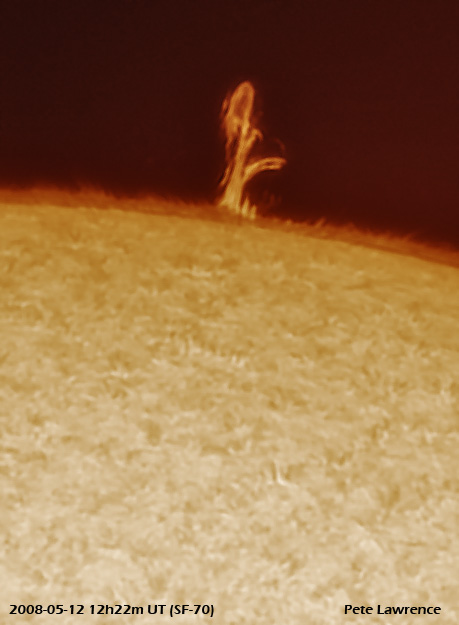
Is something lurking just over the sun's eastern limb?

solar activity
©Pete Lawrence

Newspaper

Avago claims first RF chip-scale packaging solution

The world's smallest radio frequency (RF) integrated circuit packaging solution has been claimed by Avago Technologies Ltd. (San Jose, Calif.)--a spin-off of Agilent Technologies (which was a spin-off of Hewlett Packard). Avago claims its WaferCap is the industry's first wafer-level chip-scale packaging (CSP) technology, squeezing RF chips into a 1-by-.5-by.25 millimeter leadless "0402"-size package, more familiar as the form factor for surface-mount technology (SMT) capacitors.

Heart

Disfigured Eagle to Get Artificial Beak


Disfigured eagle
©Unknown

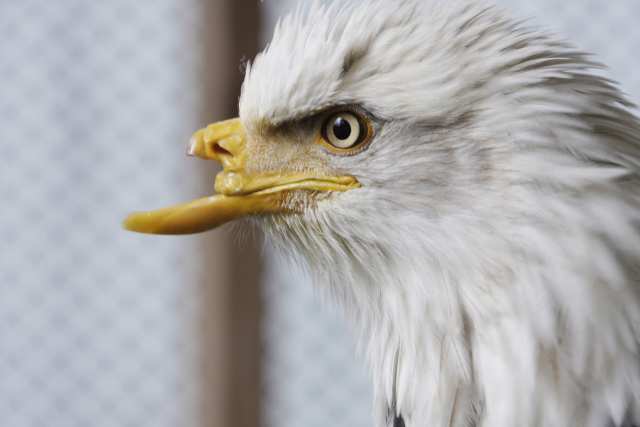
She has been named Beauty, though this eagle is anything but. Part of Beauty's beak was shot off several years ago, leaving her with a stump that is useless for hunting food. A team of volunteers is working to attach an artificial beak to the disfigured bird, in an effort to keep her alive.

"For Beauty it's like using only one chopstick to eat. It can't be done" said biologist Jane Fink Cantwell, who operates a raptor recovery center in this Idaho Panhandle town. "She has trouble drinking. She can't preen her feathers. That's all about to change."

Monkey Wrench

Scientist team creates first GM human embryo

Scientists have created what is believed to be the first genetically modified (GM) human embryo.

A team from Cornell University in New York produced the GM embryo to study how early cells and diseases develop. It was destroyed after five days.

Telescope

Europe's newest observatory officially opened

Europe's newest observatory has opened in one of the darkest corners of the UK.
With almost no light pollution from surrounding settlements the Kielder Observatory has breathtaking views of the night sky, according to the astronomers associated with the building.

It has been built in a remote part of the vast Kielder Water and Forest Park in Northumberland.

Image
Kielder Observatory.

Umbrella

Flashback Comets, dragons & prophets of doom

Ancient myths suggest that a giant comet may have visited the Earth a few thousand years ago, raining fireballs and meteors

Scientists are starting to recognise that the evolution of life on Earth has been affected, if not largely shaped, by its celestial environment. We now recognise that throughout its history the Earth has been bombarded by comets, small asteroids, meteorites (small rocky or iron bodies) and smaller particle and dust (meteor) showers. Over the years, astronomers have detected a substantial population of such small bodies out there in the Solar System, confirming that the threat of their impact with the Earth is a significant one. Current estimates, for example, suggest that between 10 and 30 impacts similar to the one that occurred in Tunguska in Siberia in 1908 have happened over recorded history, with perhaps one or more exploding with a force equivalent to that produced by 500 to 1000 megatonnes of TNT.

Image
©Frontiers
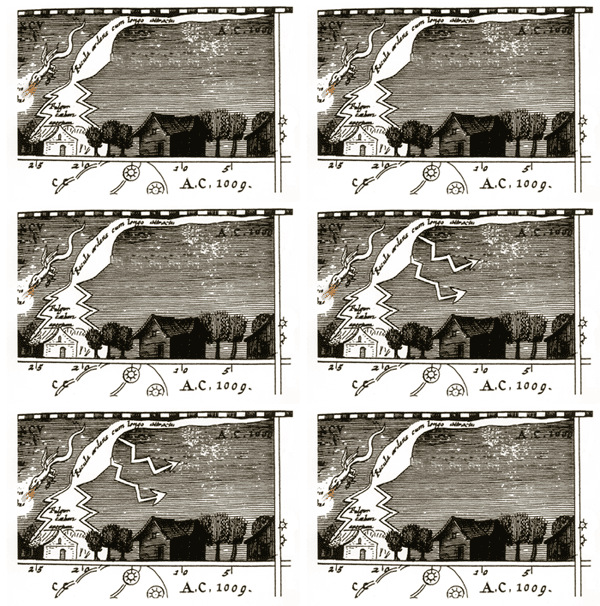
A mediæval representation of a meteorite fall as a serpent in the sky

Butterfly

Pavlov's Bacteria?

We've all heard of Pavlov's dogs, the famous canines trained by Russian physiologist Ivan Pavlov to associate food with the sound of a bell. Now, scientists have found that bacteria may be capable of similar behavior--an ability never seen in such simple organisms.

Researchers already know that microbes can mount simple responses to changes in their environment, such as acidity fluctuations, by altering their internal workings. If the changes are regular enough, bacteria can respond ahead of time. But systems biologist Saeed Tavazoie of Princeton University wondered if microbes were capable of more sophisticated reasoning. Could they, for example, learn to match a signal that didn't occur regularly to a probable future event? If so, the bacterium could improve its chances of survival by turning on a preemptive response to that event.

Telescope

CO2 shape shifts and moves about on mysterious Iapetus

Recent data from the Cassini mission to Saturn have shed new light on the surface of the saturnian moon Iapetus, particularly the presence and movement of carbon dioxide.

Telescope

Astronomers discover strange white dwarf star in the 'Great Bear'

A strange white dwarf star has been discovered in the constellation Ursa Major (Great Bear) 800 light-years away, which has a pulsating variety with carbon at its surface, not hydrogen and helium, which are usually found in such stars.

 M.S. Sliwinski and L. I. Slivinska of Lunarismaar
©Lunarismaar
New class of star: An artist's impression of a carbon-rich white dwarf. Most light emitted by these hot stars is in the ultraviolet and blue part of the electromagnetic spectrum.