Science & TechnologyS


Info

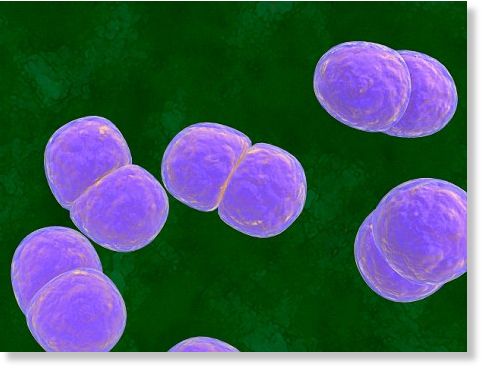
When bacteria attack! Scientists make breakthrough in studying how germs infect people

Understanding how bacteria infect people is crucial to preventing countless human diseases.

Now scientists have made a breakthrough with a new approach enabling them to study molecules within their natural environment.

The research, led by a team of biochemists, microbiologists and physicists at the University of Bristol, provides an unprecedented level of detail of the consequences of a bacterium approaching another cell.

Image
© UnknownBreakthrough: Scientists studied the common bacterium Moraxella catarrhalis, which causes middle ear infections in young children
Until now, traditional approaches to understanding infection have focused on either studies of the cells involved or dissection of individual molecules present within the cells.

Beaker

Distinct features of autistic brain revealed in novel analysis of MRI scans

mri austic brain
© Unknown
Distinct features of autistic brain revealed in novel analysis of MRI scans

Researchers at the Stanford University School of Medicine and Lucile Packard Children's Hospital have used a novel method for analyzing brain-scan data to distinguish children with autism from typically developing children. Their discovery reveals that the gray matter in a network of brain regions known to affect social communication and self-related thoughts has a distinct organization in people with autism. The findings will be published online Sept. 2 in Biological Psychiatry.

While autism diagnoses are now based entirely on clinical observations and a battery of psychiatric and educational tests, researchers have been making advances toward identifying anatomical features in the brain that would help to determine whether a person is autistic.

"The new findings give a uniquely comprehensive view of brain organization in children with autism and uncover a relationship between the severity of brain-structure differences and the severity of autism symptoms," said Vinod Menon, PhD, a professor of psychiatry and behavioral sciences and of neurology and neurological sciences, who led the research.

"We are getting closer to being able to use brain-imaging technology to help in the diagnosis and treatment of individuals with autism," said child psychiatrist Antonio Hardan, MD, who is the study's other senior author and an associate professor of psychiatry and behavioral sciences at Stanford. Hardan treats patients with autism at Packard Children's.

Info

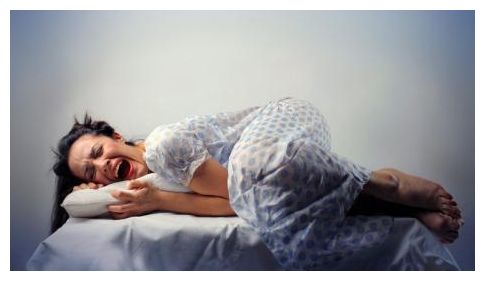
Night Owls More Likely to Experience Nightmares

Sleep Disorders
© DreamstimeLike to stay up late? The downside may be more bad dreams, research suggests.

Night owls might think staying up late is a real hoot, but a new study hints that delayed sleep might have a sinister side. People who hit the sack late might have a greater risk of experiencing nightmares, according to scientists, although they add that follow-up research is needed to confirm the link.

"It's a very interesting preliminary study, and we desperately need more research in this area," says Jessica Payne, director of the Sleep, Stress and Memory Lab at the University of Notre Dame, commenting on the new findings.

Previous reports have estimated 80 percent of adults experience at least one nightmare a year, with 5 percent suffering from disturbing dreams more than once a month. The new paper, from a group of scientists writing in the journal Sleep and Biological Rhythms, surveyed 264 university students about their sleep habits and frequency of nightmares, defined as "dysphoric dreams associated with feelings of threat, anxiety, fear or terror."

The scientists, led by Yavuz Selvi at the Yuzuncu Yil University in Van, Turkey, used a measure known as the Van Dream Anxiety Scale to assess the rate of bad dreams. Specifically, study participants were asked to rate their frequency of experiencing nightmares on a scale from zero to 4, corresponding to never and always, respectively.

Radar

War/Airships to Return to the Skies Under NASA-Led Project

Space-age airships are set to replace lorries, trains and even cargo ships for carrying goods around the world, under a project being led by NASA.


The first prototype of the new airships is expected to make its maiden voyage next year while scientists leading the project predict airships capable of carrying hundreds of tonnes of cargo at a time will be available by the end of the decade.

Using materials and aerodynamics knowledge gained from the space-race, engineers at NASA are helping to develop a new generation of airships they believe will replace lorries, trains and even cargo ships for carrying goods around the world.

Question

Is This the Face of Jack The Ripper?

Jack The Ripper?
© Trevor MarriottFace reconstruction of Carl Feigenbaum based on the Sing Sing admittance form.

Thin-haired with deep-set grey eyes and a large, red pimpled nose: this is how Jack the Ripper, perhaps the most notorious murderer in history, might have looked, according to new archival research into police documents.

Retired British police detective, Trevor Marriott, gathered together evidence and has built a case against Carl Feigenbaum, a 54-year-old German merchant seaman, and made him the top suspect for committing the horrific and notorious murders between August and November 1888.

At that time, at least five women in the Whitechapel area in London were found horribly disfigured, often with organs missing.

The name Jack the Ripper was coined in taunting letters sent to the press and police, in which the writer claimed credit for the crimes.

Ripper's career ended as suddenly as it began with the murderer still at large, making his case one of the history's greatest murder mysteries.

Since the first murder 123 years ago, more than 200 suspects have been named, including Lewis Carroll, author of Alice in Wonderland, Prince Albert Victor and Sir John Williams, obstetrician to the Royal Family.

Info

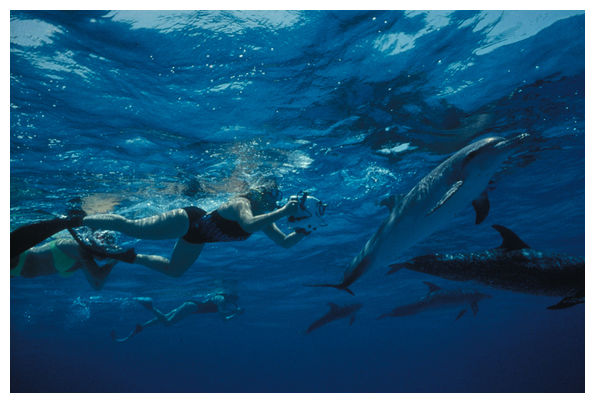
Dolphin studies could reveal secrets of extraterrestrial intelligence

Dolphins Studies
© Wild Dolphin Project.Analysis of dolphin communication with Information Theory has shown it to be surprisingly intricate and possibly second only to human communication in terms of complexity on Earth.
How do we define intelligence? SETI, the Search for Extraterrestrial Intelligence, clearly equates intelligence with technology (or, more precisely, the building of radio or laser beacons). Some, such as the science fiction writer Isaac Asimov, suggested that intelligence wasn't just the acquisition of technology, but the ability to develop and improve it, integrating it into our society.

By that definition, a dolphin, lacking limbs to create and manipulate complex tools, cannot possibly be described as intelligent. It's easy to see why such definitions prove popular; we are clearly the smartest creatures on the planet, and the only species with technology. It may be human hubris, or some kind of anthropocentric bias that we find difficult to escape from, but our adherence to this definition narrows the phase space in which we're willing to search for intelligent life.

Technology is certainly linked to intelligence - you need to be smart to build a computer or an aircraft or a radio telescope - but technology does not define intelligence. It is just a manifestation of it, perhaps one of many.

Astrobiologists see intelligence a little differently. The dictionary defines intelligence as the ability to learn, while others see it as the capacity to reason, to empathize, to solve problems and consider complex ideas, and to interact socially.

Telescope

Mars Rover Opportunity Makes New Discovery in Mars Crater "Endeavour"

Image
© thinkorthwim.comMars rover Opportunity
The new flat-topped rock in Endeavour has been informally named "Tisdale 2"

In the 7.5 years that NASA rover Opportunity has spent on Mars, it has uncovered valuable information about the red planet. For instance, Opportunity initially landed in an ancient lakebed that was rich with water-forming materials, which proved that the now-dry planet was once wet and tropical billions of years ago.

In January 2004, Opportunity and its twin rover, Spirit, were parachuted onto opposite ends of the planet Mars. Their purpose was to explore the Martian surface including rocks, craters and hills, record the data to their flash memory, and send it to deep space antennas in California, Australia and Spain.

Unfortunately, Spirit was the clumsy sibling of the two who would occasionally break down and send "nonsense data" back to Earth. Eventually, it got stuck in a sand pit and fell silent. Spirit's career officially ended in January 2010 while Opportunity remained the overachiever.

Magic Wand

Bittern: Other species that have made comeback from extinction

Image
© Press AssociationNesting bitterns can be found in Norfolk, Suffolk, the Norfolk Broads, north west England, the East Anglian fens and the Somerset Levels
There have been several species that have come back from the brink of extinction. Here are some examples.

Dormice and water voles: Two of Britain's best-loved countryside mammals, are recovering from the brink of extinction thanks to conservation programmes to save them. Both animals are well known through popular fiction: the dormouse was immortalised in Alice's Adventures in Wonderland and Ratty in Wind in the Willows is a water vole. Intensive farming techniques, pollution and climate change had threatened to wipe out both species across much of England.

Bumblebees: The five most threatened bumblebees in England have made an unprecedented comeback in the South East this year thanks to environmental work by farmers. The large garden bumblebee, the shrill carder bee, the red shanked carder bee, the moss carder bee and the brown banded carder bee are all considered under threat. The species have suffered from intensive farming, that means there are less wildflowers and the spread of towns and cities.

Cow Skull

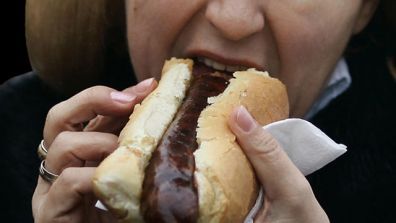
'Slaughter-Free' Stem Cell Meat Sausage Coming Soon

sausage
© AP
Maastricht, The Netherlands - Scientists are on the verge of growing artificial meat in laboratories without the need for animal slaughter, according to a report cited Thursday by The Herald Sun -- with one expert predicting a stem cell sausage might be just six months away.

Researchers say the advent of "pain-free" meat produced from stem cells could save millions of animals from the abattoir and help the environment through substantially reduced energy, land and water use.

Dutch researcher Dr. Mark Post, of Maastricht University, predicts the first synthetic sausage could be just six months away.

"I'm hopeful we can have a hamburger in a year," he told New Scientist.

But a major stumbling block will be turning cultured meat into a tasty, textured and nutritious option that could make mouths water in supermarkets and restaurants. The time and cost involved are also major hurdles.

Einstein

Weird Light-Bending Experiment Turns Scientists Into 'Coneheads'

Bending Light
© Eliza Grinnell and Nanfang YuTop, clockwise from left: Patrice Genevet, Nanfang Yu, Federico Capasso, Zeno Gaburro, and Mikhail A. Kats. Bottom: A simulation of the image that would appear in a large mirror patterned with the team's new phase mirror technology.

In a mind-bending, and light-bending, discovery, scientists have produced a fun-house-like warping of light that defies existing laws of physics.

For centuries, simple equations (taught every year to high-school physics students) have described how light moves through different media, for example from air into glass. Now, however, researchers have found that if the boundary between media is sufficiently complex (in this case, coated with nano-sized wires), those laws no longer apply.

The discovery has prompted the physicists to rewrite the traditional equations to account for the characteristics of the boundary surface. In most cases where these tweaked equations are applied, the new laws simplify back to their traditional forms, but sometimes, they show that light can behave in incredibly strange ways.

"Using designer surfaces, we've created the effects of a fun-house mirror on a flat plane," researcher Federico Capasso of the Harvard School of Engineering and Applied Sciences said in a statement. "Our discovery carries optics into new territory and opens the door to exciting developments in photonics technology."

In addition to stirring up the laws of physics, the new finding allowed the researchers to create some wacky pictures. For instance, they simulated an image of their lab group as it would appear in a mirror coated with nano-wires. The result: a portrait of conehead-looking scientists. [See images]