Science & TechnologyS


Black Cat

Do some animals get a taste for human blood?

Leopard
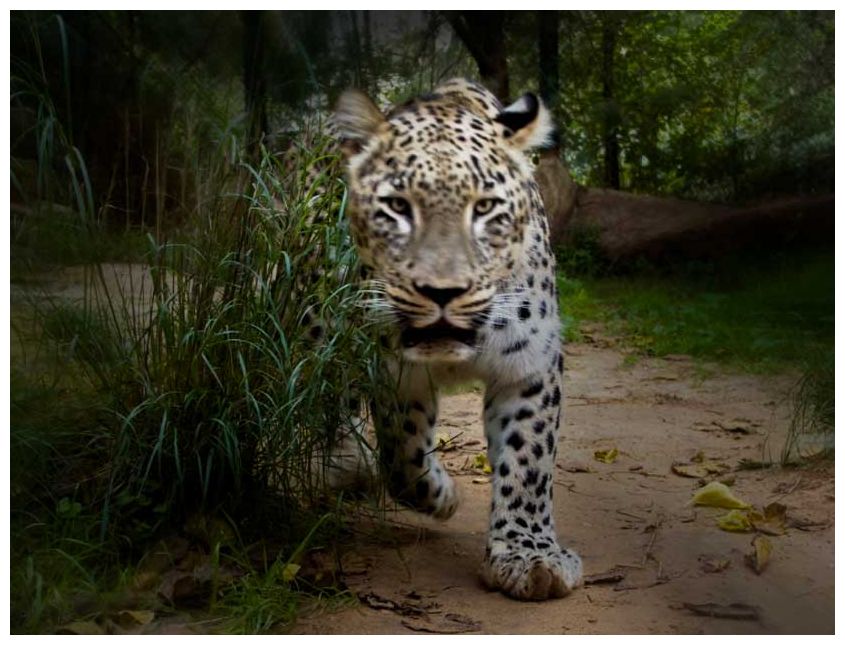
© iStockPhotoA leopard in Nepal has reportedly killed at least 15 people.
Certain animal predators may become serial killers of people, suggest animal experts and reports of multiple deaths inflicted by particular animals.

Most recently, a ravenous leopard in Nepal is believed to have killed and consumed at least 15 people over the past 15 months.

"It is not out of the realm of possibility that some individual animals may learn to target humans," George Burgess, director of the Florida Program for Shark Research, told Discovery News. "Large cats may come to view us as easy pickings under some circumstances."

In the case of the man-eating leopard in Nepal, a taste for salt might explain the horrific deaths, which last week likely included a 4-year-old boy whose head was found in a forest near his home.

Maheshwor Dhakal of the Department of National Parks and Wildlife Conservation in Kathmandu believes that as soon as leopards and other big cats start to prey upon humans, it is difficult to get them to stop.

"Since human blood has more salt than animal blood, once wild animals get the taste of salty blood, they do not like other animals like deer," Dhakal told CNN.

But developing a taste for humans, or anything, requires a learning process based on past experience. That isn't possible unless the predator can frequently encounter the "food source."

Eye 1

7 technologies that will make it easier for the next president to hunt and kill you

Tomahawk cruise missiles
© Lockhead MartinTomahawk cruise missiles
Robotic assassination campaigns directed from the Oval Office. Cyber espionage programs launched at the president's behest. Surveillance on an industrial scale. The White House already has an incredible amount of power to monitor and take out individuals around the globe. But a new wave of technologies, just coming online, could give those powers a substantial upgrade. No matter who wins the election on Tuesday, the next president could have an unprecedented ability to monitor and end lives from the Oval Office.

The current crop of sensors, munitions, control algorithms, and data storage facilities have helped make the targeted killing of American adversaries an almost routine affair. Nearly 3,000 people have been slain in the past decade by American drones, for instance. The process will only get easier, as these tools of war become more compact, more powerful, and more precise. And they will: Moore's Law applies in the military and intelligence realms almost as much as it does in the commercial sphere.

Comment: Caveat Lector: Wired Magazine and Wired.com is owned by a company which produces drones and is heavily invested in facilitating the widespread use of domestic drones for spying on, tracking, arresting and ultimately eliminating American citizens.

Attack of the Drones


Info

Microchip lung catches fatal disease

Lung Chip
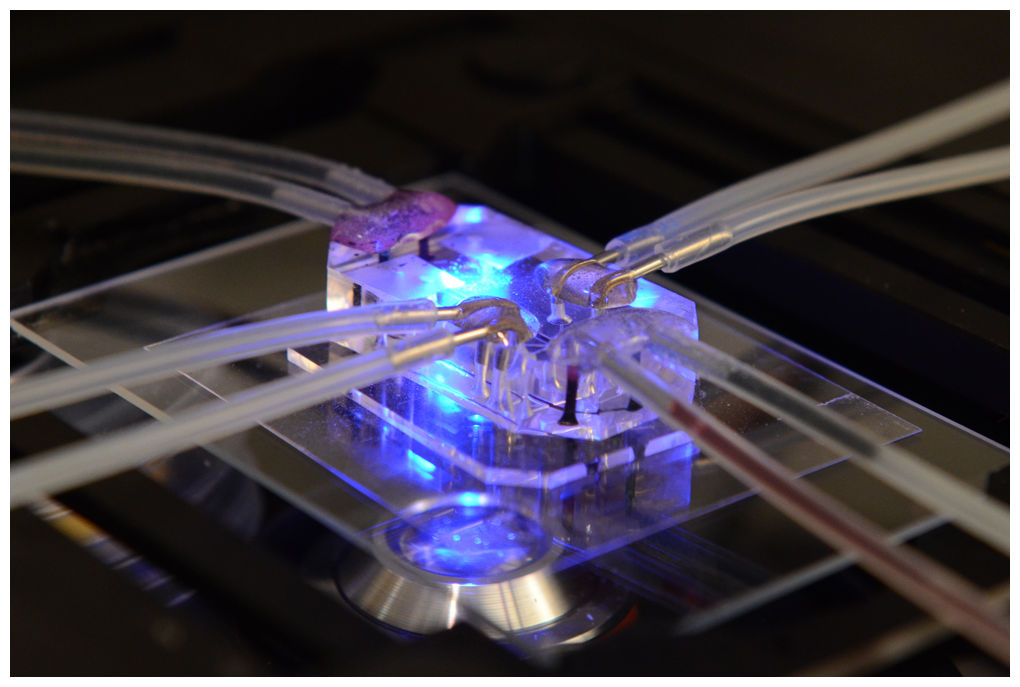
© Wyss Institute, Harvard UniversityThis plastic device, which is about the size of a flash drive, mimics the function and one of the illnesses of a human lung.
This fingertip-size device can't exactly cough, but it can get a lung disease. For the first time, researchers have reproduced some of the effects of a disease in a microchip. The scientists' "organ-on-a-chip" technology is still under development, but they hope it someday will help test therapeutic drugs more quickly and reliably than current methods allow.

"There's a huge need to find more predictive alternatives" to the lab mice that pharmaceutical companies rely on now, said Geraldine Hamilton, who worked on the diseased lung-on-a-chip. Hamilton manages the organs-on-a-chip research program at Harvard University's Wyss Institute. "We think that the organs on chips truly provide that alternative," she told TechNewsDaily.

Organs-on-a-chip are plastic microchips designed to act as small, simplified versions of lungs, hearts and other bodily organs. Unlike the microchips in computers, they don't have circuits imprinted on them. Instead, they're etched with tiny channels that carry water, air, blood or other biological fluids. The channels are lined with living cells taken from either rats or humans, to help them act more like real organs.

The researchers who make them hope they'll become more-accurate testing grounds for drugs than lab rats, or simple collections of cells grown in a Petri dish, are. The vast majority of newly invented treatments that work well in lab mice don't ultimately work in people.

Eye 1

Human enhancements at work pose ethical dilemmas

Image
© Unknown
Retinal implants to help pilots see at night, stimulant drugs to keep surgeons alert and steady handed, cognitive enhancers to focus the minds of executives for a big speech or presentation.

Medical and scientific advances are bringing human enhancements into work but with them, according to a report by British experts, come not only the potential to help society and boost productivity, but also a range of ethical dilemmas.

"We're not talking science fiction here, we're talking about advances that could impact significantly on the way we work...in the near future," said Genevra Richardson, a professor of law at Kings College London and one of the authors of the report.

The report was published after a joint workshop involving four major British scientific institutions which looked at emerging technologies like cognitive enhancing drugs, bionic limbs and retinal implants that have the potential to change workplaces dramatically in future.

Comet 2

New Comet: C/2012 V1 (PANSTARRS)

C/2012 V1 (PANSTARRS) was discovered by the PANSTARRS survey using a 1.8-m f/4.4 reflector from Haleakala, HI.

Larry Denneau, Richard Wainscoat and Henry Hsieh noted a diffuse, non-stellar appearance on four 45 seconds w-band images, and subsequently it was posted on the NEO Confirmation Page under the temporary designation P104XVd, with also a 100% NEO score.
At first I was able to confirm its cometary appearance with the 2.0-m Faulkes Telescope North, from the same site, under very good seeing conditions (stars FWHM 0.9″-1.0″). In the image below (stack of 9×45 seconds with Bessel R filter) its nature is clear, with a diffuse 4″ coma, and a FWHM 70% larger than stars nearby.

The weather was good also at Schiaparelli Observatory on the same day, so I was able to image it with a 0.38-m f/6.8 reflector. Visually (i.e. on the screen) its aspect was stellar, but the "FWHM method" clearly revealed its nature: profile 30% larger than stars nearby, and a coma 8″ wide.

Also ARI Observatory (H21) detected it on Nov. 05.26, and in the image below, taken with the very good 0.81-m f/4 astrograph stacking 30×60 seconds images, the FWHM method revealed a profile 30-35% larger than stars, and a coma 11″x7″.

This is again a demonstration of how good is the FWHM method (used largely in our T3 project) in discerning comets among asteroids.
Results were published in CBET 3289 (subscription required) and astrometry, together with preliminary parabolic orbital elements, in MPEC 2012-V40.

Bizarro Earth

How Earth's outer layers wander back and forth

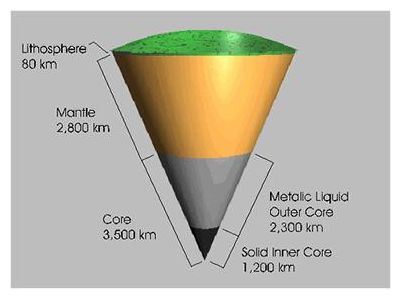
The Earth's Interior.
© USGSThe Earth's Interior.

The entire outermost part of Earth is able to wander over the rest of the planet, and now researchers say in a new study detailed in the Nov. 8 issue of the journal Nature that they can explain how it can mysteriously return back the way it was.

The planet's solid exterior - its crust and most of its mantle layer - at times drifts over its core. To envision this, imagine that a peach's flesh somehow became detached from the fruit's pit and was free to move about over it.

These shifts can prove rather extreme. A person sitting on the Earth could have seen the pole apparently wander up to 50 degrees and then return close to its original location, all in tens of millions of years.

"If it happened today, a shift of 50 degrees one way might put Boston near the north pole, while a shift in the opposite direction would bring Boston near the equator," said study researcherJessica Creveling, a geologist and geochemist now at the California Institute of Technology. "Not surprisingly, these dramatic shifts have been linked to major changes in nearly all aspects of the Earth system, including the carbon cycle, climate, evolution."

Windsock

Comparing the winds from Sandy and Katrina

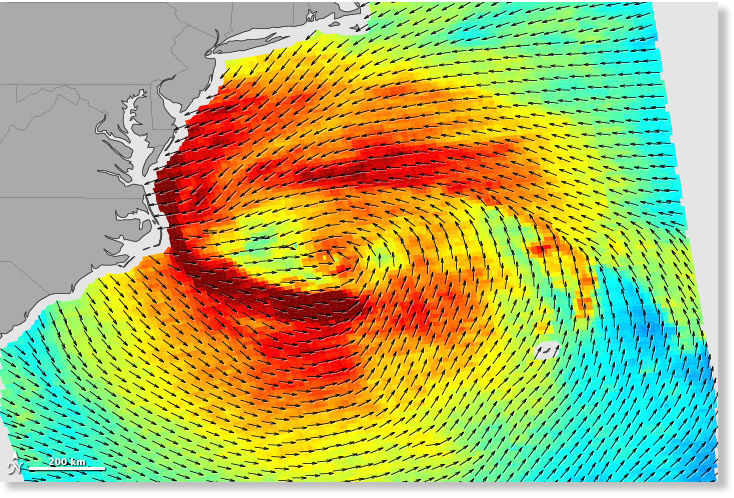
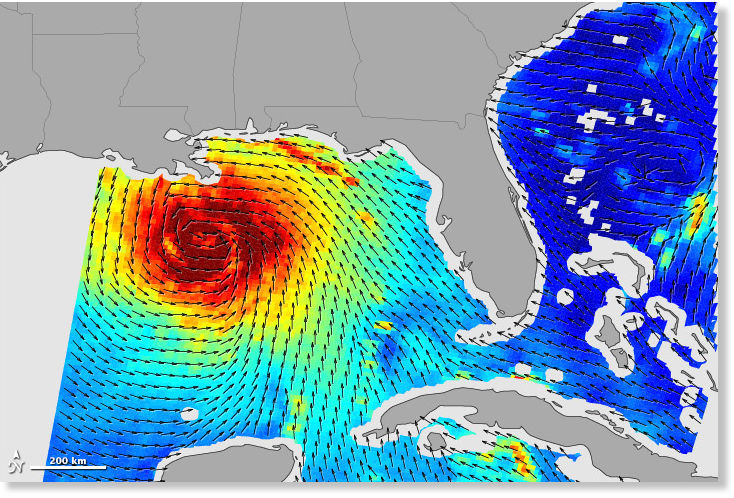
The scenes of devastation and wreckage that Hurricanes Sandy (2012) and Katrina (2005) left behind were tragically similar. Both storms flooded major cities, cut electric power to millions, and tore apart densely populated coastlines. But from a meteorological perspective, the storms were very different.

Katrina was a textbook tropical cyclone, with a compact, symmetrical wind field that whipped around a circular low-pressure center. Like most tropical cyclones, Katrina was a warm-core storm that drew its energy from the warm waters of the tropical Atlantic Ocean. Sandy had similar characteristics while it was blowing through the tropics. But as the storm moved northward, it merged with a weather system arriving from the west and started transitioning into an extratropical cyclone.
Image
© NASA
Image
© NASA

Fireball 4

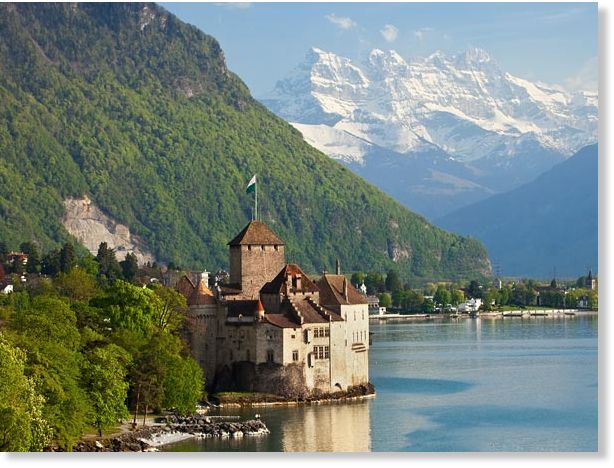
A killer wave slammed medieval Geneva - Tsunamis in the Alps?

Image
© ADS/AlamyThe circa A.D. 1000 Chateau de Chillon on Lake Geneva, Switzerland.
A killer wave slammed medieval Geneva, a new study says. And it could happen again. Nearly 1,500 years ago a massive flood in Geneva reportedly swept away everything in its path - mills, houses, cattle, even entire churches. Now researchers believe they've found the unlikely sounding culprit: a tsunami-like killer wave in the Alps. The threat, they add, may still be very much alive. (Video: Tsunamis 101.)

Spurred by a huge landslide, the medieval Lake Geneva "tsunami" (technically defined as a seismic ocean wave) swamped the city, which was already a trading hub, according to a new study. Far from any ocean, the massive wave was likely generated by a massive landslide into the Rhône River, which feeds and flows through Lake Geneva, according to a group of Swiss researchers.

The team analyzed a massive sediment deposit at the bottom of the lake's easternmost corner and determined that the material had once sat above the lake and had slid all at once into the Rhône, near where the river flows into the eastern end of Lake Geneva (map).

Galaxy

The Milky Way's black hole shoots out brightest flare ever

Milky Way
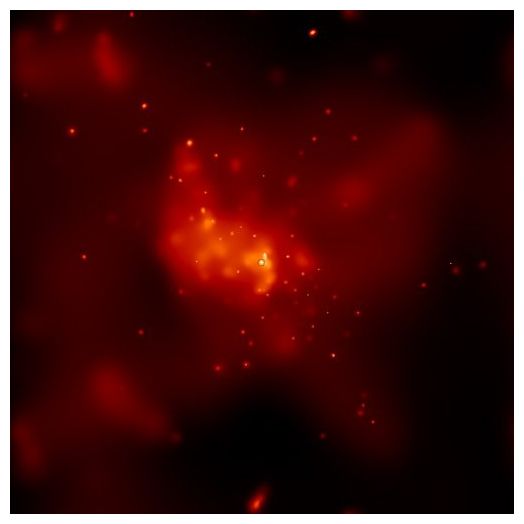
© NASA/MIT/F. Baganoff et alThis false-color image shows the central region of our Milky Way Galaxy as seen by Chandra. The bright, point-like source at the center of the image was produced by a huge X-ray flare that occurred in the vicinity of the supermassive black hole at the center of our galaxy.
For some unknown reason, the black hole at the center of the Milky Way galaxy shoots out an X-ray flare about once a day. These flares last a few hours with the brightness ranging from a few times to nearly one hundred times that of the black hole's regular output.

But back in February 2012, astronomers using the Chandra X-Ray Observatory detected the brightest flare ever observed from the central black hole, also known as Sagittarius A*. The flare, recorded 26,000 light years away, was 150 times brighter than the black hole's normal luminosity.

What causes these outbursts? Scientists aren't sure. But Sagittarius A* doesn't seem to be slowing down, even though as black holes age they should show a decrease in activity.

Magic Wand

Cockatoo shows tool-making skills

A captive-bred Goffin's cockatoo has surprised researchers by spontaneously making and using "tools" to reach food.

The species is not known to use tools in the wild.

Researchers in Austria recorded the cockatoo - named Figaro - repeatedly breaking off splinters from a wooden beam and using them to reach nuts on the other side of his wire enclosure.

The team believe Figaro's feat is the first recorded instance of tool-making among parrots.

The study, published in the journal Current Biology, was carried out at an aviary near Vienna by scientists from the University of Oxford; the University of Vienna and the Max-Planck-Institute for Ornithology in Germany.