Science & TechnologyS


Telescope

Moon illusion: New theory reignites debate over why moon appears larger near the horizon

The ancients knew the moon looks bigger near the horizon but no theory convincingly explains the illusion. Now a new idea aims to settle the debate once and for all

Image
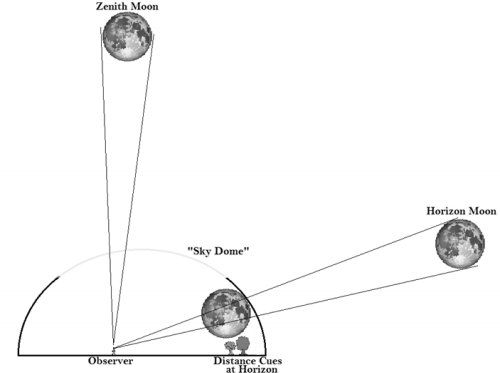
One of the classic optical illusions involves the Moon, which appears larger near the horizon than overhead. This illusion has been known and discussed for centuries and yet its explanation is still hotly contested.

Today, the debate is set to reignite thanks to the work of Joseph Antonides and Toshiro Kubota at Susquehanna University in Pennsylvania. These guys have a new theory that the illusion occurs because of a contradiction between the way the brain compares distance cues from its perceptual model of the world and cues from binocular vision.

That the illusion exists is uncontested. One easily accessible proof comes from photographic evidence that the size of the moon remains constant as it crosses the sky. So the question of why it appears larger near the horizon has been studied by many people from a variety of disciplines.

Comet

Comet ISON photographed 600 million km away

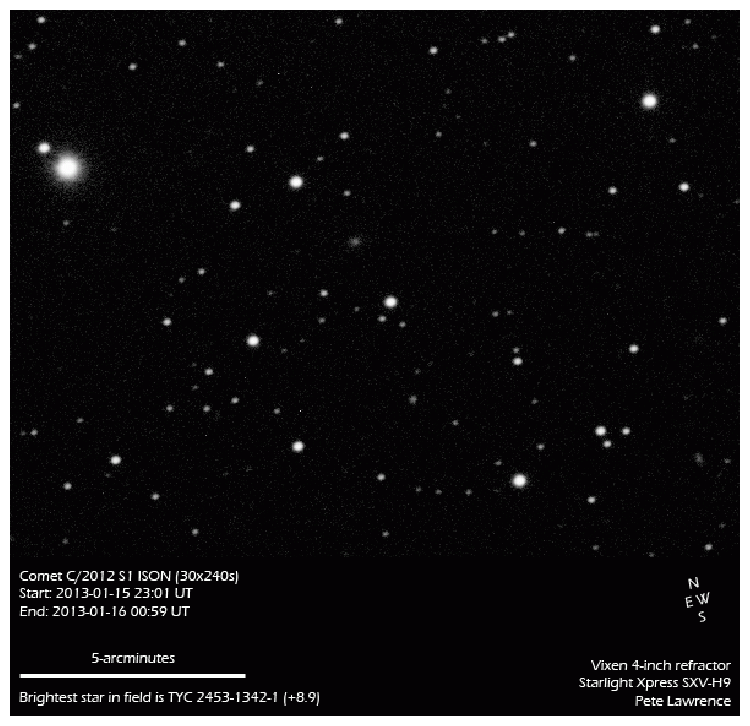
Later this year, Comet ISON could become bright enough to see in broad daylight when it passes through the atmosphere of the sun. At the moment, however, it is a cold and lonely speck barely visible through backyard telescopes. Two nights ago, Pete Lawrence of Selsey, UK, photographed the potentially-great comet moving through space near the orbit of Jupiter:
Comet ISON
© Pete Lawrence View Animated GIF
"I created this animation using images taken through a 4-inch refractor, starting at 23h on the 15th of January and ending at 01h on the 16th," says Lawrence. "The comet is clearly visible moving among the stars of Gemini, in an area just to the south of Castor."

Comet ISON looks so puny now because it is more than 600 million km away. In late 2013, however, it will be much closer. A key date is Nov. 28th when Comet ISON flies through the solar corona only 1.2 million km from the surface of the sun. If the comet survives the encounter--a big IF--it could emerge glowing as brightly as the Moon with a sensational tail sure to create a worldwide sensation. Stay tuned!

Info

Leprosy reprograms the body

Leprosy
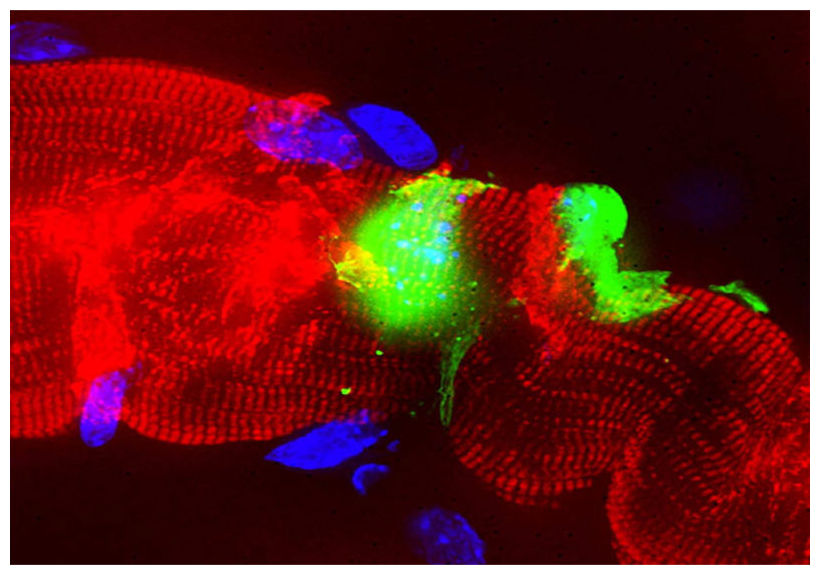
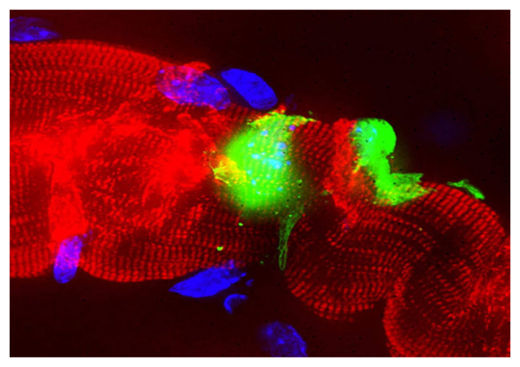
© Masaki et al., Cell (2013)Lurking leprosy. A new study suggests the leprosy bacterium can reprogram one type of nervous system cell to a stem cell-like state and use it to infiltrate other tissues in the body. Here, reprogrammed cells (green) fuse with and become skeletal muscles (red), spreading infection as they go. Cell nuclei are shown in blue.
Leprosy has plagued humans for thousands of years, but that doesn't mean it has revealed all of its secrets. A new study in mice suggests the disfiguring disease employs a bit of biological trickery to do its damage: It reprograms certain nerve cells to become like stem cells and uses them to infiltrate the body's muscle and nervous systems. This is the first time that scientists have seen bacteria reprogram cells in this way, and experts say the find could lead to the development of new treatments for leprosy and other neurodegenerative diseases.

More than 200,000 people worldwide are diagnosed with leprosy (also known as Hansen's disease) each year. Despite its ancient origins and almost mythic status, however, leprosy remains mysterious.

Researchers know that it's caused by the bacterium Mycobacterium leprae, and that it leaves sufferers with deforming lesions and a debilitating loss of sensation in their hands and feet. But they don't know how the infection spreads throughout the body or why it damages nerves so extensively. In part, that's because it's hard to investigate: the bacterium that causes leprosy can't be grown in a lab, so it can only be studied in infected humans, armadillos, and genetically engineered mice.

To answer some of those lingering questions, biologist Anura Rambukkana of the University of Edinburgh in the United Kingdom and his colleagues seized on another known detail of the disease: its predilection for infecting Schwann cells, specialized cells that sheathe the nerves and help transmit nervous system signals. The researchers isolated Schwann cells from mice and infected them with M. leprae - and were soon surprised by what they saw.

Attention

Scientists discover how to identify people from 'anonymous' genomes

Genome
© Wired.com
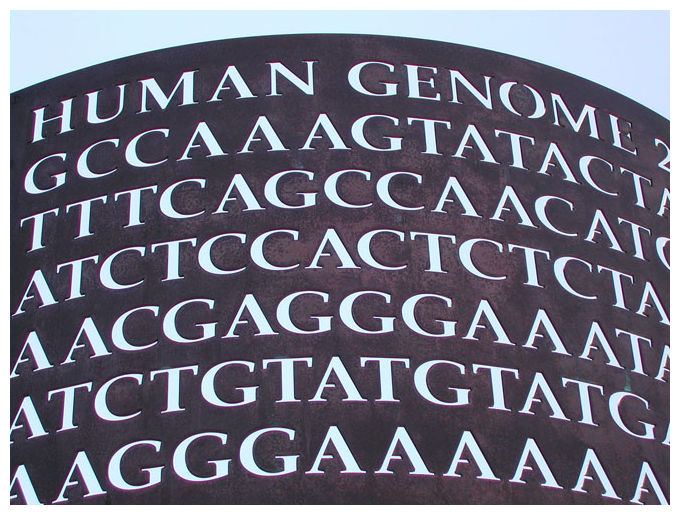
Most people participate in genomic research because they hope the DNA they offer up will help scientists uncover the roots of human diversity and disease. They generally expect to remain anonymous. But they may not be.

Researchers armed with little more than an internet connection identified nearly 50 people who participated in a large genomic study based on some of the participants' genomes and other publicly accessible information.

The researchers do not name these individuals, and they insist their intentions were good. "We are not trying to start a panic," said Yaniv Erlich of the Whitehead Institute for Biomedical Research, who led the new study. "We are trying to illuminate some of the gaps in privacy we have right now and initiate a public discussion."

Scientists and research subjects aren't the only ones who have a stake in that conversation, says genomics pioneer George Church, of Harvard Medical School. Today, a genome can be sequenced for a few thousand dollars, and the cost continues to drop.

"Soon you'll be sequencing yourself and your dog and your plants," Church said.

The new study shows that those sequences can sometimes be traced back to the individuals they came from.

Fish

Weird marine creature could be the ancestor to modern shellfish

Image
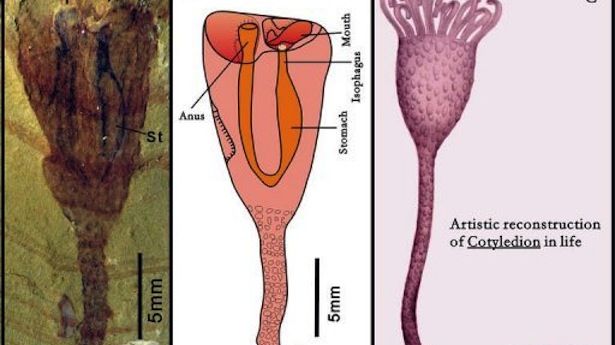
A weird marine creature that lived 500 million years ago at a time of explosive growth in Earth's biodiversity could be a forerunner of worms and molluscs, a study published on Thursday said.

Palaeontologists in China and Europe have taken a second look at fossils of a species called Cotyledion tylodes - a small animal that, when it was identified in 1999, was at first thought to be a cnidarian, or part of a group of jellyfish-like species.

Display

Facebook lets you harvest account phone numbers

Image
Frequent contributor Bennett Haselton writes with some strong cautions on a Facebook "feature" that lets you search for random phone numbers and find the accounts of users who have registered that number on their Facebook profile. This has privacy implications that are more serious than searching by email address. Especially in light of the expanding emphasis that Facebook is putting both on search qua search and on serving as a VoIP intermediary (not to mention the stream of robocalls that the FCC is unable to stop), this might make you think twice about where your phone number ends up. Read on for Bennett's description of the problem and some possible solutions.

A few weeks ago a friend of mine said she was getting harassing text messages from a particular phone number, which she didn't recognize and which didn't appear in any of her own records. On a whim, I suggested entering the number into the Facebook search box, whereupon we found the guy's profile (even though he had no friends in common with the account we were logged in under), realized who he was, and ratted the thirty-something out to his Mom.

Then I thought: Is it really a good idea, for this to be possible? I tried entering consecutive phone numbers (starting with a random valid number, and varying the last 2 digits from 00 to 99) into Facebook's search box, and 13 of them came up with valid matches. None of those matches had any friends in common with the account we were searching from; as far as I can tell, anybody could enter any phone number into Facebook's search box and find the account associated with it, if there is one.

Meteor

Feb. 15, 2013: Asteroid to come close enough to knock satellites out of orbit

2012 DA14
2012 DA14
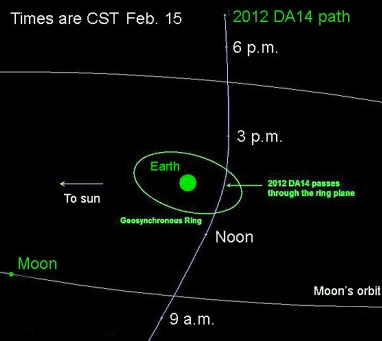
Near Earth Asteroid (NEA) 2012 DA14 has its annual flyby of the earth on February 15, 2013. Its projected orbit, according to NASA, will bring it well within the orbits of geosynchronous satellites currently orbiting our planet. NASA has indicated that there is no danger of this asteroid impacting our planet, however they have not ruled out our gravity changing the asteroids orbital pattern.

NEA 2012 DA 14 was discovered on February 23, 2012 by the Observatorio Astronómico de Mallorca (OAM), near the Spanish city of La Sagra. According to NASA's Near Earth Object Program, NEO, the asteroid will pass the earth at a distance of 21,000 miles, putting the asteroid's trajectory in between the earth and the satellites orbiting our planet. Geosynchronous satellites orbiting our planet orbit at a distance of roughly 26,200 miles above the earth. Geostationary orbiting objects orbit at a distance of roughly 22,236 miles above the Earth's equator. These objects are considered to be in High Earth Orbit (HEO). Any object in space considered to be in a Low Earth Orbit (LEO) is approximately 1250 miles above the equator. The term Medium Earth Orbit (MEO) refers to an orbiting object approximately 12,500 miles above the Earth's equator, in between objects in an LEO and a HEO, geosynchronous orbit.

With Near Earth Asteroid 2012 DA 14′s flyby falling somewhere in between geosynchronous satellite orbit, and objects orbiting in a Medium Earth Orbit pattern, the potential for this NEO impacting other objects orbiting our planet appears to be almost guaranteed.

Bad Guys

Greg Laden, liar

Harsh title - I know, but justified by Mr. Laden's actions. I could ignore him, but people like him need to be called out when they do things like this.

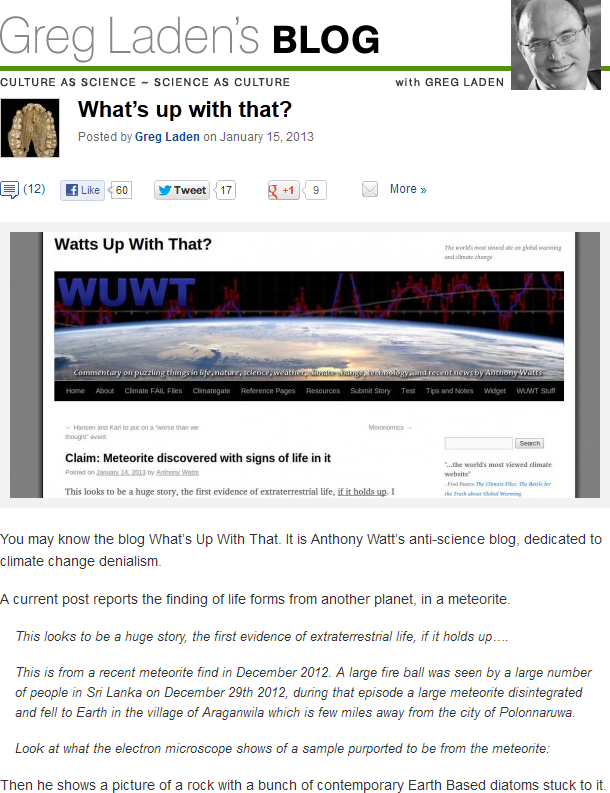
Here's a screencap of a "science blogs" post made by Mr. Laden, who is no stranger to shooting his mouth off in non factual ways that get him in trouble, as Roger Tattersall (aka Tallbloke) can testify to from another Laden episode last year where Laden was forced to remove untrue and libelous statements he made. Laden's original post about Tattersall (with all the angry unedited rhetoric) is here.

Image
You can read the rest of his post here.

Question

Dead birds in Duson, Louisiana a mystery

An odd discovery was made Tuesday in Duson. More than 30 birds were found dead, and as of now no one knows why. The birds had no visible injuries and were just scattered in an area next to a sugar cane field.

"I came here this morning and saw birds all over the ground. One of them fell when I was walking around the property," James Wing said.

When Wing found the dead birds his first thought went to a deadly disease.

Bug

'Supergene' explains red fire ant society: study

Image
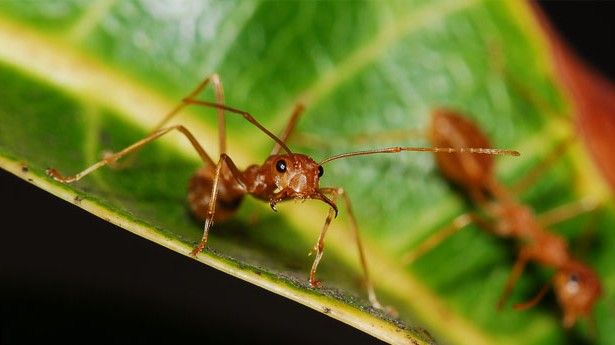
The complex social structure of the red fire ant, a fast-spreading invasive insect with a painful bite, is made possible by a DNA fusion known as a supergene, biologists said Wednesday.

It is the first study to link supergenes to animal behaviour, the scientists reported in the journal Nature, and predicted a similar effect would be found in other species.

Native to South America, the red fire ant organises itself into two distinct types of social structure - one with a single queen per colony, the other with hundreds.

Though they are the same type of ant, the workers of either group would kill the queens of the other, the international researchers wrote.

The two groups also differ physiologically: one produces large queens which accumulate a lot of fat and fly away to start new colonies, where they feed their first larvae from their body reserves.