Science & TechnologyS


Einstein

The bacterium that lays tiny nuggets of gold

Image
© AFP Photo
Among the more peculiar organisms that inhabit our Earth exists a bacterium that turns water-soluble gold into microscopic nuggets of solid gold, scientists said Sunday.

Chemists have often pondered why the germ Delftia acidovorans is frequently found on the surface of tiny gold nuggets.

Its presence led scientists to speculate it may be creating the particles from soluble gold - ions of gold that are dissolved in water.

But the puzzle was how D. acidovorans did this trick, as soluble gold is toxic.

The answer, suggest researchers in Canada, lies in a molecule excreted by the microbe that both shields the organism and transforms the poisonous ions into particles.

Ice Cube

Rare ice halos in Bulgaria

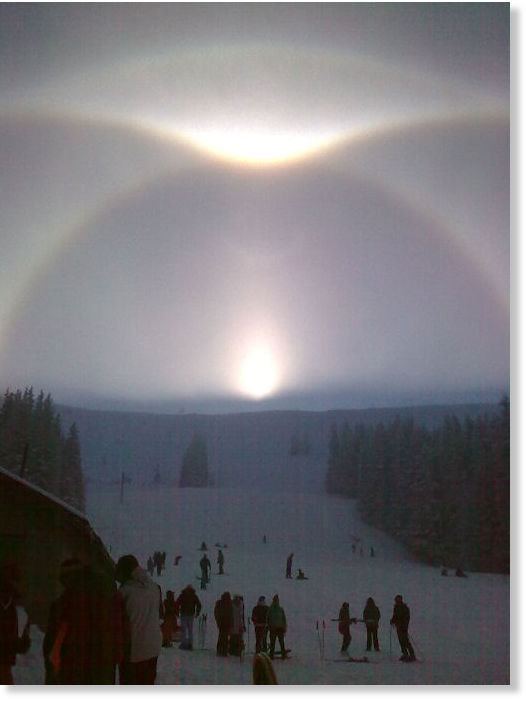
On January 28th at the Vitosha mountain in Sofia, Bulgaria, skiers stopped in their tracks when a magnificent network of luminous arcs and halos formed around the midday sun. Janeta Ganchevska pulled a mobile phone out of her jacket and snapped this photo of the apparition:

Image

Comet 2

Comet Lemmon much brighter than expected

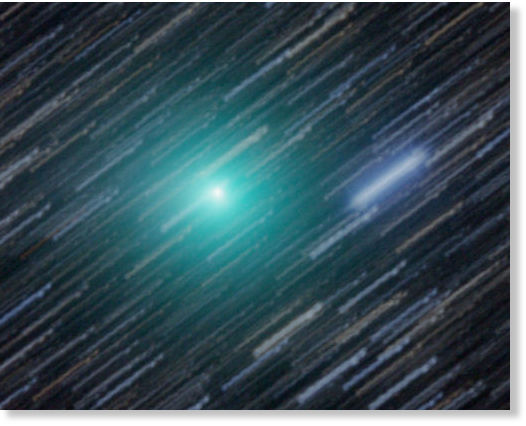
Glowing much brighter than expected, Comet Lemmon (C/2012 F6) is gliding through the skies of the southern hemisphere about 92 million miles (0.99 AU) from Earth. Amateur astronomer Rolf Wahl Olsen sends this picture from his backyard in Auckland, New Zealand:

Image
"I took this image of Comet Lemmon on the 28th of January," says Olsen. "It has become quite bright now and has also grown a beautiful tail."

Snowflake Cold

How to survive a Siberian winter

Buryat Child
© Arkady Zarubin/Wikimedia CommonsKeeping warm. A child from the Buryat people of Siberia dressed in traditional costume.
Cambridge, United Kingdom - Siberia may not be everyone's idea of a tourist destination, but it has been home to humans for tens of thousands of years. Now a new study of indigenous Siberian peoples presented here earlier this month at a meeting on human evolution reveals how natural selection helped people adapt to the frigid north. The findings also show that different living populations adapted in somewhat different ways.

Siberia occupies nearly 10% of Earth's land mass, but today it's home to only about 0.5% of the world's population. This is perhaps not surprising, since January temperatures average as low as -25°C.

Geneticists have sampled only a few of the region's nearly one dozen indigenous groups; some, such as the 2000-member Teleuts, descendants of a once powerful group of horse and cattle breeders also known for their skill in making leather goods, are in danger of disappearing.

Previous research on cold adaptation included two Siberian populations and implicated a couple of related genes. For example, genes called UCP1 and UCP3 tend to be found in more active forms in populations that live in colder climes, according to work published in 2010 by University of Chicago geneticist Anna Di Rienzo and her colleagues.

These genes help the body's fat stores directly produce heat rather than producing chemical energy for muscle movements or brain functions, a process called "nonshivering thermogenesis."

Galaxy

Colossal cosmic collision coming this year at center of the galaxy, say awestruck astronomers

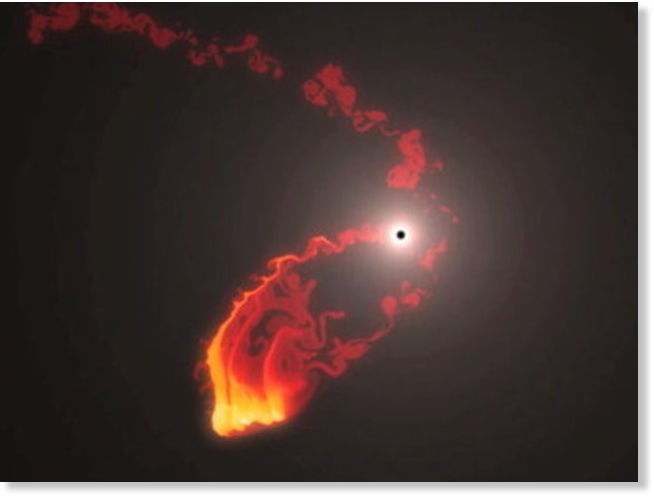
A giant gas cloud is on collision course with the black hole in the center of our galaxy in 2013. This is a unique opportunity to observe how a super massive black hole sucks in material, in real time. The black hole at the centre of the galaxy, formally known as Sagittarius A*, fascinates scientists. By mid-2013 a gas cloud is expected to pass in its vicinity at a distance of only 36 light-hours (equivalent to 40.000.000.000 km), which is extremely close in astronomical terms. So-called super massive black holes are the largest type of black holes.
Image
A giant gaseous cloud will collide with the black hole at the center of the Milky Way Galaxy sometime in the middle of 2013
Their mass equals hundreds of thousands to a billion times the mass of our sun. The centre of all galaxies is thought to contain super massive black holes. But their origin is not fully understood and astrophysicists can only speculate as to what happens inside them. Hence the imminent collision is of great interest to scientists as it should provide some new insights. Reinhard Genzel leads the team of astronomers from the European Southern Observatory which has discovered the gas cloud about to collide with the black hole at the heart of our galaxy and studied its trajectory. According to their observations, its speed has nearly doubled in the last seven years, reaching more than 8 million km/h.

The cloud's edges have already started to shred and it is expected to break up completely over the coming months. As we near the collision, the cloud is expected to get much hotter. It will also probably start to emit X-rays as a result of the interaction with the black hole. This event will provide astronomers and astrophysicists a unique opportunity to observe how a gas cloud behaves so close to one of the most mysterious objects in our universe. Black holes are invisible because their extreme gravity even light swallowed. However, if a black hole accretes matter from its surroundings, this material is heated and glows brightly in X-rays.

Frog

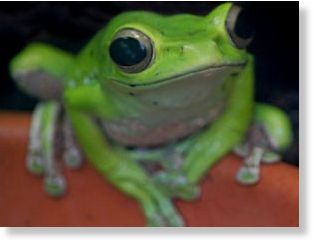
New study: Common pesticides kill frogs on contact

Image
© @Doug88888/Flickr
To me, there are few more comforting sights on a farm or in a garden than a frog hopping about amid the crops. Frogs and other amphibians don't just look and sound cool - they also feast upon the insects that feast upon the plants we eat. These bug-scarfing creatures are a free source of what is known as biological pest control.

But modern industrial agriculture doesn't have much use for them. It leans on chemistry, not biology, to control pests - and in doing so, it's probably contributing to the catastrophic global decline of amphibians, a natural ally to farmers for millennia. The irony is stark: in industrial agriculture's zeal to wipe out pests, it is helping to wipe out those pests' natural predators. The latest evidence: a new study showing that exposure to common pesticides at levels used in farm fields can kill frogs rapidly.

For a decade or so, it has become increasingly clear that widely used herbicides like Syngenta's atrazine, in tiny amounts found in streams after running off from farm fields, do crazy things to the sexual development of frogs. Such "endocrine-disrupting chemicals" have what scientists call chronic, not acute, effects on amphibians - that is, they don't kill them outright, but they alter them profoundly - even change their gender. (See Dashka Slater's profile of a scientist who documented atrazine's impact on frogs, earning a backlash from Syngenta.) Monsanto's blockbuster herbicide Roundup also exerts subtle but important harm on amphibians, research suggests.

Cassiopaea

Possible Nova in Cepheus

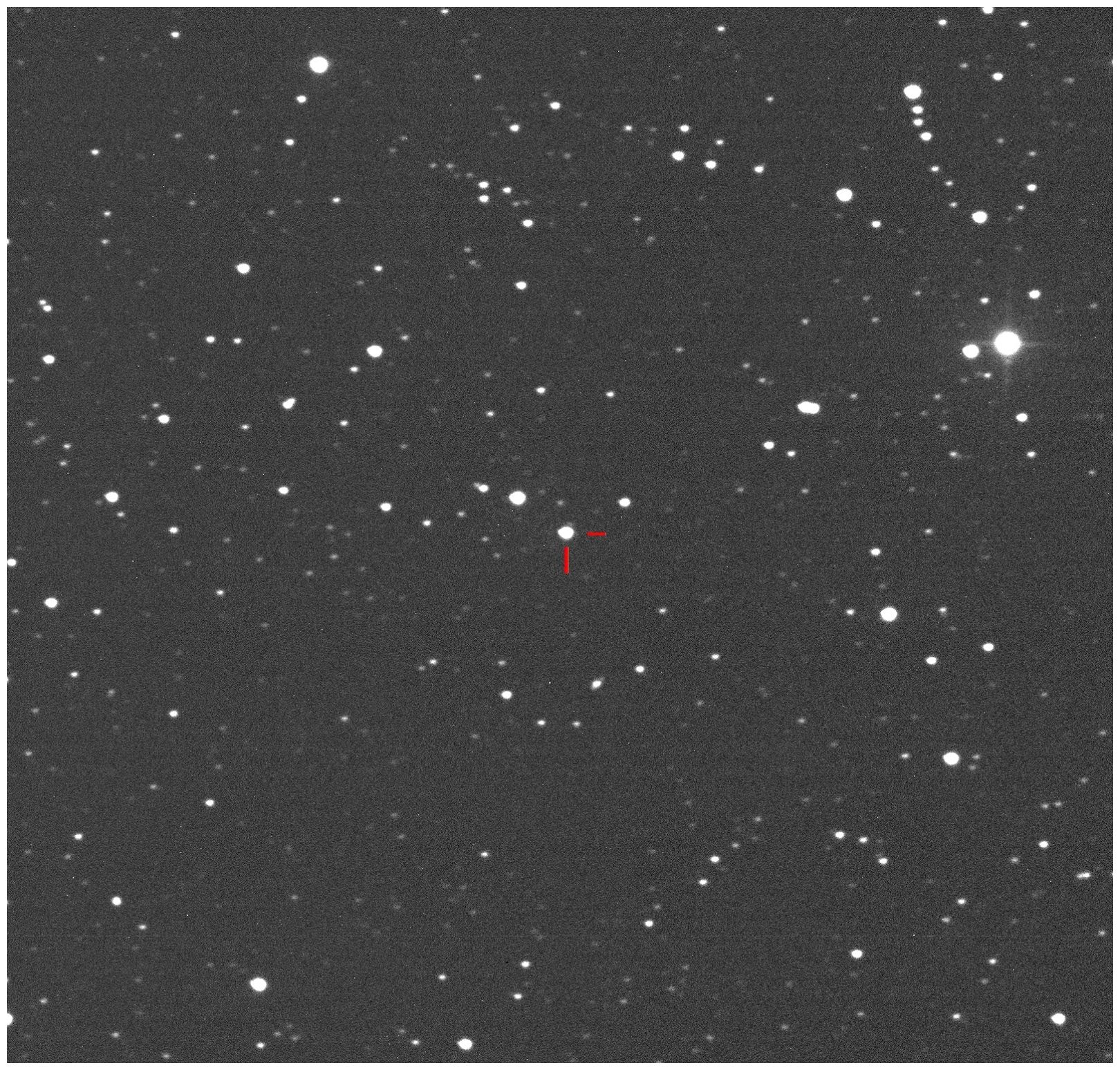
Following the posting on the Central Bureau's Transient Object Confirmation Page about a possible Nova in Cep (TOCP Designation: PNV J23080471+6046521) we performed some follow-up of this object remotely through the 0.43-m f/6.8 reflector + CCD of ITelescope network (MPC Code I89 - Nerpio, Spain).

On our images taken on February 02.8, 2013 we can confirm the presence of an optical counterpart with unfiltered CCD magnitude 9.8 at coordinates:

R.A. = 23 08 04.70, Decl.= +60 46 52.0 (equinox 2000.0; USNO-B1.0 catalogue reference stars).

Our annotated confirmation image
Possible Nova
© Remanzacco Observatory

Comet 2

Year of the Comet: Third comet set to make appearance in April 2013

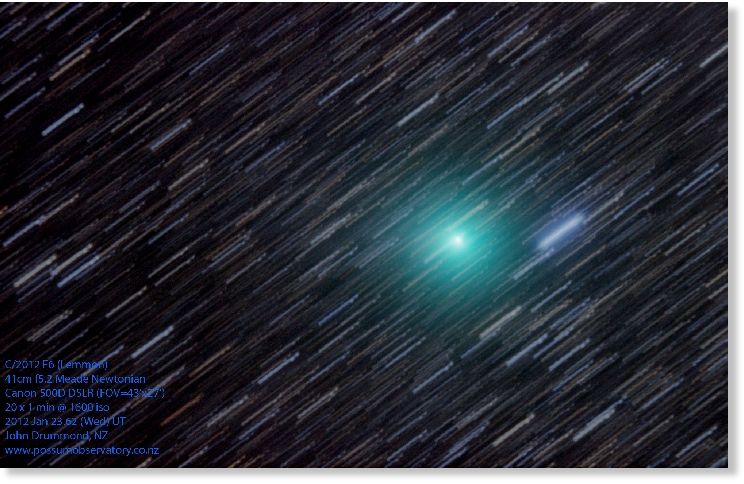
2013 could be the Year of the Comet. Comet Pan-STARRS is set to become a naked eye object in March, followed by possibly-Great Comet ISON in November. Now we must add to that list green Comet Lemmon (C/2012 F6). "Comet Lemmon is putting on a great show for us down in the southern hemisphere," reports John Drummond, who sent us a picture from Gisborne, New Zealand: "I took the picture on Jan. 23rd using a 41 cm (16 in) Meade reflector," says Drummond. "It is a stack of twenty 1 minute exposures."
Image
© John Drummond
That much time was required for a good view of the comet's approximately 7th-magnitude coma ("coma"=cloud of gas surrounding the comet's nucleus). Lemmon's green color comes from the gases that make up its coma. Jets spewing from the comet's nucleus contain cyanogen (CN: a poisonous gas found in many comets) and diatomic carbon (C2). Both substances glow green when illuminated by sunlight in the near-vacuum of space. Discovered on March 23rd 2012 by the Mount Lemmon survey in Arizona, Comet Lemmon is on an elliptical orbit with a period of almost 11,000 years. This is its first visit to the inner solar system in a very long time.

The comet is brightening as it approaches the sun; light curves suggest that it will reach 2nd or 3rd magnitude, similar to the stars in the Big Dipper, in late March when it approaches the sun at about the same distance as Venus (0.7 AU). Northern hemisphere observers will get their first good look at the comet in early April; until then it is a target exclusively for astronomers in the southern hemisphere. - Space Weather

Einstein

Germany clears genetic testing of embryos after ethics debate

Image
© AFP Photo
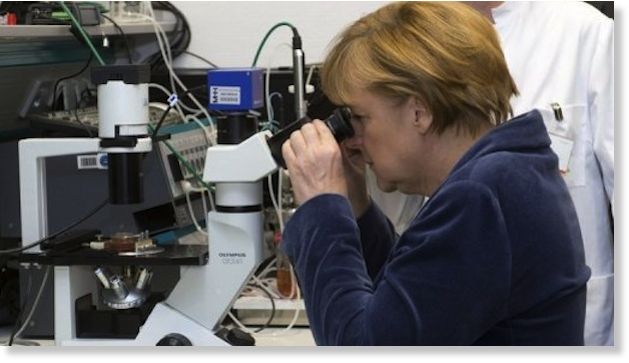
Germany's upper house of parliament on Friday gave its green light to testing embryos after in vitro fertilisation in certain cases after a passionate ethical debate in the country on the issue.

The Bundesrat voted to allow so-called pre-implantation genetic diagnosis of embryos when one of the partners had a history of serious hereditary disease or if there was a high risk of stillbirth.

The lower house of parliament, the Bundestag, gave its approval in July 2011 after an emotional three-and-a-half hour debate.

People

Cooperators can coexist with cheaters, as long as there is room to grow

Microbes exhibit bewildering diversity even in relatively tight living quarters. But when a population is a mix of cooperators, microbes that share resources, and cheaters, those that selfishly take yet give nothing back, the natural outcome is perpetual war. A new model by a team of researchers from Princeton University in New Jersey and Ben-Gurion University in Israel reveals that even with never-ending battles, the exploiter and the exploited can survive, but only if they have room to expand and grow. The researchers present their findings at the 57th Annual Meeting of the Biophysical Society (BPS), held Feb. 2-6, 2013, in Philadelphia, Pa.

"In a fixed population, cells that share can't live together with cells that only take," said David Bruce Borenstein, a researcher at Princeton. "But if the population repeatedly expands and contracts then such 'cooperators' and 'cheaters' can coexist."

Our world and our bodies play host to a vast array of microbes. On our teeth alone, there are approximately a thousand different kinds of bacteria, all living in very close quarters. This is amazing, the researchers observe, because many of those species share resources with nearby neighbors, who might not be so cooperative or even related [1].

At the scale of cells, individuals cooperate mainly by exporting resources into the environment and letting them float away. "This is a deceptively complex process in which cells interact at long ranges, but compete only with nearby individuals," explained Borenstein. "Our models predict that, even when this exploitation prevents any possibility of peaceful coexistence, the exploiter and the exploited can survive across generations in what is basically a perpetual war." The researchers speculate that similar competition might occur between cancer cells and normal tissue.