
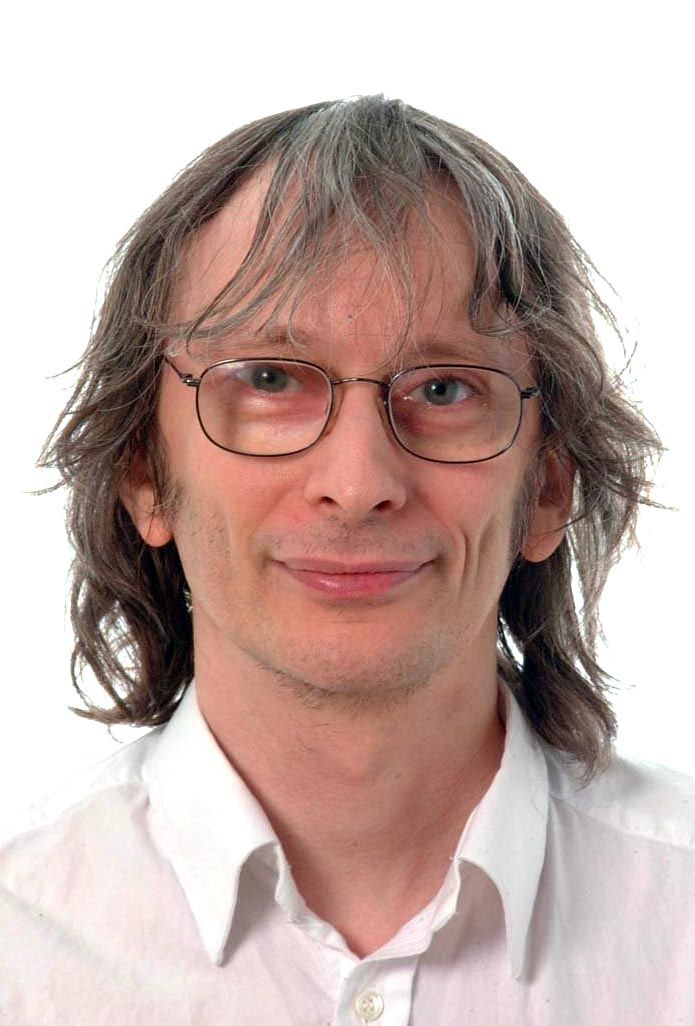
© physics.ox.ac.ukPhysicist David Deutsch, who is developing a potential 'theory of everything' with Chiara Marletto.
Computer scientists currently use a theory developed by the American mathematician and cryptographer Claude Shannon in the 1940s to describe how classical information can be encoded and transmitted across noisy channels efficiently - what, for instance, is the most data that can be streamed, in theory, down a fiber-optic cable without becoming irretrievably corrupted. At the same time, physicists are striving to build quantum computers that could, in principle, exploit peculiar aspects of the subatomic realm to perform certain tasks at a far faster rate than today's classical machines.
But the principles defined by Shannon's theory cannot be applied to information processing by quantum computers. In fact, Deutsch notes, physicists have no clear definition for what "quantum information" even is or how it relates to classical information. "If we want to make progress in finding new algorithms for quantum computers, we need to understand what quantum information actually is!" he says. "So far, the algorithms that have been discovered for quantum computers have been surprises that were discovered by blundering about because we have no underlying theory to guide us."













Comment: For more on information theory and how it may apply to everyday life, see Pierre Lescaudron and Laura Knight-Jadczyk's new book, Earth Changes and the Human-Cosmic Connection.