OF THE
TIMES


Here's a timeline of the evening:NBC reports that Card's psychological deterioration began when he was fitted for hearing aids a few months ago:
- Around 7 p.m.: Two shootings are reported in Lewiston with multiple casualties, according to Maine's Department of Public Safety commissioner Mike Sauschuck.
- 8 p.m.: Androscoggin County Sheriff's Office releases photos of the armed suspect and says it's investigating two active shooter incidents. The agency encourages "all businesses to lock down and or close while we investigate."
- 8:09 p.m.: Maine State Police says there's "an active shooter in Lewiston" and tells people to stay inside with their doors locked. "Law enforcement is currently investigating at multiple locations," the agency added.
- 8:26 p.m.: The neighboring city of Auburn urges all residents to shelter in place.
- 8:53 p.m.: Lewiston police identify the shooting locations as Schemengees and Sparetime Recreation, a restaurant and bowling alley.
- 9:17 p.m.: Lewiston police release the image of a white vehicle, asking members of the public to contact them if they see it. Maine State Police tell CNN the image is of the suspect's car.
- 10:52 p.m.: Police on social media name Robert Card as a "person of interest" in the shootings and release his photo.
- Around 11:30 p.m.: Maine Department of Public Safety Commissioner Mike Sauschuck says a "vehicle of interest" was found in Lisbon, about 8 miles from Lewiston, but the person of interest remains at large.
- 11:34 p.m.: Lisbon officials say all town offices will be closed on Thursday and tell people to keep sheltering in place.
Card, a firearms instructor and a longtime Army reservist, began to hear voices that were saying "horrible" things about him about a couple of months ago when he was fitted for high-powered hearing aids, according to Katie Card, who is married to his brother.
She said his mental health had deteriorated quickly.
"He was picking up voices that he had never heard," she told NBC News. "His mind was twisting them around. He was humiliated by the things that he thought were being said." [...]
Katie Card said the family did their best to reassure Robert Card that the comments were not real, including by verifying with some of the people he claimed had made the remarks.
But, she said, "it turned into a manic belief." [...]
"We don't know this person. This is not him," she said.
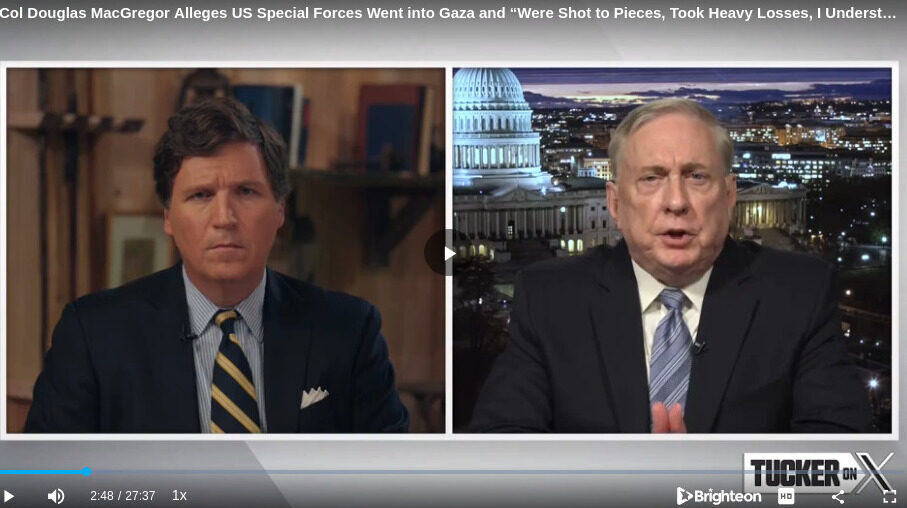
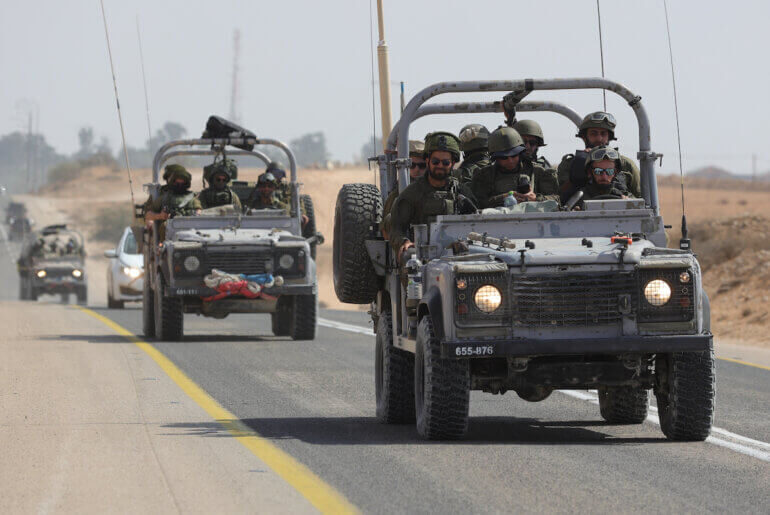
Col. Douglas MacGregor: We don't have the means to rapidly ship a large force of 80 to 100,000 troops on the ground into the region, which means that we're reliant on special forces and right now 2000 marines and perhaps 2000 special forces and special operations forces. That's not going to make much of a dent. And as we've seen quite recently, within the last 24 hours or so, some of our Special Ops forces and Israeli Special Ops forces went into Gaza to reconnoiter to plan for where they might want to go to free hostages and make an impact. And they were shot to pieces and took heavy losses as I understand it. I think that's where we're headed and I don't see that as a win for Israel in any way, shape or form.
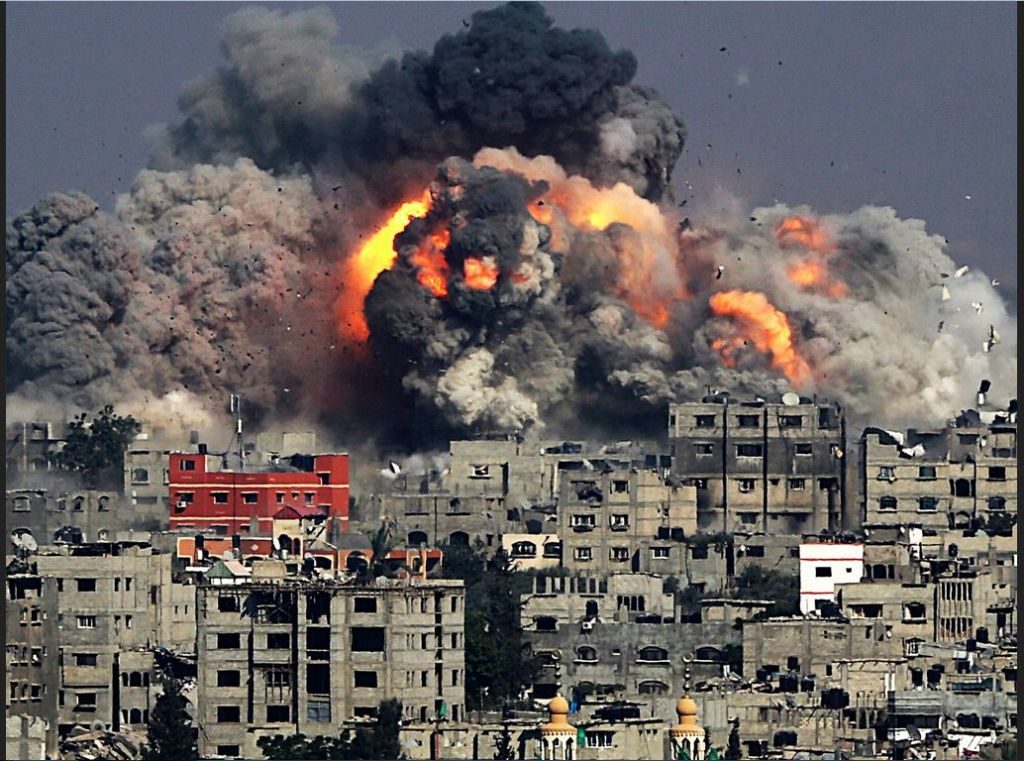
Some analysis on the prospects of an Israeli ground assault and occupation of Gaza, which perhaps explains why they've been shying away from actually launching the operation. Hamas right now claims 40,000 reasonably well-armed and well-trained fighters in a city of 2 million.
First rule of thumb: all else being equal, you generally need a 3:1 numerical advantage to attack successfully. While the IDF has an extremely steep advantage in firepower, the Palestinians have had over a decade to dig in, and the Israelis would be attacking into a growing rubble pile. As anyone familiar with the Battle of Monte Cassino (or the much more recent Battle of Mosul) would tell you, rubble can be just as good to fight from as intact buildings and will interfere with the effective use of armored vehicles. Thus, the IDF will need to mass some 120,000 troops to defeat Hamas et al and occupy Gaza.
Second rule of thumb: to conduct intensive counterinsurgency operations, you need a 1:20 ratio of security personnel to local inhabitants.
There are some two million people living in Gaza, suggesting that an occupation army of 100,000 will be required into at least the medium term to pacify the city and root out insurgents - of which there will be many, because the local population hates the Israelis to an extent we have difficulty comprehending in the West. The IDF's regular strength in peacetime is 165,000 troops. So it can be readily seen that this mission would require doubling the standing strength of the IDF out of reserves and keeping it there for a period of years, likely after a grueling urban battle that could easily inflict more combat casualties on the IDF than it has suffered in every war it has been involved in since independence combined.
Or to put it another way, devoting 1.5% of the Jewish and Druze population of Israel to counterinsurgency duty in Gaza for an indefinite period. No wonder Netanyahu keeps pushing off the invasion. Even if they win the battle it's a recipe for disaster.

Editor's Note: The author of this article requested that their name not be published, fearing for their personal safety due to the intensification of fascist persecutions against critical voices in Israel.Since October 7, the day's events have been shrouded in mystery. There are not only questions about the Israeli intelligence apparatus's colossal failure to anticipate what was happening in the tightly besieged Strip or the quick collapse of their billion-dollar "Maginot Line" but also the details of what actually transpired in the military bases and settlements around the Gaza Strip. We know that, by common estimates, 1,400 Israelis were killed in the following few days, but we do not yet know the details of how.
Comment: