"Once we defeat Barack Obama this economy will start turning around," the former Pennsylvania senator told a crowd in Miamisburg, Ohio. "Because you'll know you have someone in there who's going to unshackle businesses, reduce rates, not increase them. The president's promised increased taxes if he's re-elected."
"All he wants to do to solve the deficit problem is increase taxes on people, particularly higher-income people," Santorum continued. "You see, that sounds very populist. Go after the 1 percent. It's interesting because the British just did this. They went after the 1 percent in Britain. They dramatically increased taxes on the highest-income Brits. And guess what? It failed."
American politicians forever talk about the nation's "exceptionalism," a special greatness that sets the U.S.A. apart from all others. But this jingoism requires whitewashing much of U.S. history and ignoring much of the present, too, says Lawrence Davidson.
Everyone wants to be exceptional, to be special, to be great at something. Parents spend a lot of time assuring their children that they are indeed exceptional, even though they often know that the their offspring will spend their working lives selling mattresses or cars.
When it comes to individuals there is a very wide range of achievements that can make you stand out. Everyone can be exceptional in some way or other. Yet it is not only individuals who need to feel themselves exceptional or great.
Everyone has heard that Big Brother is tracking their navigation on the internet. Now users have a chance to find out who is doing the tracking.
RT advises that Firefox is the second most popular browser in use by web surfers. The owners are now introducing the Collusion add-on, which will allow users to monitor how their actions and movements are tracked and shared by various websites. It will show, in real time, how that data creates a spider-web of interaction between companies and other trackers.
"Since this country's earliest days, the American people have risen to this challenge - and all that it demands. But, as we have seen - and as President John F. Kennedy may have described best - 'In the long history of the world, only a few generations have been granted the role of defending freedom in its hour of maximum danger.'"Holder quotes that and then immediately rejects it, claiming that our generation too should act as if it is in such a moment, even if it isn't, a moment that Holder's position suggests may last forever:
"Half a century has passed since those words were spoken, but our nation today confronts grave national security threats that demand our constant attention and steadfast commitment. It is clear that, once again, we have reached an 'hour of danger.'So, if I were to estimate that Al Qaeda barely exists and is no serious threat to the Homeland formerly known as the United States, I would not be underestimating it? If I were to point out that no member of that horrifying outfit has been killed in Afghanistan this year, that fact would not contribute to an unacceptable underestimation? What fun it is to fight the most glorious of wars in the hour of maximum danger against an enemy so pitiful that it literally cannot be underestimated.
"We are a nation at war. And, in this war, we face a nimble and determined enemy that cannot be underestimated."
An important message by the Director of Applied Scholastics in Western Australia based in Perth, Alison Tarrant was sent to the public on behalf of The Athena School. "Some very disturbing information has come across our path in relation to a Draft Mental Health Bill which concerns our precious children and our rights as parents," said Tarrant in a statement in the February 29, 2012 letter.
Tarrant initially thought the information lacked authenticity and was later astonished when she found out the document was legitimate. "When I read it I was quite shocked and thought someone was playing a joke on me but then I went onto the main website which is the Government Department of the Mental Health Commission and looked at the actual Draft Bill," she added.
PreventDisease.com recently reported that vaccinating without parental knowledge will soon become the norm across the world. There is now a confirmed global initiative to remove any consent parents have to safeguard their children's health while simultaneously removing any chance of informed consent by those who are considered of "mature" age regardless of their status as a child or teenager. These proposed bills are poised to become law and their frequency is increasing especially in the U.S, U.K, Canada, Australia.
The bill - H.R. 347, or the "Federal Restricted Buildings and Grounds Improvement Act of 2011" - was passed by unanimous consent in the Senate, while only Ron Paul and two other Republicans voted against the bill in the House of Representatives (the bill passed 388-3). Not a single Democratic politician voted against the bill.
The virtually unanimous passage of H.R. 347 starkly exposes the fact that, despite all the posturing, the Democrats and the Republicans stand shoulder to shoulder with the corporate and financial oligarchy, which regarded last year's popular protests against social inequality with a mixture of fear and hostility.
Among the central provisions of H.R. 347 is a section that would make it a criminal offense to "enter or remain in" an area designated as "restricted."
The bill defines the areas that qualify as "restricted" in extremely vague and broad terms. Restricted areas can include "a building or grounds where the President or other person protected by the Secret Service is or will be temporarily visiting" and "a building or grounds so restricted in conjunction with an event designated as a special event of national significance."
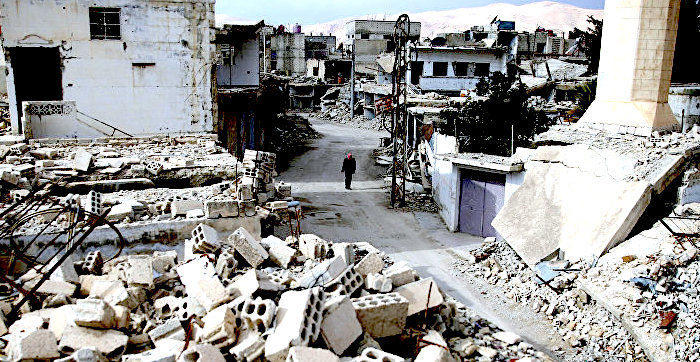
Palestine - Dozens of homes were flooded in central Gaza by untreated sewage water after Israel opened a dam located in the eastern side of the impoverished territory which leads to the Gaza Valley off the Mediterranean .
With Egypt's refusal to allow fuel into the blockaded coastal enclave, it was extremely difficult for rescue crews to tackle the problem.
Families in the flooded area have been struggling since the early hours of the morning trying to retrieve their belongings. Some area residents described the flooding of as another Israeli aggression demanding international protection.
In 2007 Israel placed the Territory under an unprecedented blockade on nearly all movement and supplies in and out of the Strip.
To add insult to injury Gazans have to deal with 18 hours of power outage because Gaza's sole power generating plant has stopped working again after Egypt blocked the flow of diesel fuel through underground tunnels.
"Where have you been?," he asked, in a manner suggesting I'd answer if I knew what was good for me. I told him I'd been at my piano lesson. He looked at me with a puzzled expression and thought about it for a moment or two. "I don't want you going to piano lessons any more." Gary said it as a simple declaration of fact: this is what he wanted, and it would happen. I looked puzzled in my turn; I wondered what on earth he meant. Gary noted my expression, and he took a step closer to me, his face tightening with distaste and disapproval. "You aren't going to any more piano lessons. If I catch you going to one, I'm going to beat the crap out of you."
It's in the very nature of decent folks to find some things unimaginable. And it's also common for all of us to use our own experience and self-reflection to conjecture what the underlying motives of someone else might be when they engage in behaviors that perplex us. For example, we might feel ashamed of ourselves when a thoughtless or insensitive comment we made about someone comes to light. As a result, we might deny we ever said what we did, or attempt to put as positive a "spin" as we can about what we meant by the comment. It's natural, therefore, when we see someone else engaged in some sort of denial or even some "covering their tracks" sort of behavior to presume that their motivation for doing so is the same as ours would be.


Comment: In this video, Dr. Albert A. Bartlett stresses the idea that, " We can't let others do the thinking for us".