
© Asia Narratives
The Strait of Hormuz crisis has already destabilized global energy markets. Secondary effects on fertilizer, shipping, insurance, and food prices will intensify later this year.
This summit therefore unfolds against the backdrop of systemic military conflicts and economic pressure rather than diplomatic and strategic opportunities. The central issue is no longer what China and the United States discuss, but whether Washington has the internal coherence to follow through on its agreements.
The formal agenda is extensive: Iran, trade, artificial intelligence, semiconductors, rare earths, Taiwan, and supply chains. The practical expectations are narrower. Three hotels with approximately one thousand rooms have been reserved for the American delegation. It will include Boeing CEO Kelly Ortberg and Citigroup CEO Jane Fraser. It is expected that Beijing will announce a large purchase from Boeing. Beyond that, major structural breakthroughs will be unlikely, as America is intent on containing China and China equally determined to resist.
Optics will outweigh substance.
This is Trump's second state visit to China. It is expected that President Xi will reciprocate with a visit to Washington in late 2026. The symbolism matters to both sides, but the governing philosophies remain fundamentally different.
China approaches statecraft through continuity, strategic patience, long-term planning, and institutional coordination.
Trump approaches negotiations through pressure, leverage, seat-of-the-pants improvisation, and public spectacle.
China seeks structural stability. Trump seeks trophy transactions.
Beijing prioritizes systems. Trump prioritizes momentum and perception.
Deciphering Trump
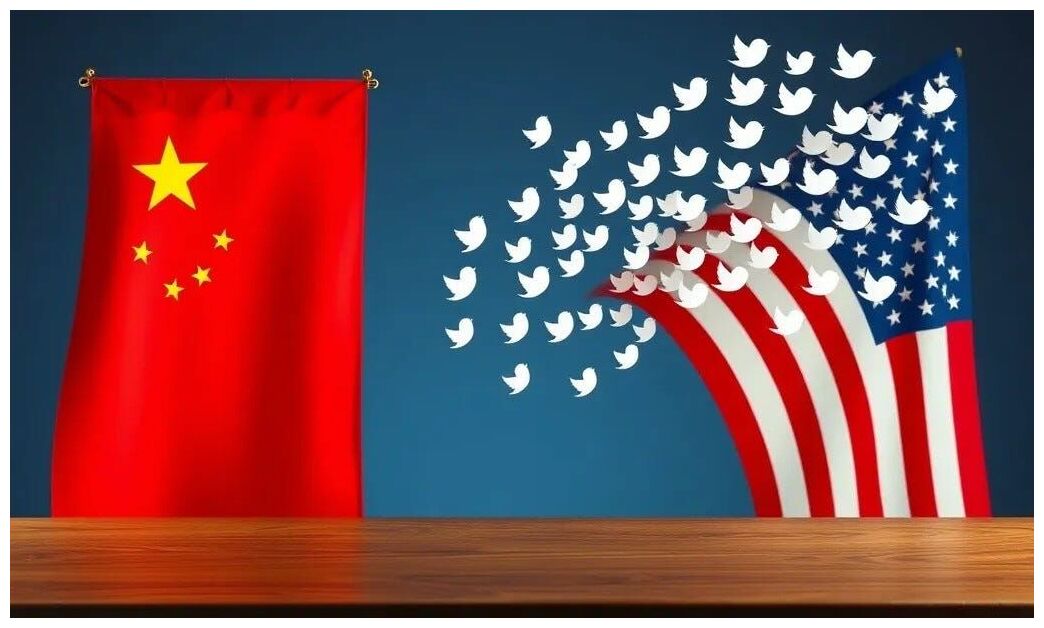
The key to deciphering Trump is his social media posts both in terms of number and content. Since the beginning of his second term Trump has been telegraphing his priorities and state of mind on a daily basis. His posts reveal his emotional impulses, political insecurities, instincts, and objectives more clearly than his official speeches or policy documents.
The hierarchy of those posts is revealing. Personal grievances dominated the messaging: attacks on judges, media organizations, political opponents, bureaucratic institutions, and perceived disloyal elites. Iran followed closely behind, framed through deterrence rhetoric, military threats, and unpredictability. The White House ballroom project occupied the third position, functioning as a symbol of his desire to memorialize his ego and legacy. Migration, border sovereignty, poll numbers, "Golden Age" restoration rhetoric, and narratives of national decline were also part of the major themes of his social posts. China appeared less frequently as a direct subject, yet remained indirectly embedded in nearly every international strategic issue.
This hierarchy differs sharply from Trump's campaign promises and inaugural rhetoric. His MAGA political movement was based on promises to reduce inflation, restore manufacturing, improve wages, lower healthcare costs, stabilize energy prices, secure borders, end foreign wars, and deliver a renewed American "Golden Age." His inaugural messaging emphasized industrial revival, national restoration, economic stability, and peace through strength.
The daily social media reality revealed Trump's different operational priorities. Emotional confrontation displaced governance. Symbolic conflict displaced measurable policy outcomes. Grievance politics occupied more space than inflation, healthcare reform, or industrial modernization.
Economic problems were moral failures. Inflation was elite incompetence. Deindustrialization was about being betrayed by allies and adversaries. Trade deficits were framed as humiliating attacks. Migrant laborers were cast as criminals conspiring to displace Americans. Economic anxieties caused by years of domestic political and economic malfeasance were twisted into a narrative of international victimization.
Non-white immigration was framed as an existential threat to American sovereignty, demographic security, and cultural cohesion.
Healthcare, despite 18 years of campaign promises, became secondary. Scattered references focused mainly on pharmaceutical pricing and bureaucratic inefficiency rather than comprehensive reform promised.
In terms of the war in Ukraine, Trump criticized the conflict as expensive, prolonged, and extended by weak leadership and European dependency. At the same time, he avoided fully embracing either interventionism or isolationism. The rhetoric preserved flexibility while maximizing political leverage.
At the center of Trump's neurosis is the White House ballroom. Critics viewed it as vanity and excess. Trump then framed the opposition as unpatriotic saboteurs of American prestige and national renewal. His personal ambition has become fused with his sense of state symbolism and power.
The Iran rhetoric revealed similar contradictions. Iran was described simultaneously as weak, collapsing, and internally broken while also being portrayed as an existential threat demanding overwhelming military pressure and immediate responses from the allies he hadn't consulted. The contradictions inherent in populist politics mean the adversary must appear simultaneously inferior and dangerous.
Trump's messaging consistently personalizes power. Crowd sizes, poll numbers, instinctive diplomacy, and leader-to-leader chemistry appeared repeatedly. National success was linked to his personal authority. His foreign policy centered around his whims and instincts rather than institutions and planning.
China's part in this framework remains significant because it was presented as implicit rather than explicit threat and response. The Strait of Hormuz is critical to China because China is the world's largest crude oil importer. Washington's idea was that by destabilizing China's energy security, manufacturing output, inflation management, and export competitiveness will be effected. Venezuela and Nigeria were similar points on this arc of energy attack on China. China's response has been to build reserves, develop its nuclear and fission reactor industries, and lead the world in terms of renewable energy equipment.
Trump put the national victimization narrative on full display. Washington's narrative: the US pays the costs of maritime order while China derives the economic benefit from stable trade routes. Ignoring the reality of America's $4.3 trillion import dependence. Trump's logic toward China: diplomacy is weakness, pressure is strength, and leverage is the foundation of American hegemony.
Trump's China strategy is transactional. Tariffs, rare earths, semiconductors, manufacturing leverage, supply chains, energy pressure, and symbolic bargaining between strong leaders dominate the framework. The Iran conflict indirectly pressures China through oil prices, shipping costs, inflation, and supply-chain instability.
At the symbolic level, Trumpian nationalism and Chinese national rejuvenation narratives have parallels. Both emphasize restoration, historical humiliation, national prestige, and the need for vigilance. The difference remains institutional. China embeds symbolism within state continuity and long-term national development. Trump personalizes symbolism around his ego.
Internationally, Trump's political "own goals" have cast China as steady and predictable. While Trump's theatrical politics have reinforced global perceptions that U.S. governance is unstable, personality-driven, polarized, and strategically inconsistent. China increasingly presents itself, particularly across the Global South, as disciplined, predictable, development-oriented, and institutionally coherent. That contrast has become central to China's international positioning.
Trump's social media remains the clearest guide to his strategic instincts and political psychology. It reveals his emotional priorities, perceived threats, symbolic obsessions, and negotiating style more directly than formal diplomatic language. Viewed through that lens, this Beijing summit is unlikely to produce major structural agreements. It will instead emphasize spectacle, tactical bargaining, economic symbolism, and narratives of strength.
The summit is therefore not primarily about convergence. It is about management. Beijing will pursue stability, continuity, and strategic advantage. Trump will pursue leverage, visibility, and political theater. China will approach the meeting as statecraft. Trump will approach it as negotiation and performance. The contrast defines the summit itself.



Reader Comments