
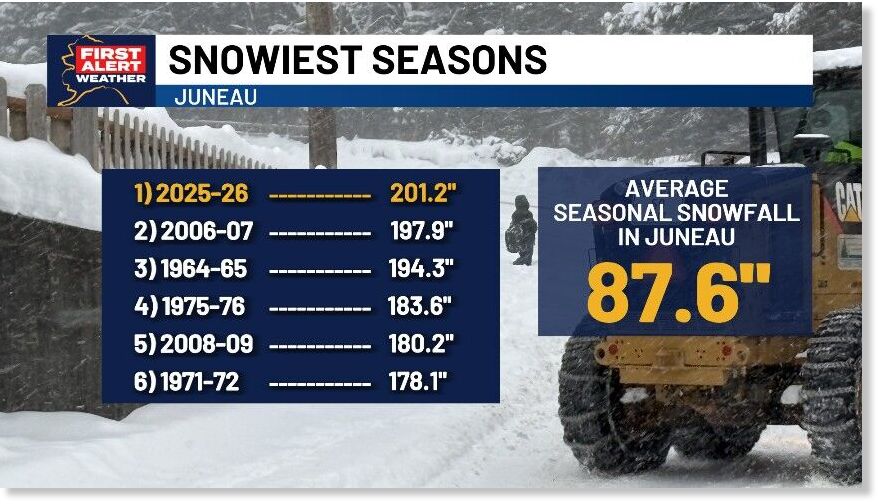
Juneau has now logged an extraordinary 201.2 inches of snowfall so far this season, pushing the city past its all‑time seasonal record and underscoring the severity of this year's winter storms. While the city is no stranger to heavy snow, the total far exceeds what even residents of the reliably wintry capital typically see, following months of intense systems that triggered avalanche dangers, buried roadways and contributed to roof collapses earlier in the season. The accumulation marks one of Juneau's most disruptive winters in recent memory, highlighting how persistent, moisture‑packed storms have overwhelmed the city's usual capacity to manage snow.
On Tuesday, the National Weather Service (NWS) office in Juneau shared an infographic on its website detailing the all-time record—201.2 inches of snow have fallen throughout the 2025-26 winter season. Snowfall records are kept from mid-summer to mid-summer of the following year, NWS lead meteorologist Dan Slagle told Newsweek, as Juneau frequently sees snow in spring and fall, as well as during the winter months. Usually, Juneau averages about 80 inches per year, Slagle said.
The 201.2 inches Juneau has seen so far this year has far outpaced the average and also puts this year in first place for all-time snow, smashing the previous record of 197.9 inches, set in 2007. The third-place mark was 194.3 inches, set in the 1964-1965 season.
The new record was shared a few hours after NWS Juneau posted about heavy snow conditions.
"Heavy snow showers are currently over the Juneau area, with more moderate to heavy snow showers further upstream near Funter Bay," NWS Juneau said in a post on X on Monday. "We have issued a Special Weather Statement for this threat. Expect an additional 1 to 3 inches this afternoon, with locally higher amounts possible."
In addition to smashing its all-time snow record, Juneau International Airport has received 69.2 inches this month alone, making it the snowiest March on record.
"It's been a long winter for a lot of people," Slagle told Newsweek.
Looking ahead, there's no heavy snow forecast for the immediate future. The region will be trending toward a drier period, Slagle said, for at least the next five days. Winter weather advisories in place across the region earlier this week have expired, although wind advisories, gale warnings and small craft advisories remain in place.



Reader Comments
to our Newsletter