
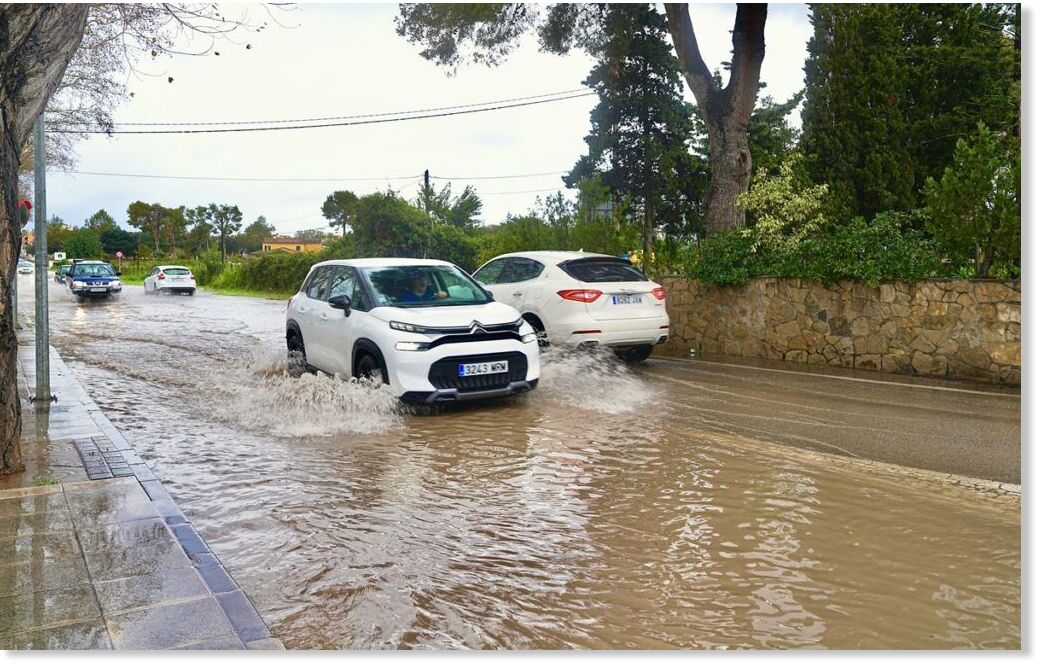
© Siahay Photo CornerVehicles drive through floodwater on a street in Spain after record winter storms brought the heaviest rainfall in nearly 50 years.
Between late December and mid-February, eleven consecutive storms swept across the Iberian Peninsula, bringing record rainfall, flash floods and landslides. According to Spain's national weather agency AEMET, the rainfall recorded during this period is the highest seen in 47 years, marking a dramatic shift for a country far more used to worrying about drought than overflowing rivers.
For many residents and expats living in southern Spain, the scenes have been striking. Regions famous for sunshine and dry landscapes suddenly found themselves dealing with swollen rivers, damaged roads and communities cut off from the outside world.
A chain of storms that changed the Spanish winter
The turning point came when Storm Leonardo hit the south of the peninsula, particularly Andalusia, bringing intense rain and powerful winds.
In some areas, up to 120 millimetres of rain fell in just one day, while wind gusts reached 150 kilometres per hour. What began as heavy rain quickly turned into dangerous flooding in several provinces.
In Granada province, small communities experienced the most dramatic impact. In the village of Bayacas, located on the slopes of the Sierra Nevada, the Chico River suddenly burst its banks, flooding streets and damaging key infrastructure.
Water supply pipes ruptured under the pressure and several access roads disappeared beneath floodwater before emergency services could reach the area. Residents reported bridges collapsing and cars being swept away by the force of the water.
Near the Guadalfeo river, floodwaters rose so quickly that some homes were submerged within minutes.
Authorities confirmed that two people lost their lives during the storm, while several towns had to organise evacuations as landslides threatened nearby properties.
For locals and foreign residents alike, the speed of the flooding was the most alarming part. Many said the situation changed within hours, transforming quiet winter landscapes into scenes that looked more like a disaster film.
A country built for drought, not floods
Spain is no stranger to extreme weather, but the country's infrastructure has traditionally been designed with water shortages in mind rather than sudden excess rainfall.
In regions such as Andalusia, the climate typically brings more than 300 days of sunshine a year, and much of the water management system focuses on storing rain during occasional storms to survive long, dry summers.
This winter's storms, however, exposed the limits of that approach.
Several towns reported water networks breaking under pressure, while landslides blocked roads and delayed rescue operations. In some remote areas, residents were temporarily cut off from outside help.
In the first hours of the flooding, locals often had to act quickly themselves. Residents built temporary barriers using sandbags and stones, while farmers tried to redirect the flow of water away from fields and homes.
The damage has not been limited to buildings and roads.
Once soil becomes saturated after repeated rainfall, it loses its ability to absorb water. This increases the risk of landslides and erosion, especially in mountainous regions. Agricultural land has also been affected, with some fields buried under layers of mud and debris.


Reader Comments
to our Newsletter