
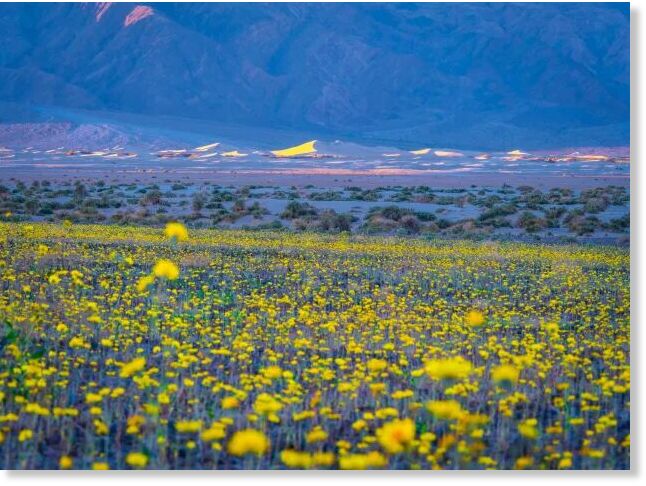
The National Park Service said the colorful display is being fueled by multiple rounds of rain since autumn, with blooms expected to continue at low elevations into mid-late March
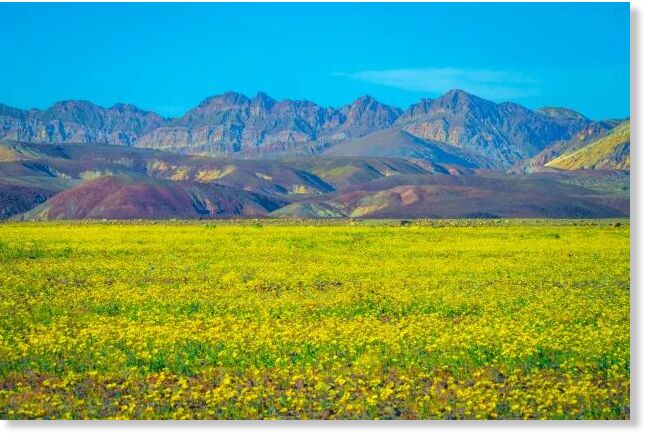
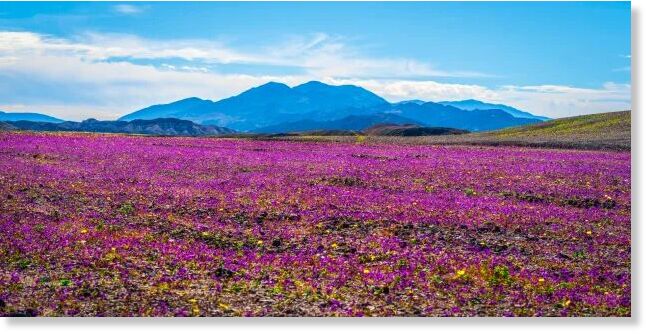
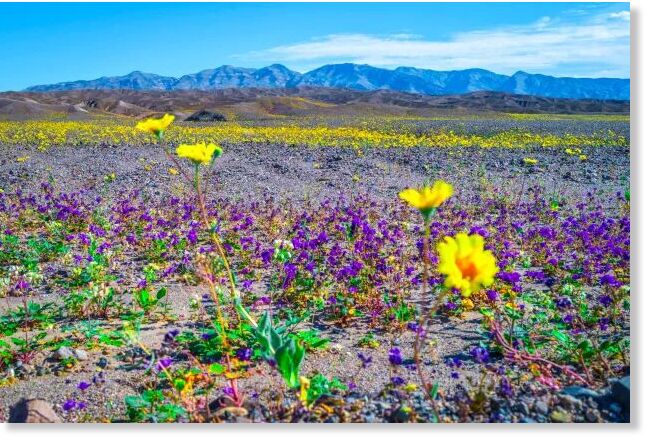
"We are having the best bloom year since 2016," park officials said in an update Saturday, Feb. 28, adding that "many sprouts have not yet flowered." The yellow Desert Gold is one of the most prominent blooms right now, with a variety of other species adding to the display.
For a superbloom to take shape in Death Valley, it usually takes more than a single storm. Multiple episodes of rain in the park during autumn and throughout the winter can build enough moisture in the soil for widespread flowering.
Photographer Dr. Elliot McGucken told AccuWeather he made the trip to the remote California park after hearing the conditions were lining up.
Another rare sight is also drawing visitors to the park: Lake Manly, a temporary lake that forms in the basin under the right conditions. It is not as deep as it has been in some past years, but visitors have still been wading out into the shallow water, where it appears to range from above the ankles to below the knees in many spots.
With crowds gathering in Death Valley to see the superbloom, park officials are urging visitors to stay on established paths to avoid damaging fragile flowers.


Reader Comments
to our Newsletter