
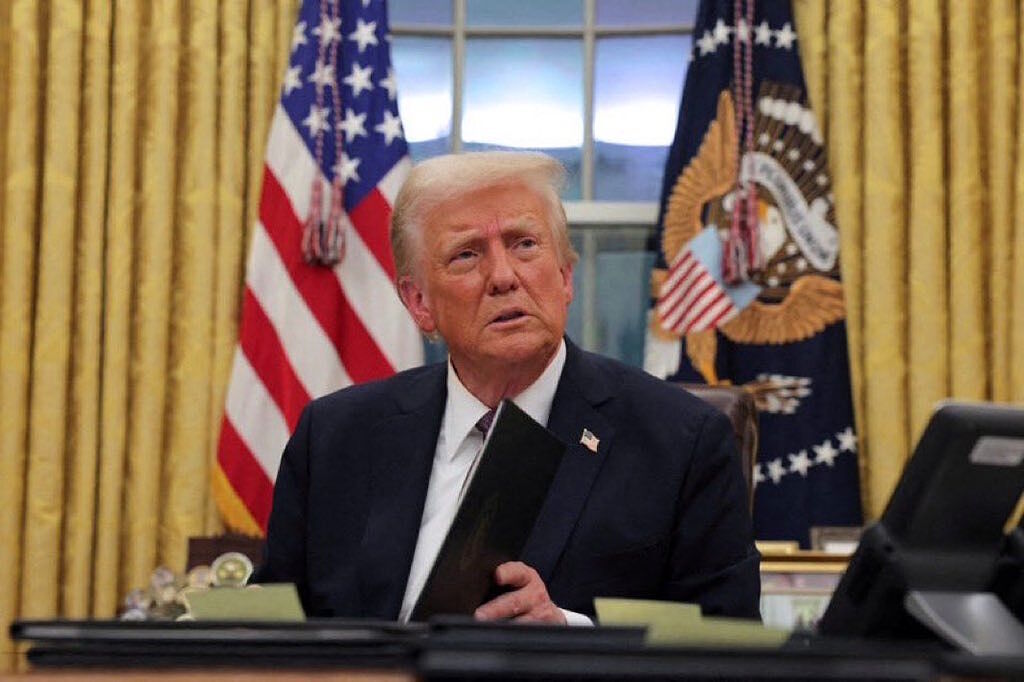
© Carlos Barría/ReutersPresident Donald Trump in the Oval Office January 6, 2025
The rule, dubbed Schedule Policy/Career, converts a wide swath of federal workers into a status similar to that of political appointees who can be fired at will.
Federal worker unions have staunchly opposed the switch, casting it as a way for President Trump to politicize a workforce tapped for its expertise to neutrally carry out their role across administrations.
The administration has been clear that the goal of the rule is to more easily fire workers it argues are hindering Trump policies — a nod to the president's claims of a "Deep State" within the federal government trying to undermine him.
"This is not about people's views or ideas. This is about whether they are refusing to actually affect their duties on behalf of the American people consistent with the objectives of this administration," said Scott Kupor, director of the Office of Personnel Management (OPM), which promulgated the rule.
Comment: If you're not going to do your job, you shouldn't have the job.
"The only impact Policy/Career has is if their disagreement leads them to then try to actively thwart or undermine the execution of those priorities, then that [is] behavior that we want to declare to people is not acceptable."
The American Federation of Government Employees (AFGE) on Thursday said the rule would open the door to political patronage.
"This rule is a direct assault on a professional, nonpartisan, merit-based civil service and the government services the American people rely on every day," Everett Kelley, the group's president, said in a release.
Comment: Seriously?
"When people see turmoil and controversy in Washington, they don't ask for more politics in government, they ask for competence and professionalism. OPM is doing the opposite. They're rebranding career public servants as 'policy' employees, silencing whistleblowers, and replacing competent professionals with political flunkies without any neutral, independent protections against politicization and arbitrary abuse of power."
The new rule would also make significant changes to how these federal workers could report waste, fraud, or abuse, barring them from going to another independent agency — the Office of Special Counsel — with their whistleblower complaint. Instead, Schedule Policy/Career employees would be required to make their complaint of wrongdoing within their agency.
Kupor said those complaints will now be reviewed by the general counsel at the agency — a role filled by a political appointee — who will then ask someone not involved to investigate the complaint.
"We are filling the gap by requiring that agencies create processes at their agencies to investigate these, including by somebody who wasn't immediately involved in the action, which is really the best we can do," Kupor said.
The AFGE and other organizations previously sued to block the policy as it was being developed, and while litigation was paused as rulemaking progressed, it is expected to resume shortly.
"This is a deliberate attempt to do through regulation what the law does not allow — strip public servants of their rights and make it easier to fire them for political reasons and harm the American people through doing so," said Skye Perryman, president of Democracy Forward, which is leading the suit.
"We have successfully fought this kind of power grab before, and we will fight this again. We will return to court to stop this unlawful rule and will use every legal tool available to hold this administration accountable to the people."
Trump tried a similar move at the end of his first term in office, then calling it Schedule F, and also faced trouble in court.
Former President Biden then also promulgated a rule that would block federal workers from being moved into a new classification without their consent, something Trump is undoing with the latest rule.
The U.S. has since the 1800s relied on a merit-based hiring system designed to end a spoils system where jobs were doled out based on political loyalty.
Comment: Merit-based. Uh-huh.
While the president can hire or nominate political appointees for a number of high-ranking roles, those positions are just a fraction of the federal workforce, which is otherwise required to carry out their nonpartisan work regardless of who is in office.
"For decades, our nonpartisan civil service has set us apart from other countries and enabled us to have stability and continuity no matter who is in the White House. The Trump Administration's move to reclassify federal employees to make it easier to fire them for political reasons will hurt these workers and their families, threaten our national security, and make it harder for Americans to access the services they need," Virginia's two Democratic senators, Tim Kaine and Mark Warner, said in a statement.
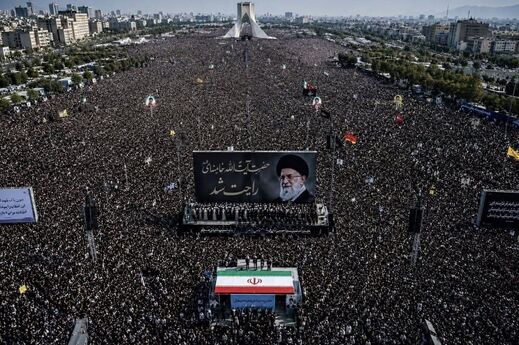
Comment: They're fighting to protect this lot:
"If we want to continue to lead the world, then we must have a federal workforce based on merit, not politics. We will continue to do everything we can to protect these dedicated public servants, many of whom live in Virginia."
But an OPM official speaking with reporters slammed public servants, arguing that the earlier leaking of the rule demonstrates that federal employees are working against the administration.
"We have a boatload of empirical data that supports the idea that there is misconduct and policy resistance among the career civil servants," the official said.
"We have numerous examples of that — career civil servants in policy-making roles. Just in the formulation of this rule, we had this rule — a confidential draft of it — was leaked to the media, so we know that that happens. We are inundated every day in the federal government, unfortunately, with misconduct and poor performance by civil servants. It's a crisis."






The average annual salary for federal civilian employees is $106,382 , according to data from the Office of Personnel Management (OPM)."
The Trump team needs to layoff a lot more than 50,000. Cushy jobs, no business requirements, fun place to work.