
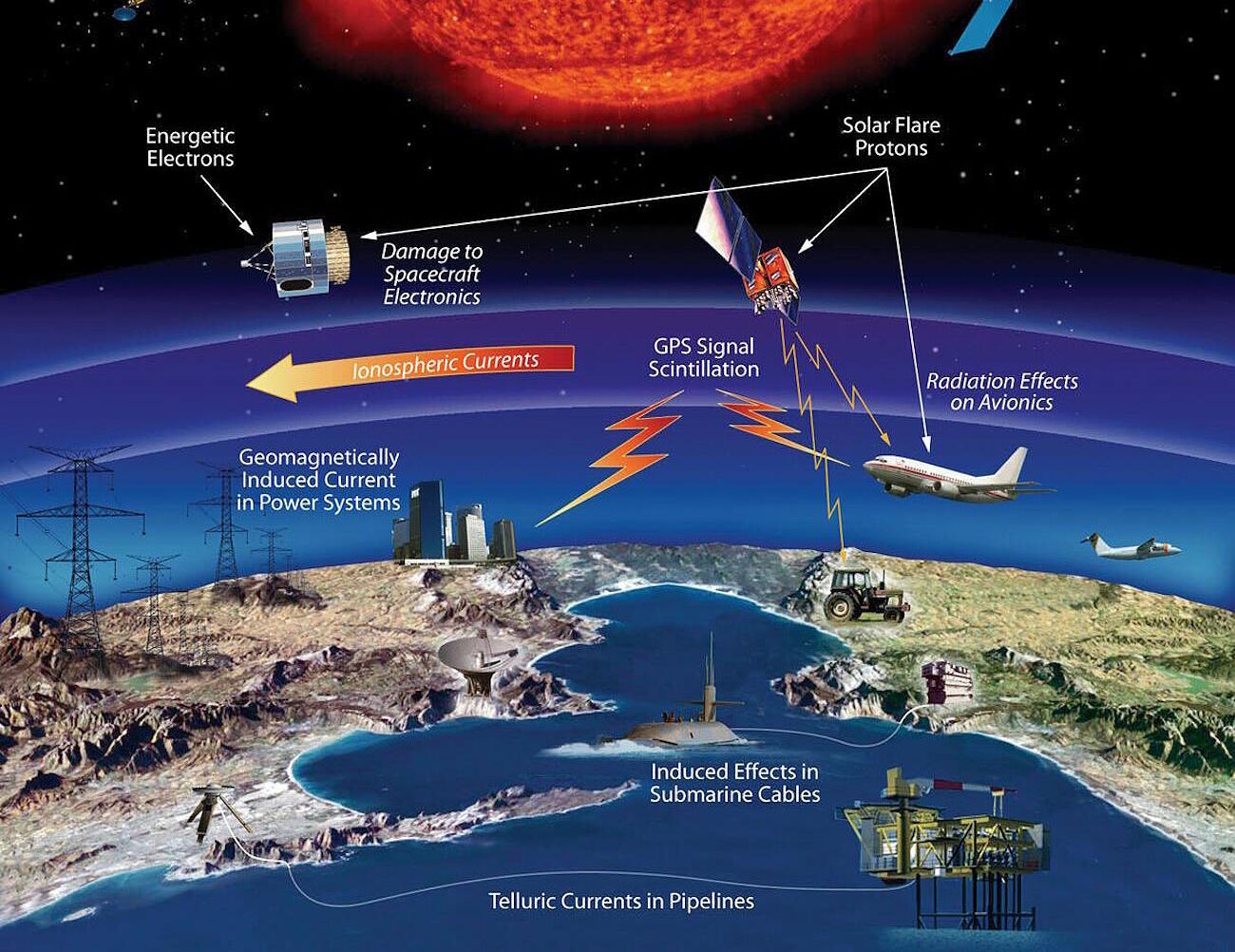
© NASA's Goddard Space Flight CenterModern society depends on a variety of technologies that are susceptible to the extremes of space weather. This graphic shows some of the technology and infrastructure affected by space weather events.
Now, the Van Allen radiation belts are "fully charged," according to space weather observer Stefan Burns. He warns that these belts of energetic particles have been building up due to repeated solar storms over the past few months.
"The next solar storm to hit could cause this plasma to precipitate downward toward the planet's upper atmosphere," Burns said.
The effects of intense solar storms are particularly significant for satellites, GPS, radio communications, and space operations, where disruptions can occur.
With growing discussion around space-based data centers and rapidly expanding satellite internet constellations, the question arises: can a modern society built on fragile semiconductors withstand repeated X-class solar flares or a Carrington-class coronal mass ejection?










Comment: