
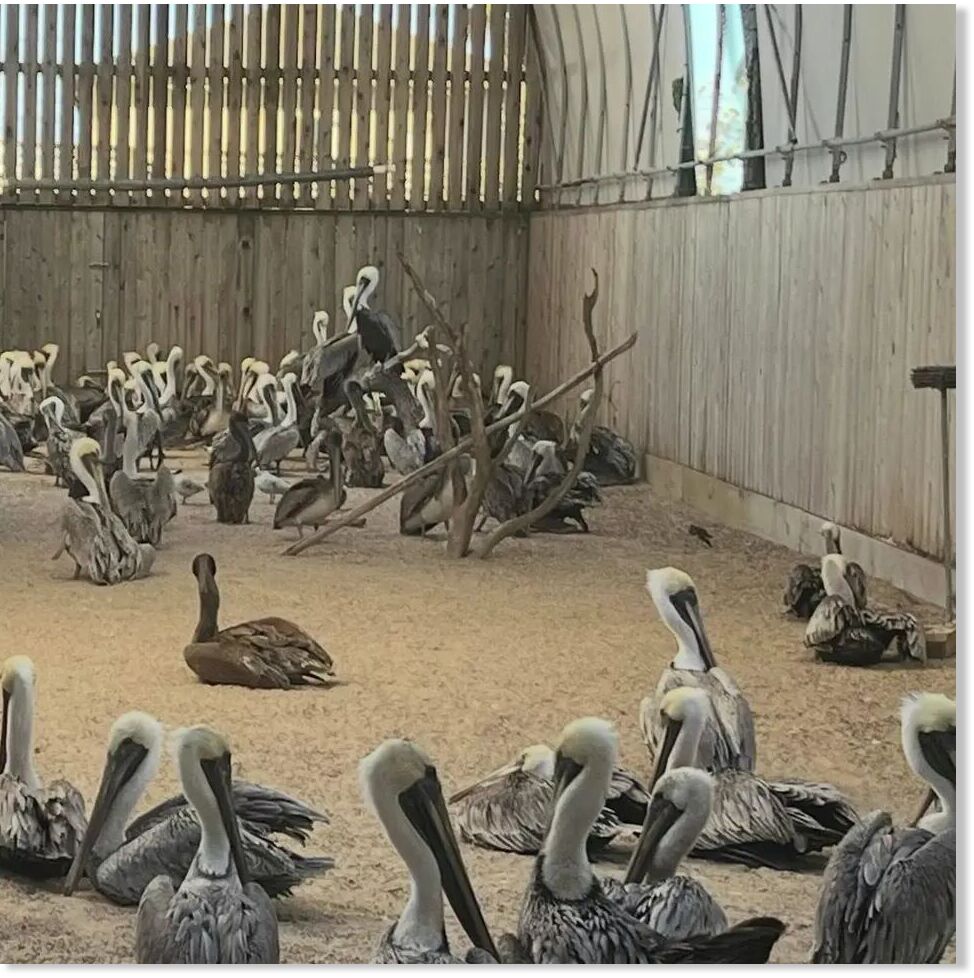
© Amos Rehabilitation KeepSurvivors of the hailstorms were transported to the ARK facility in Port Aransas for treatment.
Early assessments from the Harte Research Institute (HRI) show the scale of the loss: roughly 2,000 birds, mostly brown pelicans, were killed or severely injured on rookery islands across Corpus Christi Bay and near Baffin Bay during the Nov. 1 storms.
HRI scientists deployed drones to survey the battered islands, combining aerial footage with on-the-ground assessments to measure the extent of the damage and guide recovery efforts. The work has become a coordinated response involving multiple agencies, including the University of Texas Marine Science Institute's Amos Rehabilitation Keep (ARK), the Coastal Bend Bays & Estuaries Program, Texas Parks and Wildlife and The Nature Conservancy.
The first alarms came from fishermen who spotted dead birds on Monday morning. When staff from UTMSI-ARK reached the islands, they found grim evidence of the storm's power—pelicans with injuries matching hail impacts, and hundreds more birds dead or dying. An estimated 1,400 birds, primarily brown pelicans, were killed outright, while another 600 were injured. Survivors were transported to the ARK facility in Port Aransas for treatment.
While brown pelicans were hit hardest, the storm did not spare other species. ARK staff reported receiving great blue herons, reddish egrets, laughing gulls, ring-billed gulls, royal terns, forster's terns, sanderlings, ruddy turnstones, double-crested cormorants and belted kingfishers from the rookery islands.
"Unfortunately, many of these birds suffered very severe injuries, and all we can do is alleviate their suffering," the ARK said. "However, we're hopeful that some of these birds will be able to return to the wild once again following rehabilitation."
A photo shared by HRI captures the raw aftermath: a rookery island with craters where hailstones bored into the sand.
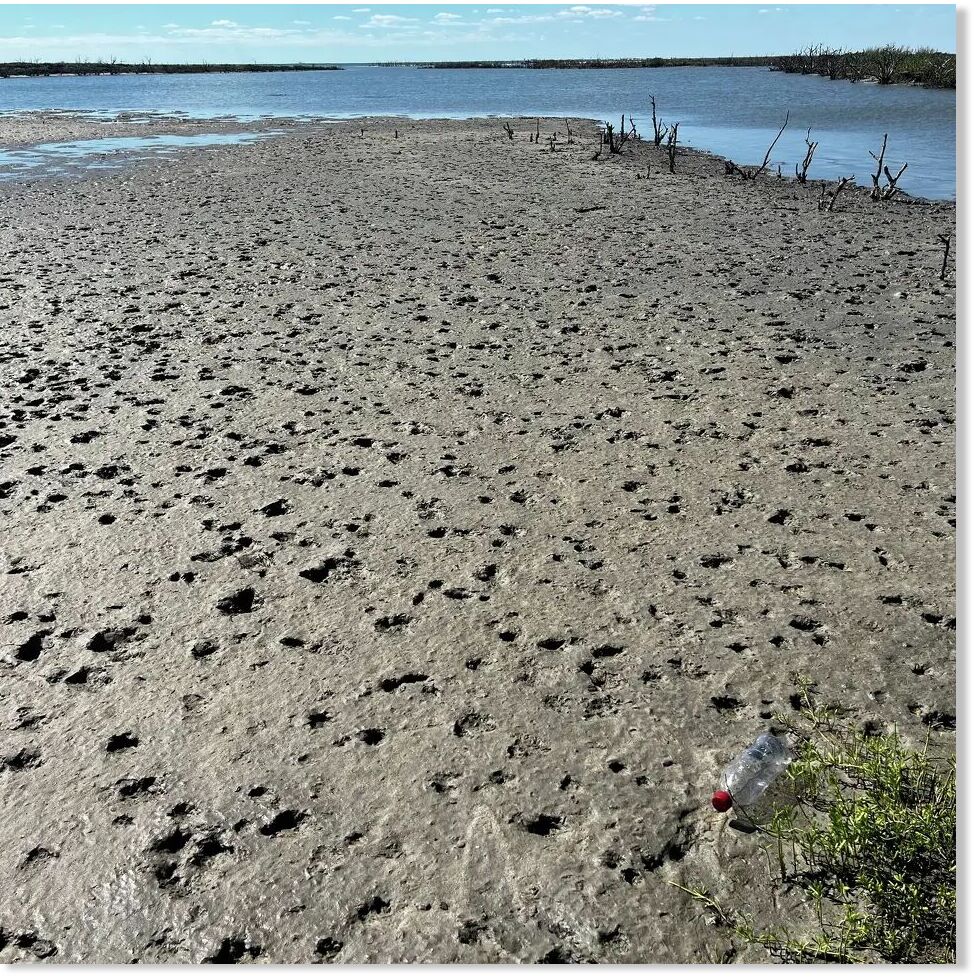
© Harte Research InstituteA photo of the damage hailstones did on a rookery island in the Coastal Bend on Nov. 1.
One storm cell packed a peak wind gust of 69 mph—tropical storm strength— and pelted the area with golf-ball-sized hail for nearly 10 minutes.



Reader Comments
to our Newsletter