
© The Postil Magazine
The "Shoah guilt complex" (Holocaust-related guilt) has for decades underpinned much of Europe's and North America's diplomatic and public support for Israel, shielding it from criticism and reinforcing its victim narrative. However, the on-going genocide in Gaza and the West Bank, carried out by Israel, is widely condemned for its savagery and heartlessness. This has led to increasing public dissent and activism in the West, with many citizens calling for accountability, ceasefires, and justice for Palestinians.
Further, the prime minister of Israel, Benjamin Netanyahu, is charged with carrying war crimes — but politicians continue to treat as if he is pure as the driven snow — all the while the ordinary people of these same politicians are frustrated and angry.
As noted, despite this shift in public sentiment, political support for Israel remains robust among Western governments and many mainstream political leaders. This is often attributed to a combination of historical guilt, strategic interests, and the fear of being labeled antisemitic. Politicians may feel compelled to maintain support for Israel due to entrenched alliances, lobbying, Islamophobia, and the perception of Israel as a key strategic partner in the Middle East.
Propaganda and guilt-based appeals by the Israel lobby that once secured broad Western support for Israel are now met with skepticism, particularly as images and reports of Palestinian suffering unimaginable horrors circulate widely and Israel ignores international law and common decency.
The "propaganda machine" that once influenced majorities in Western societies is now effective mainly among smaller, elite circles, such as top government officials and legislators, while the broader public increasingly questions or rejects these narratives. This disconnect between political elites and public opinion is a source of tension and is driving activism for policy change.
For example, there is the recent Kneecap case, the legal proceedings involving Liam Óg Ó hAnnaidh, also known as Mo Chara, a member of the Irish-language rap group Kneecap. He has been charged with a terrorism-related offence for allegedly displaying a flag in support of Hezbollah, a proscribed organization in the UK, during a concert at the O2 Forum in Kentish Town, London, on 21 November 2024.
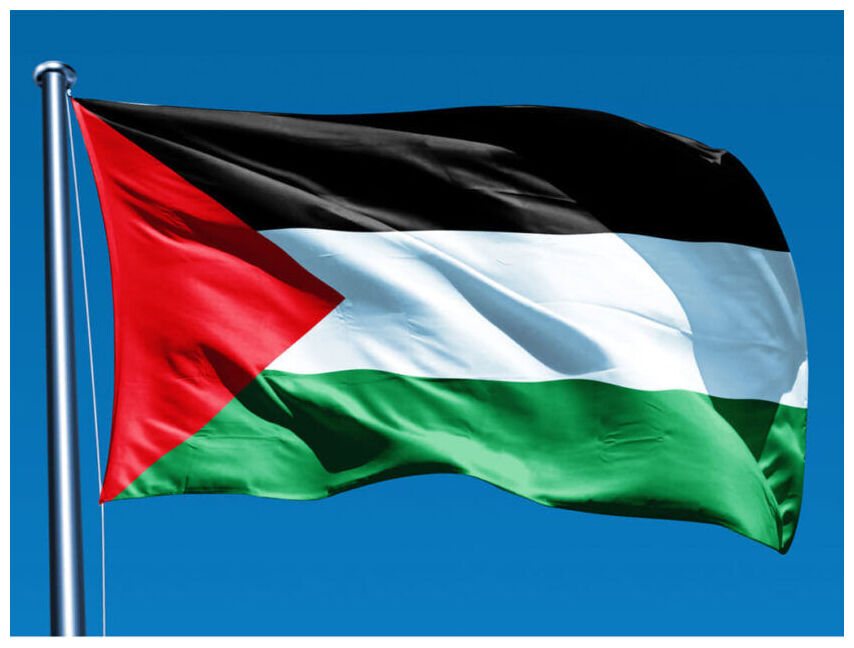
It is a crime to display a Palestinian flag. But it is not a crime to murder thousands of children. That is the true face of Western politicians. That is the West's "values." That is the West's "rule-based order." Western politicians care little for human life; they care only for power — so that mass murder is merely part of their political job description.
How long can such injustice be tolerated?










During WWII the NAZIs conquered territory that contained 2.3 million Jews, after the war 4.3 million Jews applied for compensation, tragically the remaining 6 million Jews perished.