
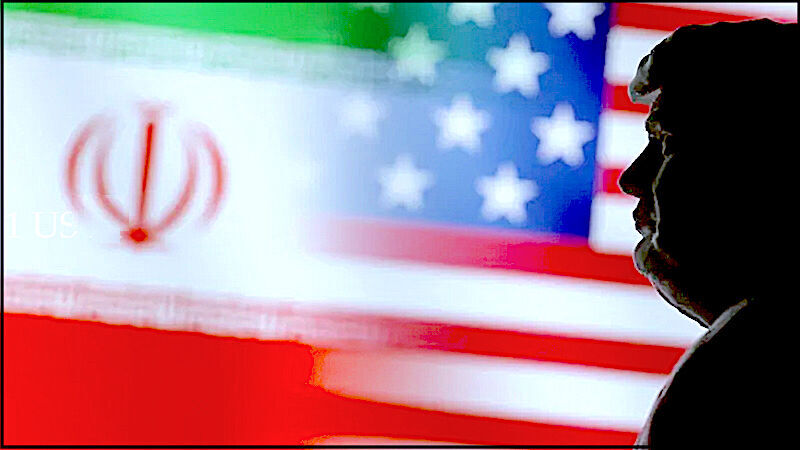
© ReutersUS President Donald Trump 3D-printed figure and flags of Iran and USA
In the United States, President Donald Trump seems to be sending mixed messages on the surface. He continues to invoke tough language on Iran, maintains sanctions, and pressures Tehran through military posturing. But the real signals of his intentions lie not in his public statements, but in his actions. Most notably, Trump's decision to fire National Security Adviser Mike Waltz has caught the attention of analysts and policymakers alike. Waltz, a key figure who reportedly held unauthorized discussions with Israeli Prime Minister Benjamin Netanyahu about potential military strikes on Iran, was relieved of his duties - allegedly because Trump was angered by his efforts to push the US closer to conflict. This move is significant. It suggests that Trump is distancing himself from advisors advocating for war and that he favors a more controlled diplomatic path. The firing sends a clear internal message: Trump does not want to be boxed into a war, particularly one driven by external pressures from Israel or hardliners in his own administration.
Trump's calculations are also shaped by domestic political realities. Despite his brash approach to foreign affairs, he is acutely aware of American public sentiment, especially as the midterms loom. The American electorate has grown weary of protracted wars in the Middle East. The Iraq and Afghanistan conflicts still cast long shadows, both in terms of lives lost and the trillions spent. Another conflict, especially with a nation as militarily and politically complex as Iran, would be deeply unpopular and politically risky. Trump knows that should the US be dragged into a new war, particularly one that appears avoidable or driven by geopolitical ambition, it would likely erode his political capital and diminish his appeal among key voter blocs. This aversion to entanglement bolsters the case that Trump is willing to pursue a diplomatic alternative - one that offers him the image of strength without the cost of bloodshed.
Moreover, Trump has long portrayed himself as a dealmaker above all else. He relishes the perception of being the man who can achieve what his predecessors could not. In this light, reviving a nuclear agreement with Iran - especially after withdrawing from the Obama-era Joint Comprehensive Plan of Action (JCPOA) — would serve his personal and political narrative. Trump's approach has always involved the use of intense pressure, sanctions, and military threats as bargaining chips. These tactics are not necessarily designed to provoke war, but to coerce opponents into concessions. The pattern fits: squeeze the adversary until they are willing to talk, then offer a face-saving off-ramp that can be sold as a "better deal." Trump's political brand is based on winning. Striking a deal with Iran, even a symbolic one, would reinforce that image and hand him a major foreign policy achievement heading into the next election cycle.
On the other side of the equation, Iran is perhaps more motivated than ever to come to the table. The Islamic Republic is confronting a series of cascading crises that have fundamentally weakened its bargaining position. First and foremost is the growing awareness among Iran's leadership that the alternative to diplomacy could be devastating. President Trump has not ruled out military action, and with hawkish voices still surrounding him in Washington and Tel Aviv, the threat of a coordinated strike on Iran's nuclear facilities is not far-fetched. If talks completely collapse, the likelihood of a pre-emptive strike from Israel - possibly in coordination with the US - increases dramatically. This would not be a symbolic gesture. It would be a military operation with the potential to spark a regional war, one Iran is in no position to win.
The Iranian economy also weighs heavily on the regime's calculations. Under the renewed pressure campaign by the US, sanctions have battered every sector of Iran's economy. The Iranian rial has plummeted to record lows, eroding the purchasing power of ordinary citizens and fueling public discontent. While Tehran has tried to pivot eastward - strengthening ties with China and Russia - the support from those alliances has been insufficient to alleviate the full impact of American sanctions. The current trajectory is unsustainable. Four more years of this pressure could push Iran's economy to the brink, potentially sparking unrest that even the government's extensive security apparatus would struggle to contain. For the leadership in Tehran, a deal with the United States is not just desirable - it may be necessary for survival.
Compounding these economic and military risks is Iran's shrinking sphere of influence in the region. All of these factors converge to create a rare and fragile window for diplomacy. For the first time in years, both Washington and Tehran have strong incentives - domestic, strategic, and economic - to avoid war and pursue a negotiated settlement. The firing of Mike Waltz was more than a personnel change; it was a symbolic moment that illuminated Trump's true intentions. His rhetoric may remain combative, but his actions reveal a leader who sees more benefit in closing a deal than opening a new front in the Middle East. Similarly, Iran's internal vulnerabilities and external pressures have created a situation where reaching an agreement is not just advantageous - it may be essential for the regime's stability and future.
In conclusion, the latest developments underscore a significant truth: the prospect of a nuclear deal between the US and Iran no longer hinges on ideology or principle alone. It depends on political will. And for now, that will exists on both sides. The coming weeks will test whether that shared willingness can overcome the logistical hurdles, domestic pressures, and deep-seated mistrust that have long stood in the way.



Reader Comments