
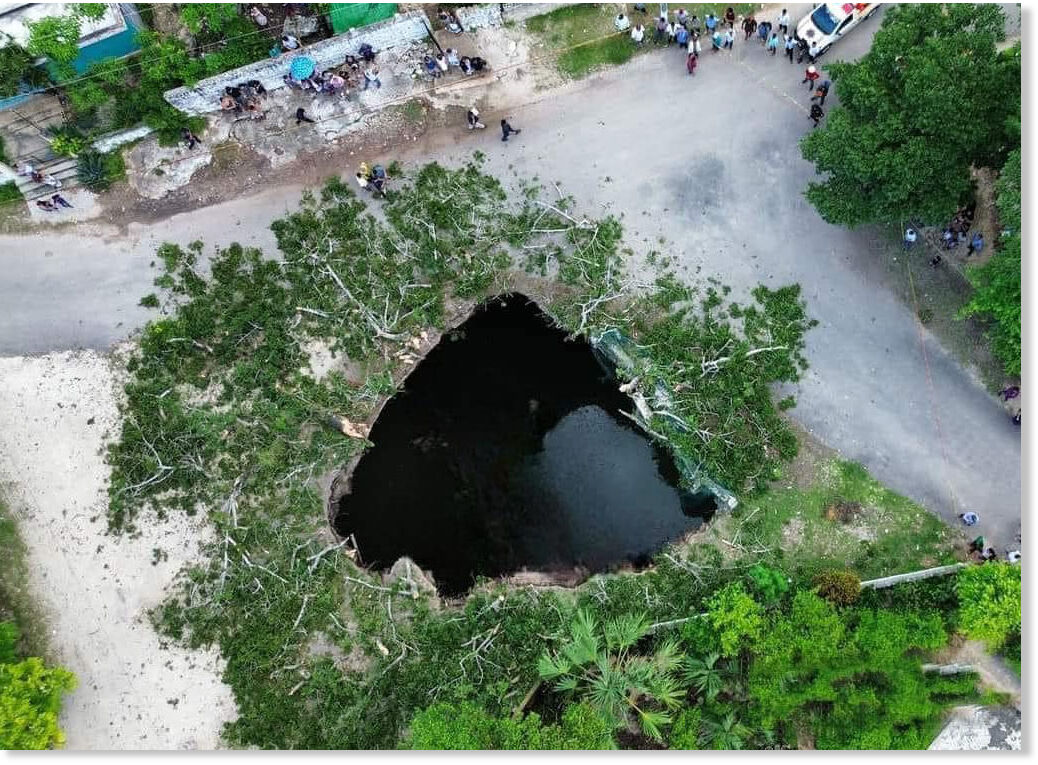
An aerial photograph of the newly discovered cenote in Xocén in Valladolid.
However, being located in Yucatán, it soon became apparent that this was not simply a sinkhole but a previously undiscovered cenote.
Speleologists are just now beginning to explore the secrets of Xocén's cenote and publishing photographs.
"The collapse of the ceiba into this cenote in Xocén appears to have been an entirely natural phenomenon, but this sort of event is important to understand as the region continues to grow and develop," a speleologist, Erick Sosa, told Diario de Yucatán.
Locals have interpreted the Ceiba's collapse and the cenote's appearance as an omen.
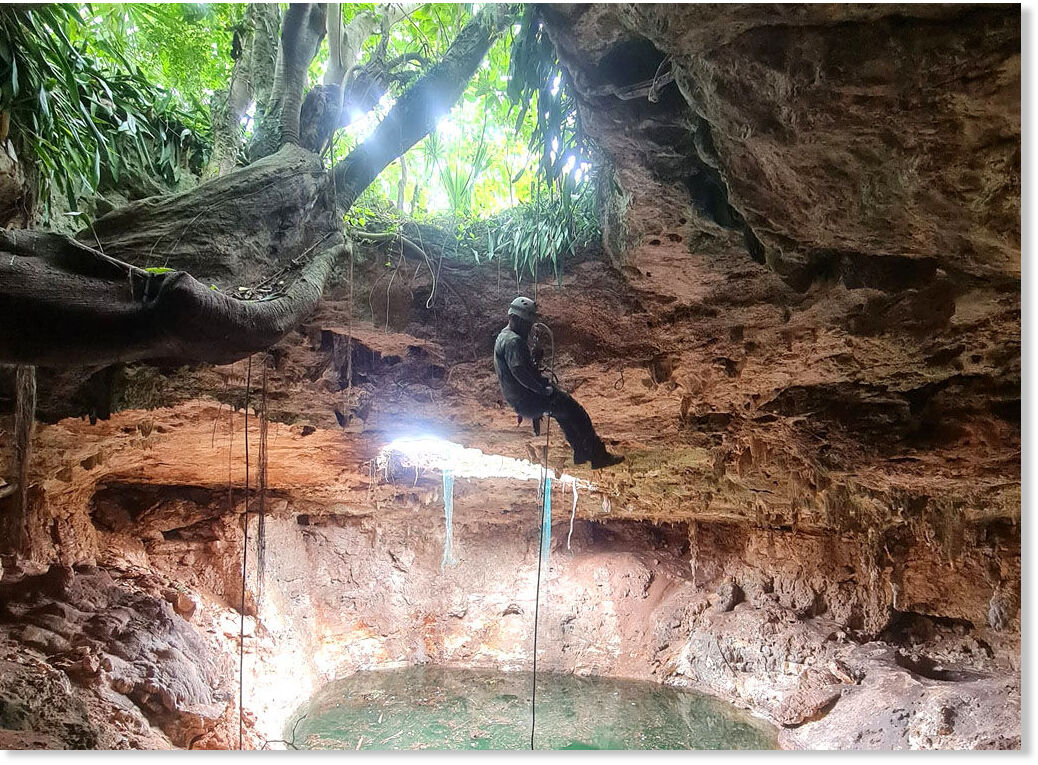
Researchers are beginning to descend into the newly discovered cenote to learn more about what led to its collapse.
The ceiba tree, or ya'axche in Maya, is considered sacred to the Maya people because of its symbolic representation of the universe.
Cenotes have also long been considered sacred in Yucatán, as they are considered both literal and metaphorical portals to the Maya underworld, Xibalbá.
Aside from serving as popular tourist attractions, many cenotes remain the main water source for several rural communities in Yucatán.
However, in recent years, pollution from pig farms and other forms of agricultural runoff have begun to affect the water quality of these ancient natural formations.
"The collapse of the Ceiba into the cenote feels oddly symbolic of what is happening in our communities. We have to do a better job of protecting our resources if we are to have any future at all," said Juan Pech, a local of Xocén, on Facebook.


Reader Comments
to our Newsletter