
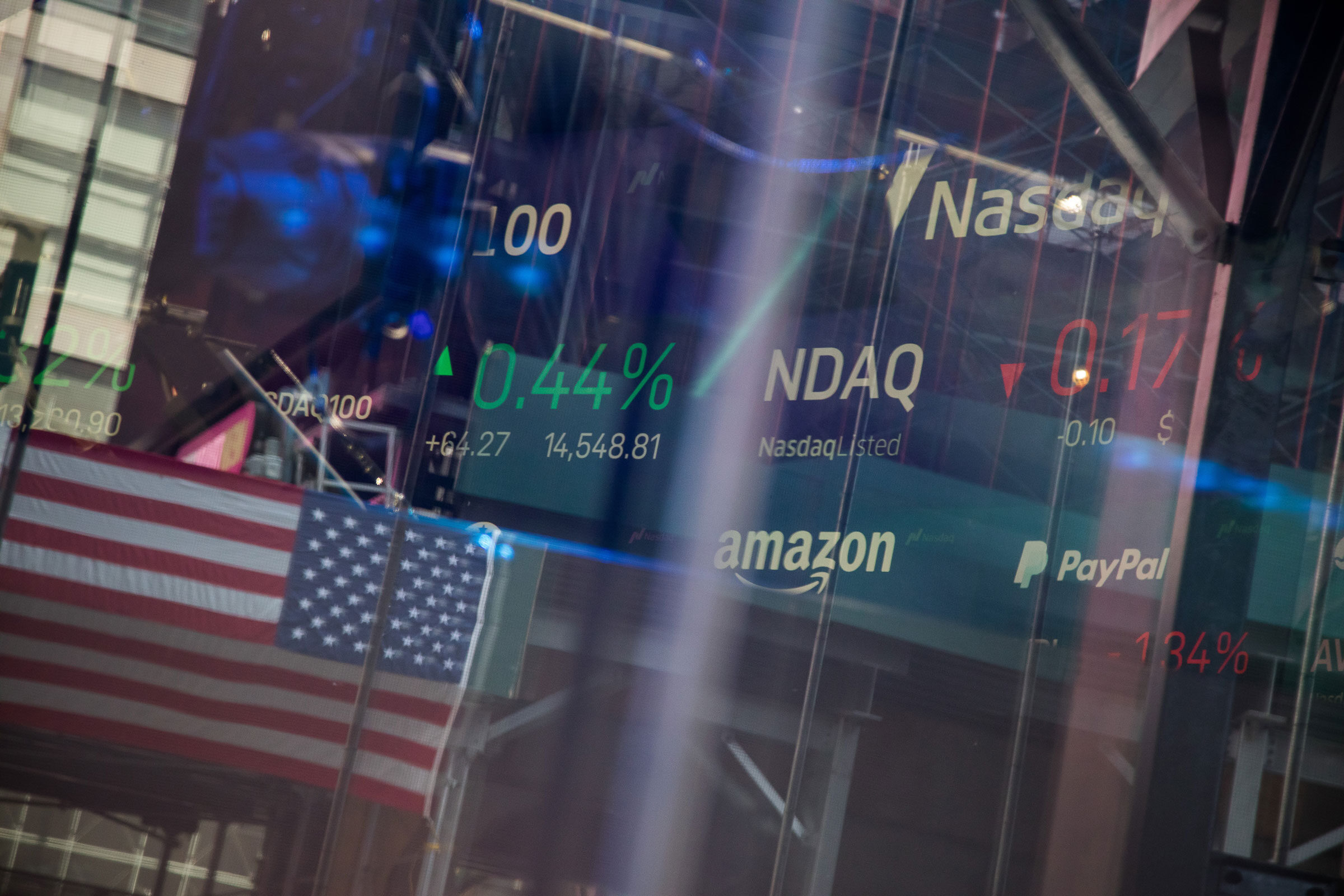
© Michael Nagle—Bloomberg/Getty ImagesStock market information at the Nasdaq MarketSite in New York, on June 9, 2023. Even with the Federal Reserve potentially halting rate hikes, US stocks remain under the shadow of a severe economic downturn, says a recent analysis by strategists at Bank of America Corp.
Comment: And this is bearing in mind that a number of analysts have shown how the labor market numbers were basically showing how those who lost their jobs during the lockdowns, eventually found other employment, it also includes those who were taking two or three jobs on top of their main one. Often, what's notably absent from these statistics is the number of unemployed, working age people who have stopped looking for work entirely.
Despite having accurately forecasted the dip in US stocks the previous year, Hartnett's stance has remained pessimistic throughout 2023, even as the S&P 500 enjoyed a 17% surge. Investors' recent optimism is partly driven by hopes that a dwindling US economy would lead the Fed to adopt a more dovish stance. The S&P 500 showed an upward trend in the past fortnight but concluded August with its inaugural monthly drop since February. Anticipation now hinges on the Labor Department's impending non-farm payrolls report, which many expect to reveal the weakest job addition numbers since the conclusion of 2020.
Supporting this viewpoint, Barclays Plc strategist Emmanuel Cau highlighted the market's tendency to view economic downturns as stock market boosters. However, he cautioned that this perspective is sustainable only as long as company profits remain unaffected. He emphasized the precarious nature of the benefits derived from rate reductions following economic slumps.
Adding to this, Cau said, "The US consumer may hold the fate of equities", especially given the existing widespread unfavorable news in regions like Europe and China.
Additional insights from Bank of America include:
- The week leading up to August 30 saw global stock funds drawing in $10.3 billion.
- Cash funds witnessed a $6.5 billion inflow, whereas bonds experienced a $1.7 billion influx.
- Tech funds maintained their growth trajectory, marking the 10th consecutive week of inflows, amassing $5.1 billion: the most substantial influx since May.
- Hartnett underscored the dominant position of tech this year, attracting a whopping $34 billion.
- In contrast, US stock funds only garnered $4.5 billion and Europe continued its 25-week trend of outflows.




Comment: It's pretty clear that a crash is on the cards, particularly for economies in the West, the question is whether the deep state market manipulators will be able to conjure up enough financial trickery to keep their zombie economies going for long enough that they can manipulate the situation to their advantage, or whether control will finally slip out of their hands: 'Crash coming this year', Big Short investor who called 2008 crisis