
© University of Birmingham
In a paper published in Nature Communications, an international team of scientists led by the University of Birmingham have studied material taken from cores drilled near Jackson, Mississippi in the USA.
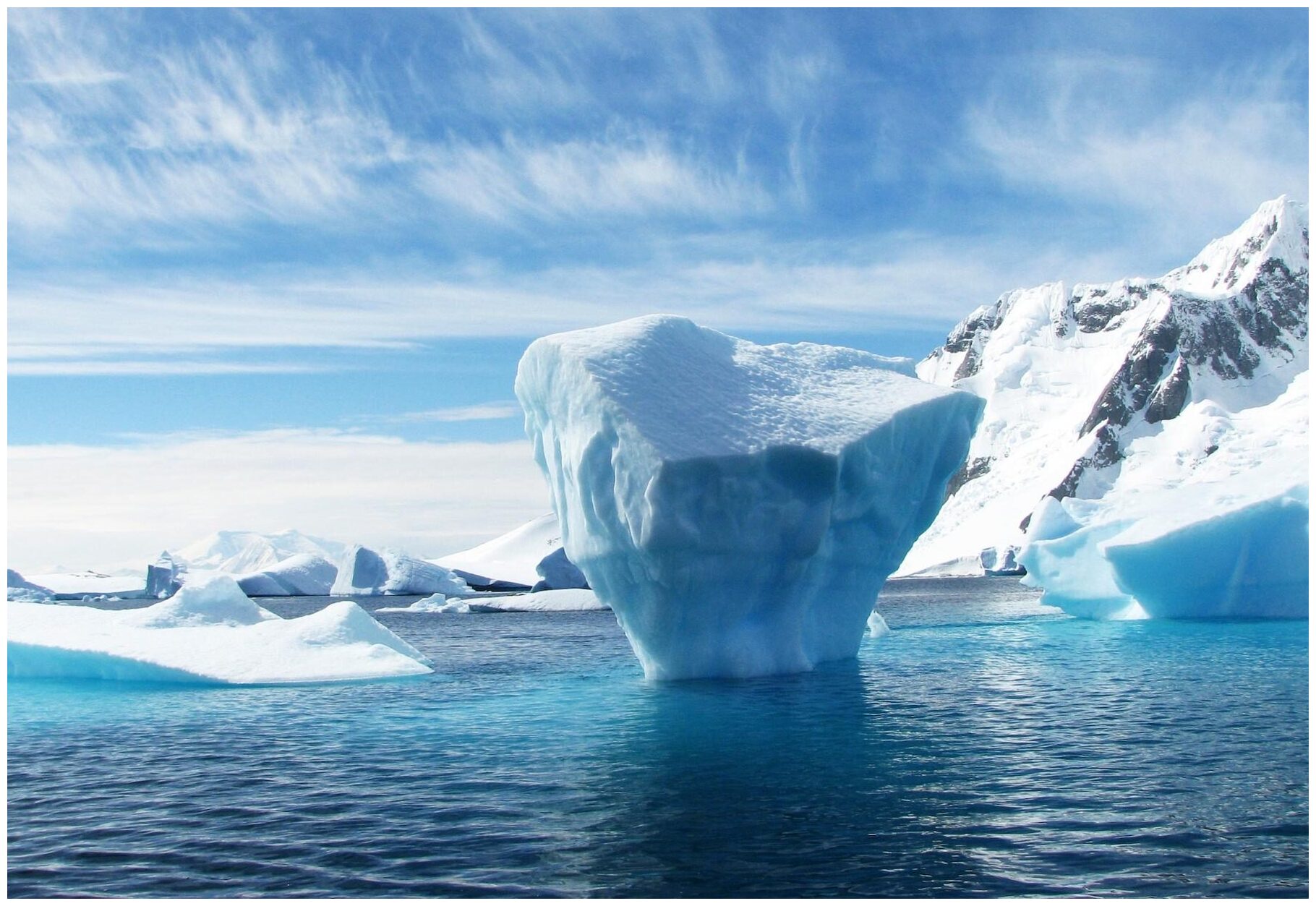
Material found in layers of the cores suggest that there was a major transfer of carbon from plant remains in coastal environments into the atmosphere, driven by sea level falls of around 40 metres as Antarctic ice caps formed.
While the initial formation of those ice caps, and the beginning of the modern, colder climate of the past 34 million years was due to long-term burial, or sequestering of carbon in sediments; the team found that the falling sea levels led to a 300,000 year brake on climate cooling.
Falling seas exposed coastal regions and their soft sediments to intense erosion by rain and rivers. Organic carbon, such as plant material, that was once bound up in these sediments and environments - think of today's tropical mangrove swamps - was then exposed to oxygen in the air and was available for bacteria to eat and convert back into carbon dioxide that can be released to the atmosphere.
Dr Tom Dunkley Jones from the University of Birmingham is senior author of the paper, and said:
"We've unearthed information from the Mississippi mud to answer a key question about how Antarctic ice massively expanded to continental scale.
"The Eocene Oligocene transition is probably the planet's biggest climate cooling event and has had a major impact on the earth's history. As sea levels fell over this transition, we can observe how a temporary brake on atmospheric cooling took place with the release of large amounts of carbon dioxide sequestered in coastal regions around the basin of the Mississippi River.
This solves a puzzle about the timeline of the transition, and suggests that the beginnings of this event and the build-up of Antarctic ice sheets started some 300,000 years earlier"This solves a puzzle about the timeline of the transition, and suggests that the beginnings of this event and the build-up of Antarctic ice sheets started some 300,000 years earlier. Once the brake of organic carbon was used up, the transition was freed to continue its move to the colder state of the past 34 million years."
Dr Tom Dunkley Jones
Marine clays
The research team studied samples from marine clays covering a depth of around 137m - and compared these to other key records of this event, especially from the middle of the Pacific Ocean. The team were able to use the data from the new samples to fill in gaps in the geological record, showing how sediments deposited in the area changed over time, and providing more precise timings for the sea level fall which signalled the formation of the icesheets.
Dr Kirsty Edgar, the University of Birmingham said:
"Our paper gives us a valuable new clue about how Earth's climate can undergo dramatic shifts and how this is often strongly linked to the biosphere and carbon cycle.
"Understanding these past events gives us a clearer picture of the beauty and complexity of the Earth's climate and ecology."



Reader Comments
The process of cooling was slowed down by have a brake applied. The cooling didn't stop (take a break), it just slowed down how quickly average temperatures were dropping.
The ice age then froze much water into the icecaps, lowering sea-levels.
Lower sea levels expose muddy flats around coastlines. The mud contains much organic matter (decaying ooze) which once exposed to the air, out-gassed various "greenhouse gases". These gases did not stop the oncoming ice-age, but they did slow down how quickly it arrived.
Braking here is used as a generic term for "to slow".
Not all brakes work by friction. Magnetic induction can also be used (non-contact). Or in the case of regenerative-braking, you get the system's momentum to drive electric-generators in order to reclaim the energy.
[Link]
stop flying all around the world in private jets
stop buying beachfront mansions
stop driving motorcades of 20 SUVs to get from the airport to the next important summit.
and yet we see none of these. Nuf said.
Go dig in a swamp: you pull up black ooze muck. This is partially decayed organic matter, rich in carbon.
Go to a part of the ocean with large tidal swings (Bay of Fundy, for instance?) and breathe in that rich dead-fish smell of the ocean... the dead and not fully decayed biology is the source of the to-be-released "green-house gasses".