

Mr Dutton said he wants a peaceful relationship with China as he makes baseless allegations against Beijing.
Peter Dutton made the extraordinary admission during a wide-ranging interview with News Corp Australia. He claimed his fears over China's military strength and strategic position were echoed by defence chiefs across the country.
Comment: These are indeed threats to the West because they could thwart their failing attempts to subjugate much of the planet.
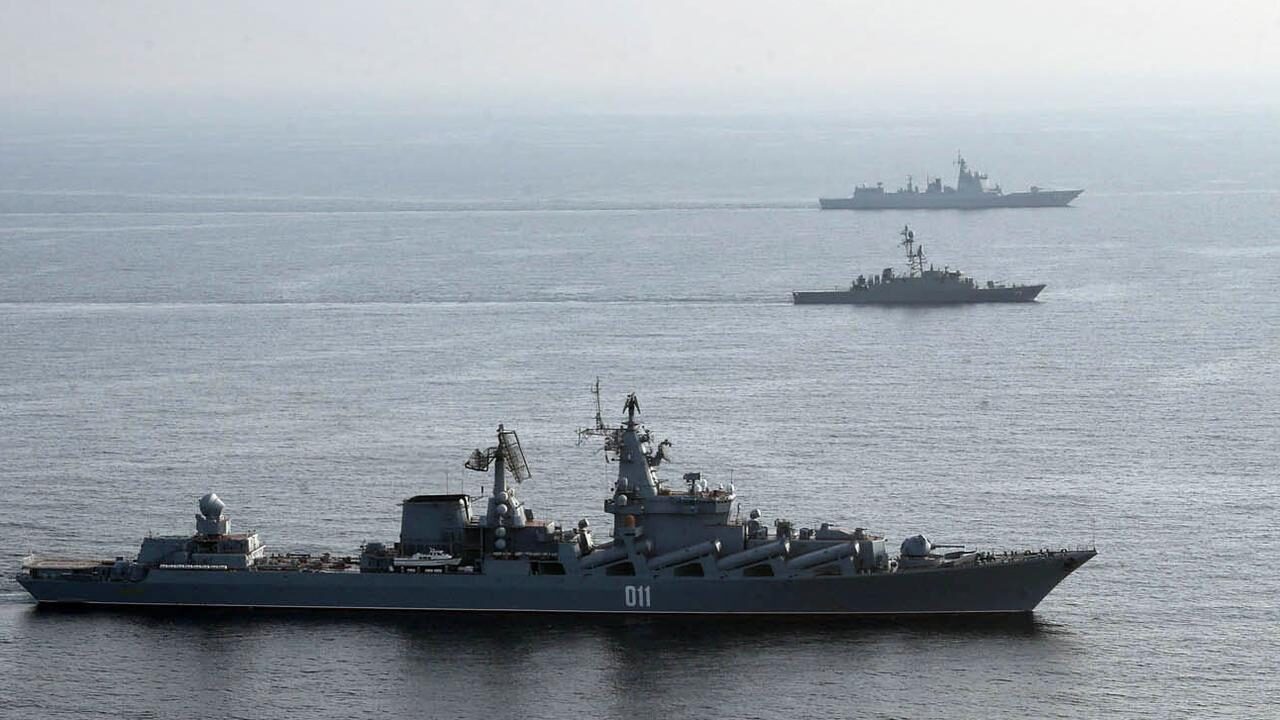
© SuppliedVessels from Iran, Russia and China during military drills in 2021.
Comment: Unsurprisingly, these 'facts' are supported neither by evidence nor even a reasonable motive.
"We want a normalised peaceful relationship with every country, including China. But China has changed. And it's going to take money to respond to that both in terms of additional personnel as well as investment in technologies and equipment."
Comment: China has changed, it's capable of defending itself and it has displaced the West on the economic stage. Dutton is fearmongering in an attempt to justify defense spending whilst citizens become increasingly impoverished.
He added, Australia needed to maintain both its military and naval capacity to "be prepared for what a year ago would have been inconceivable".
"It's conceivable that there could be a chemical warfare attack on a capital city of one of our allies and so could you be drawn back into a conflict in the Middle East," he said.
Comment: It certainly is conceivable, because the West has staged numerous false flags to provide justification for its subsequent aggression.
Tensions between China and the West have risen in recent times.
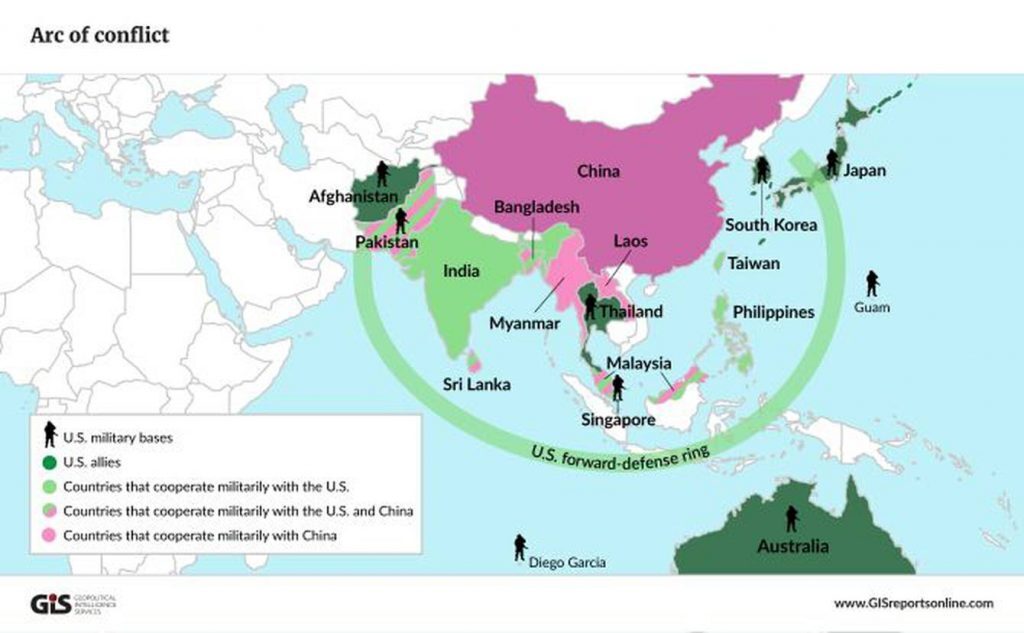
China's militarisation of South-East Asia has been closely watched by Australian and US Defence departments. China's Communist Party has developed infrastructure on coral reefs across the region - with fears these could be turned into military bases - and inked new military contracts with the Solomon Islands.
Comment: 'China's militarisation':
Just last week, China's President Xi Jinping delivered several cryptic messages in a rare speech on Thursday where he proposed a new "global security initiative".
Chinese President Xi Jinping delivering a keynote speech at the opening ceremony of the Boao Forum for Asia via video link
Xi spent much of his speech urging the world to work together against the Covid-19 pandemic, despite Beijing being criticised for being notoriously secretive.
Comment: Urging the world to work together isn't so cryptic, obviously for the pathocrats in the West mutually beneficial cooperation is an alien concept.
Some snippets from an article on Xi's speech:
"We, humanity, are living in an indivisible security community. It has been proven time and again that the Cold War mentality would only wreck the global peace framework, that hegemonism and power politics would only endanger world peace and that bloc confrontation would only exacerbate security challenges in the 21st century," Xi said.
The Chinese leader underlined that international security is "indivisible" and therefore respect for the sovereignty and territorial integrity of all countries, non-interference in each other's internal affairs and cooperation for the sake of common peace and security should form the basis of the international security framework.
Despite the pleas for peace, there were other contradictions. He never mentioned another country by name but there were obvious comparisons to the US, Ukraine and Russia.
"Right now, changes of the world, of our times, of our history, are unfolding in ways like never before," he said.
"These changes are posing challenges that must be taken seriously by humanity.
"We have yet to walk from the shadow of a once-in-a-century pandemic but new traditional security rules are already emerging."








Comment: We can expect the demonisation of China to worsen as the West's death grip on the world slips:
- Taiwan issues its first war survival handbook, follows US arms deal and China's vow for reunification
- How China's Realpolitik approach to Venezuela, Iran & Afghanistan upends US' geopolitical game
- The AUKUS issue is not over
Also check out SOTT radio's: