
© (Photo 163145380 / Beer ColleenMichaels | Dreamstime.com)
"The good people of Seattle responded to a tax on sugary drinks by buying more beer," Christopher Snowdon, director of Lifestyle Economics at the Institute of Economic Affairs and a leading critic of the nanny state, tweeted after the study's release.
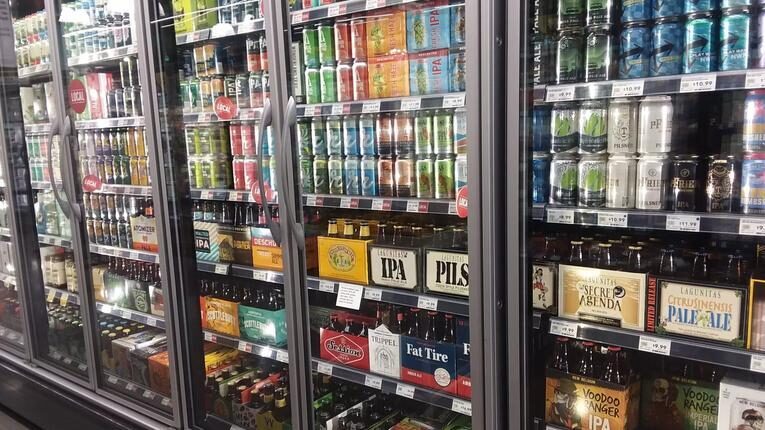
The PLoS study, by University of Illinois-Chicago researchers Lisa M. Powell and Julien Lader, compared sales of beer in Seattle both before and since adoption of the soda tax with comparable sales in nearby Portland, Oregon, which has no soda tax.
"At two-years post-tax implementation, [the] volume sold of beer in Seattle relative to Portland increased by 7%," the authors report. Though supporters of soda taxes claim (largely without evidence) that they're a successful tool to combat obesity, the authors of the PLoS study note that the dangers of "excess alcohol consumption [include] higher risk of motor accidents/deaths, liver cirrhosis, sexually transmitted diseases, crime and violence, and workplace accidents." Also: obesity.
While the dangers of excessive alcohol consumption are known, earnest onlookers also knew consumers would switch from soda to booze as a direct result of a tax on the former. The researchers, for example, note in their study that "a potential unintended consequence of such a policy could be that the tax induces substitution to alcoholic beverages."
Several years ago, I contributed an essay to a Cato Institute debate series on soda taxes, in which Snowdon served as the lead commentator.
"Drinking soda is neither a sufficient nor a necessary cause of obesity, and consumers can easily switch to other high-calorie products if the price of one product rises," Snowdon explained in his great essay, riffing on a theoretical Pepsi drinker who switches to beer in the face of high soda taxes.
Even if Snowdon's Pepsi drinker was theoretical, her switch from soda to beer was backed by data. Indeed, in my essay I linked to a study that found high soda taxes "led to increased purchases of beer."
It's also generally understood that if you tax something enough, and it costs more, people will buy less of it. Indeed, various reports have indicated the soda tax has caused a reduction in soda buying in Seattle. That's caused some to argue the tax is "working really well." (That's particularly true if you own a brewery!)
There's no inherent reason that Seattleites have switched from soda to beer. I suspect city residents likely might have swapped out soda for liquor, too — the PLoS study didn't examine liquor sales — but Washington State's ridiculously high liquor taxes, which make the city's soda tax look trivial, likely helped to make beer Seattle's soda substitute.
Interestingly, soda taxes have largely disappeared as an issue in the United States in recent years, and for reasons that aren't quite clear to me. I've assumed that California's excellent (and startling) 2018 statewide ban on new soda taxes helped dampen the spirits of Cali-covetous activists in the rest of the country. But a switch in consumer palates — particularly among the White Claw crowd — may play a role, too. It's possible, I suspect, that policymakers have seen that, with soda consumption already on the decline for years without targeted taxes, and perhaps accelerating more recently among younger generations, pushing for taxes that didn't make economic sense several years ago is an even less attractive approach today. Whatever the case, any momentum for such taxes appears to have stalled.
That's good news. After all, people who understand the impact of such taxes — from their regressive nature to their utter lack of impact — always found them to be a bad idea.
"It's hard to overstate the abject failure of soda taxes to deliver on their promised benefits," Reason Foundation's Guy Bentley wrote several years ago in a Washington Post op-ed. "Nowhere in the world, let alone the United States, have soda taxes reduced obesity."
Although a consumer switch from soda to beer in Seattle was not unexpected, the new study data is a little surprising. Last year, the Seattle Times reported that liquor and wine consumption had increased in the city during the pandemic, but that even though beer remained Seattle's most popular tipple, "beer and hard cider didn't gain in popularity during the pandemic in the Seattle area."






MENTAL, CRIMINAL & PSYCHOPATHIC SICK
Biotech company Neuralink, owned by billionaire Elon Musk, has developed a device designed to be incorporated into the gray matter of humans to monitor and potentially stimulate brain activity and help people recover from brain and spinal cord injuries. .Fifteen of the 23 monkeys implanted with Neuralink brain chips at the University of California at Davis in 2017-2020 died, according to media reports citing the Medical Commission for Responsible Medicine (PCRM) animal rights group. ).After reviewing the recordings made by veterinarians previously requested by the university, the group would come to the conclusion that the monkeys used in Neuralink's experiment had been abused and subjected to "extreme suffering."
"Almost every single monkey that had implants implanted in their heads suffered from rather debilitating health effects (...) frankly they were mutilating and killing animals," said PCRM Research Advocacy Director Jeremy Beckham, quoted by the New York Post. Additionally, in an interview with Business Insider, Beckham said the remaining seven monkeys that survived the experiment were transported to a Neuralink facility in 2020 before the company terminated its partnership with the university.
The group filed a draft complaint with the Department of Agriculture to initiate an investigation into the experiment, citing potential violations of the United States Animal Welfare Act. Although Neuralink has not yet officially commented on the matter, a Davis University spokesperson told the New York Post that the university's Institutional Animal Care and Use Committee had "thoroughly reviewed and approved" the project.To show the progress in the experiment, Neuralink released a video last year showing a healthy-looking monkey apparently using a brain chip to play the "Pong" video game.
In December 2021, Musk said Neuralink is expected to begin human testing this year.