Kanishka Singh
ReutersSun, 18 Oct 2020 05:48 UTC
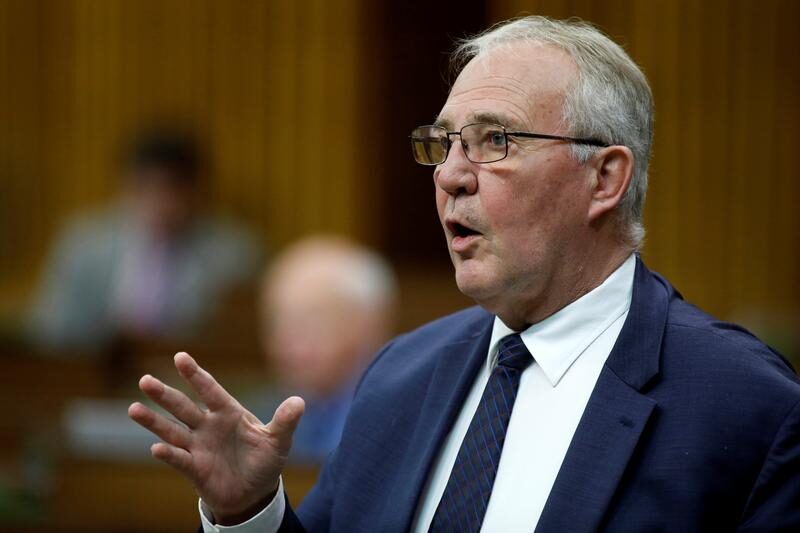
© REUTERS/Blair Gable/FilesCanada's Minister of Public Safety and Emergency Preparedness Bill Blair speaks during a meeting of the special committee on the COVID-19 pandemic, as efforts continue to help slow the spread of the coronavirus disease (COVID-19), in the House of Commons on Parliament Hill in Ottawa, Ontario, Canada June 16, 2020.
Canadian Public Safety Minister Bill Blair on Saturday said a fire that destroyed a lobster facility in southwest Nova Scotia was "suspicious", adding that he has authorized more Royal Canadian Mounted Police (RCMP) to keep peace in the region where fishery tensions have escalated.
"I am deeply concerned about the suspicious fire and confident that investigators will find the answers they need to hold those responsible to account", Blair said in a statement."I have now approved a request from Nova Scotia's Attorney General to enhance the presence of contracted RCMP resources as needed in that jurisdiction in order to keep the peace", he added.
Earlier in the day, the fire led to a man being admitted in hospital with life-threatening injuries, the RCMP said.The development capped a week of rising tensions over Indigenous fishing treaty rights.The blaze broke out at one of two facilities where Indigenous fishermen had stored their catch, which were raided and vandalized by commercial fishermen in southwest Nova Scotia this week.The two clashes earlier in the week involved hundreds of people outside lobster pounds that handle Indigenous-caught lobster.
"The current tensions cannot continue. The temperature of this dispute must be lowered, now. The threats, violence, and intimidation have to stop", the Canadian public safety minister said."We all need to acknowledge that a lasting resolution to this dispute can only be concluded if it is rooted in the recognition of legitimate Mi'kmaq treaty rights", he said.
Comment: More
from CBC:
...
Tensions have been simmering for weeks in the province's southwest, sparked by the launch of a moderate livelihood lobster fishery by the Sipekne'katik band outside the federally mandated commercial season — 21 years after the Supreme Court of Canada ruled in the case of Donald Marshall Jr.
The landmark decision affirmed the Mi'kmaw right to earn a "moderate livelihood" from fishing. The court later said the federal government could regulate the Mi'kmaw fishery but must justify any restrictions it placed on it.
Many commercial lobster fishermen say they consider the new Sipekne'katik fishery in St. Marys Bay illegal and worry that catching lobster outside the mandated season, particularly during the summer spawning period, will negatively impact stocks.
Sipekne'katik officials have said the amount of lobster that will be harvested and sold is tiny compared with what's caught during the commercial season, which begins in late November and runs until the end of May.
They say the fishery was launched after the band was unable to find common ground with the Department of Fisheries and Oceans on the definition of "moderate livelihood."
Calls for Ottawa to take action
When it comes to laying blame for the escalating conflict, many — including the Sipekne'katik First Nation, commercial fishers, Nova Scotia Premier Stephen McNeil and opposition parties — have pointed fingers at the Department of Fisheries and Oceans for failing to properly define a "moderate livelihood."
The premier tweeted Saturday afternoon that he is "deeply concerned about the acts of intimidation and violence" in southwestern Nova Scotia.
...




Fishery? How about lobstery? R.C.