
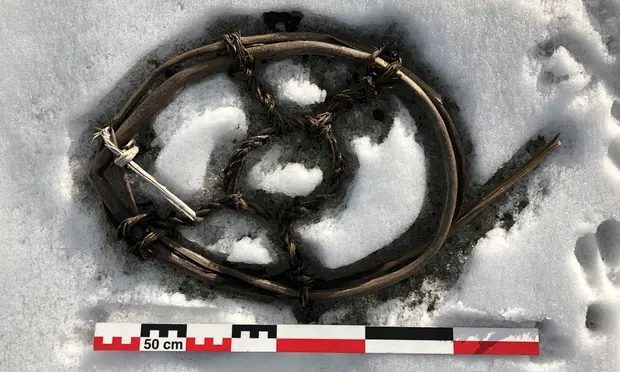
© Espen Finstad/secretsoftheice.comA horse snowshoe found during 2019 fieldwork at Lendbreen.
Comment: The Guardian's 'global warming/climate change-crisis' agenda is pretty well known, but, just for reference, while this mountain pass may be melting, elsewhere up north: All-time record snowfall buries parts of Sweden - 3.25 M (10.7 ft) - Don't tell Greta...
The pass, at Lendbreen in Norway's mountainous central region, first came to the attention of local archaeologists in 2011, after a woollen tunic was discovered that was later dated to the third or fourth century AD. The ice has retreated significantly in the years since, exposing a wealth of artefacts including knitted mittens, leather shoes and arrows still with their feathers attached.
Though carbon dating of the finds reveals the pass was in use by farmers and travellers for a thousand years, from the Nordic iron age, around AD200-300, until it fell out of use after the Black Death in the 14th century, the bulk of the finds date from the period around AD1000, during the Viking era, when trade and mobility in the region were at their zenith.
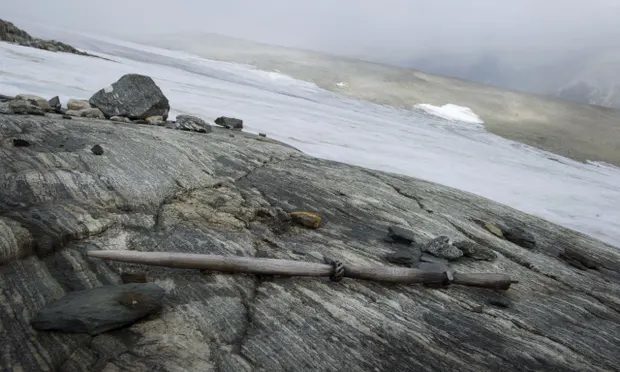
© Espen Finstad/secretsoftheice.comDistaff made from birch, radiocarbon-dated to about AD800
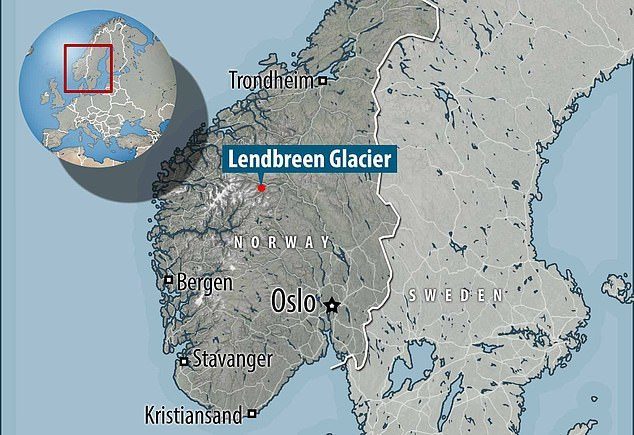
The transport through the mountain pass at Lendbreen, in Norway's southern mountains, peaked markedly around AD 1000 and then declined through the Middle Ages
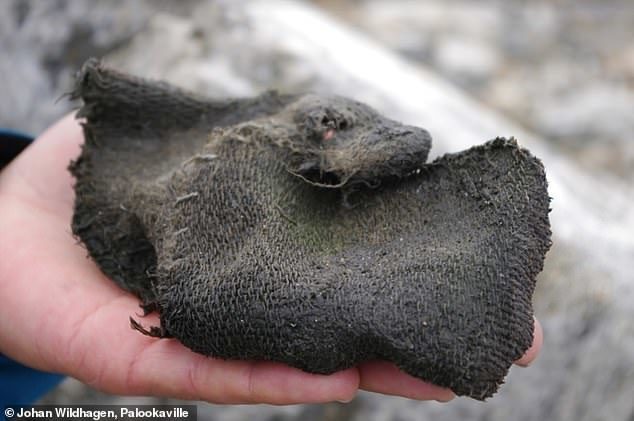
© John Wildhagen, PalookavilleMitten, made from different pieces of woven fabric. Found in the pass area at Lendbreen. Radiocarbon-dated to the 9th century AD
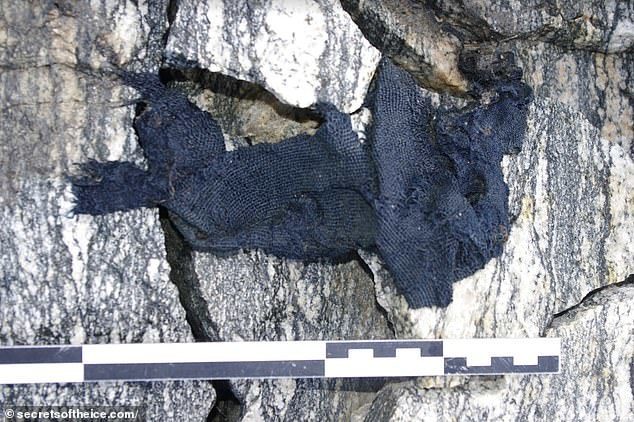
© secretsoftheice.comA piece of textile which shows remains of blue colouring. From the Lendbreen pass area.
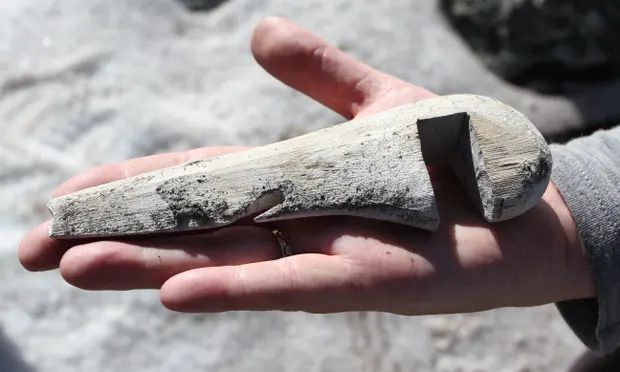
© Espen Finstad/secretsoftheice.comObject believed to be a locking device found in the Lendbreen pass area.
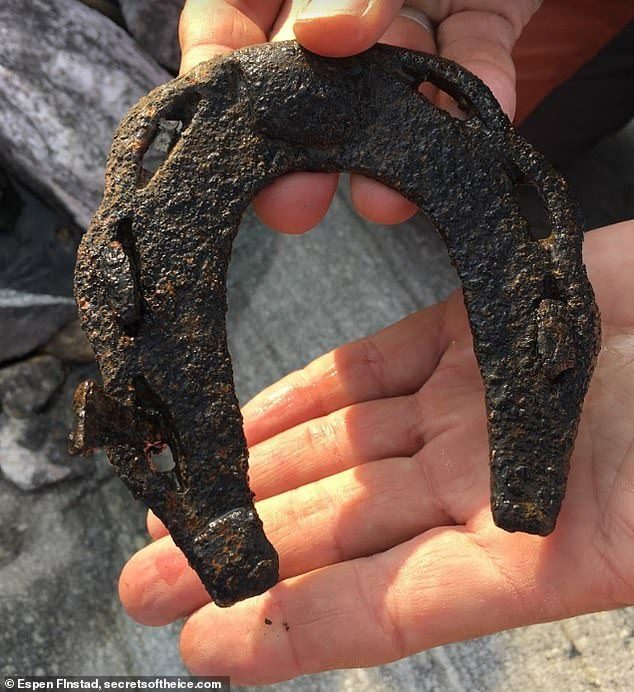
© Epsen Finstad, secretsoftheice.comA preserved horseshoe which melted out of the ice in the lower part of Lendbreen in 2018. The shape dates it to the 11th to the mid-13th Century AD. A small part of the hoof was still attached to the other side of the shoe

© secretsoftheice.com/Vegard VikeWalking sticks, complete or broken, are quite common at Lendbreen. This example carried a runic inscription with the name of its owner – Joar.
The team's discoveries are published in the journal Antiquity.










Comment: See also: