
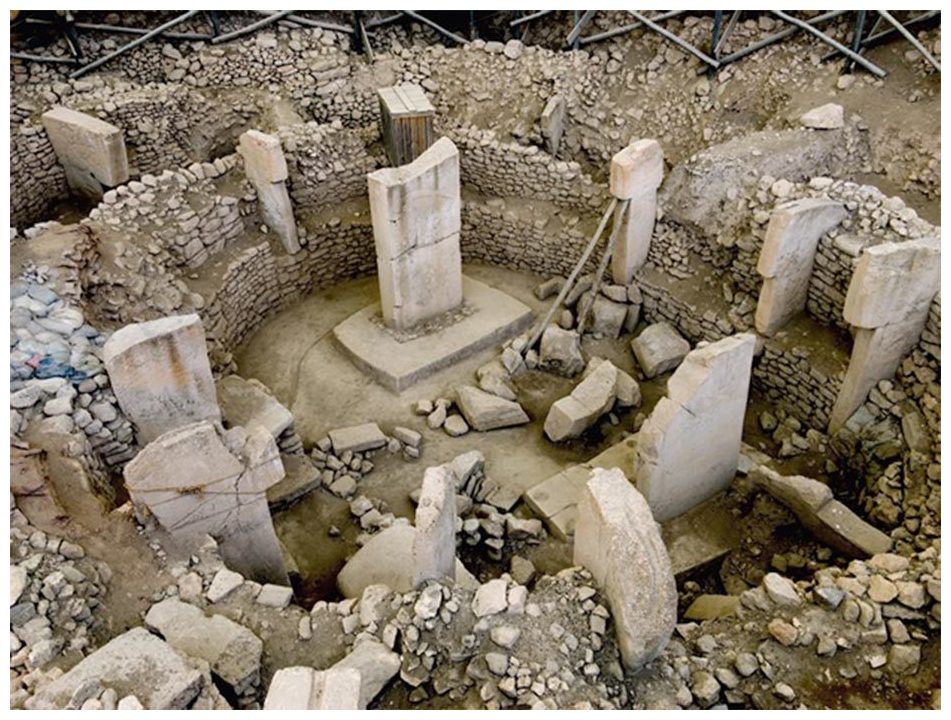
© Brian Weed/ Abode StockAncient Site of Göbekli Tepe in Southern Turkey.
Agriculture First vs The World's First Temple?
But this 'agriculture first' model is challenged by Göbekli Tepe , the world's first temple. Situated on top of a hill in southern Turkey at the heart of the Fertile Crescent, this ancient megalithic construction, many times the size of Stonehenge, and yet at least twice as old, has quickly become the most important archaeological site in the world. This is because it screams 'civilisation', and yet pre-dates the establishment of agriculture by thousands of years. Even more incredibly, its giant stone pillars are adorned with strange animal symbols which appear to communicate information - they seem to be an early form of proto-writing. Perhaps they can even reveal how civilisation began?
In the words of one leading archaeologist, Ian Hodder many people think Göbekli Tepe: '...changes everything...It overturns the whole apple cart. All our theories were wrong.' But this view was expressed before Göbekli Tepe's animal symbols were decoded. Only now that one can begin to read the meaning of these symbols, can one truly appreciate the scale of the change required. In fact, Göbekli Tepe's impact reaches beyond the boundaries of archaeology and anthropology, into the heart of an age-old scientific debate that has raged for millennia. It even rocks the foundations of science itself. So, to say that Göbekli Tepe 'changes everything' is a massive understatement.
Read the rest of the article



Reader Comments