
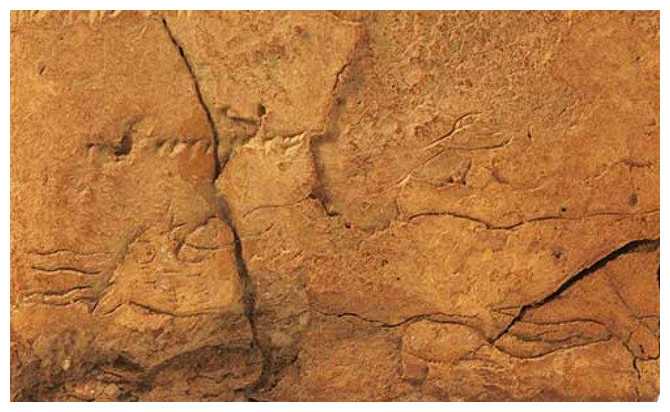
© University of CopenhagenThe demon can be spotted at the bottom of the image, horns and face to the left and legs to the right- See also the researcher's drawing below.
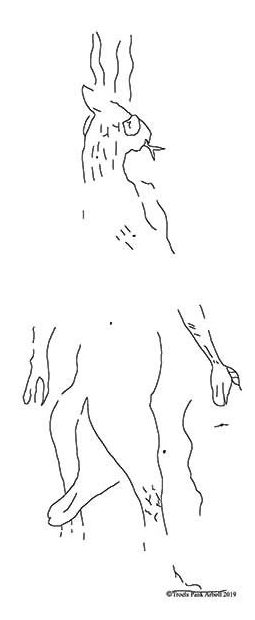
© University of CopenhagenEpilepsy Demon
"Drawings of supernatural powers are very rare on cuneiform tablets with magical and medical treatments. When there is a drawing, it usually depicts one of the figures that the healers used in their rituals, not the demon itself. But here we have a presentation of an epilepsy demon as the healer who wrote the text must have imagined it."
Lunacy through history
Bennu-epilepsy, which is one of the diseases described in the 2,700-year-old text, was feared in ancient Iraq; symptoms included seizures, loss of consciousness or sanity, and, in some cases, the patients cried out like a goat.
"The text also states that the demon acted on behalf of the lunar god Sîn when it inflicted a person with epilepsy. So the Assyrians and Babylonians believed that there was a connection between the moon, epilepsy and insanity. In the following millennia, this idea became widespread, also in our part of the world, and it can still be detected in the English word 'lunacy'. In other words, the views on illness, diagnoses and treatments in the earliest civilisations have had a significant impact on later perceptions of illness, even in recent history, "says Troels Pank Arbøll.
Troels Pank Arbøll has recently published an article about his findings in Journal des Médecines Cunéiformes. His research is supported by the Edubba Foundation.






Tapeworm