
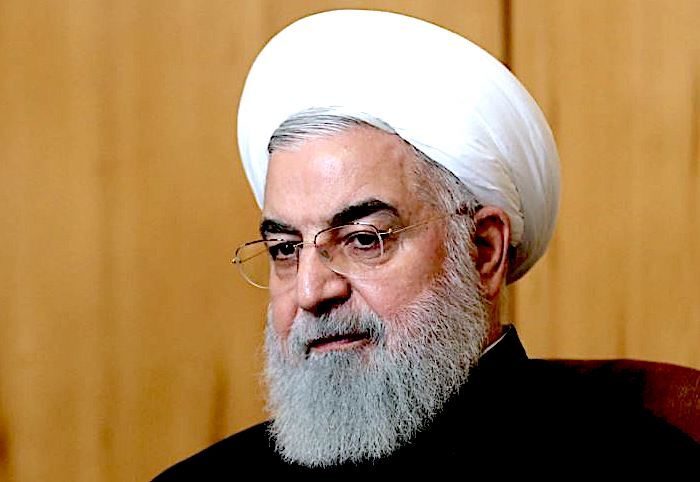
© President.ir/EPA-EFEIranian President Hassan Rohani
"We have always been a man of negotiation and diplomacy, the same way that we've been a man of war and defense," Rohani said on April 24. "Negotiation is only possible if all the pressures are lifted, they apologize for their illegal actions and there is mutual respect," Rohani said.
Global oil prices on April 23 hit their highest level since November after Washington announced that it will end all waivers on imports from sanctions-hit Iran next week. That has put pressure on importers to stop buying oil from Tehran and has further tightened the global oil supply.
Iran agreed to a nuclear deal in 2015 with world powers, including the United States -- receiving relief from international sanctions in return for curbing its nuclear program and ensuring it is not trying to produce nuclear weapons.
But the United States withdrew from the agreement in 2018 and began reimposing its own sanctions.
U.S. President Donald Trump says the Iran nuclear deal was "fatally flawed" because it did not address Iran's ballistic-missile program or Tehran's alleged state sponsorship of terrorism.
Other signatories to the nuclear deal -- France, Germany, Britain, the European Union, Russia, and China -- have been working to try to save the international agreement.
But the cancellation of waivers by Washington means the United States is now threatening sanctions against importers in any country that don't comply with U.S. sanctions and continue to buy oil from Iran.

Comment: Saudi Arabia, Qatar and UAE have obligations to Iran: