
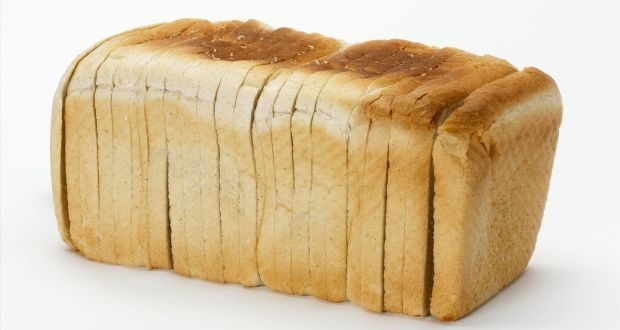
© SSPL/Getty ImagesA US organisation dedicated to “real foods” called Fooducate recently analysed the ingredient lists of over 2,000 breads and found that the average mix had about 20 ingredients!
Do you really want plaster of paris, ground-up bones or soybean oil in your loaf?
Ah bread! It's hard to find a simpler, now more basic food. It has a special place in social life, with Ireland jealously guarding its own specialities like barmbrack and Blaas, which have even got their own special protected status. On the grand scale, historians know that the planting of wheat led to both the first fixed settlements and a spiritual reverence for the cycle of life and death epitomised by the spikes of wheat, watered by a priest, that adorn the temples of Ancient Egypt, alongside scenes of the baking process.
Humble bread dominates Christian iconography too - from the "breaking of" rituals, to full-blown miracles, as in the Bible story of Jesus feeding the multitudes with loaves and fishes. All of which maybe explains why two of the greatest philosophers, John Locke and Jean-Jacques Rousseau, both waxed eloquently on the virtues of brown bread. Rousseau enthusiastically sings its praises as part of a rustic repast "with tolerable wine" while for Locke, happiness simply was a loaf of brown bread. In a little-known essay called Some Thoughts Concerning Education, penned in 1692 he explains:
"I should think that a good piece of well-made and well-bak'd brown bread, sometimes with, and sometimes without butter or cheese, would be often the best breakfast... I impute a great part of our diseases in England, to our eating too much flesh, and too little bread."Locke's pronouncements on "life, liberty and the pursuit of happiness" have thundered down the centuries, but his views on bread seem to have been treated too casually! Not least because, the first thing you will notice today about many popular diets is that they actually try to rule out bread. Take the popular paleo, or "Stone Age Man", diet, for example. This claims that not just bread but everything made from cereals and grains is a recent unnatural invention, bad for the human body - and must be shunned.
Actually, the argument that the human metabolism cannot cope with grains is weak and indeed archaeologists have found evidence of people grinding little loafs out of wild grains. But paleo dieters may not be barking up the wrong tree entirely. Because there is a problem with many of the things presented as breads today, which is simply that they are not really bread at all. Because, you see, if real bread is made out of a very few, reassuring ingredients, being flour, a bit of water, yeast and a pinch of salt, many of the bread and rolls we eat nowadays are something rather different. Today's industrial bread uses high-speed mixers and a witch's brew of chemicals to make a very white loaf out of budget-grade grain in double-quick time. Fat, emulsifiers and enzymes are added to the traditional ingredients, all of which are then pounded to death in about three minutes by the mixers.
An American organisation dedicated to "real foods" called Fooducate recently analysed the ingredient lists of over 2,000 breads. Their survey found that the average mix had about 20 ingredients! "Among those you might not expect - or want - to find, is soybean oil or fat. Adding olive oil has a similar effect, but soya bean oil is much, much cheaper. Another is calcium sulfate. Also known as... plaster of paris. Bread companies use it to speed up the fermentation process, to increase shelf life and to make the dough stick less to their machinery. But is it really something you want to eat?
Then there's the mono and di-glycerides, ethoxylated mono and di-glycerides. These strange-sounding chemicals are added to make the dough blow up bigger (think less of the other ingredients, hence cheaper!). And slithering in alongside is high-fructose corn syrup (HFCS). Even "real" breads sometimes use a sweetener to improve taste and help the dough rise (because yeast loves sugar). In fact, bread often contains a dash of honey although HFCS is the cheapest sugar, and that is why manufacturers love it more than almost anything else. Maybe there's calcium propionate. Think "fungicide". It is added to the bread to inhibit mould and bacterial growth. Also present is soy lecithin, sometimes accused of upsetting the hormonal balance and confusing the body into putting on weight!
Yet another unsung ingredient of modern bread is monocalcium phosphate. Unsung because phosphates are usually made from ground-up bones. Farmers value as fertilisers and bakers use them as a leavening agent and preservative, but still... ground up bones!
Other unwanted extras are azodicarbonamide which is added to make the dough easier to handle and to bleach the flour and DATEM, used to improve volume and uniformity. When a truck of it overturned in Chicago in America in August 2001 it caused toxic fumes and a health scare.
The ingredient sodium stearoyl lactylate, brings us firmly into the industrial age. "Lactylates" are used in foods from pancakes and waffles to vegetables and ice creams - and in packaging and shampoos too. And don't forget the enzymes added to speed up the time it takes dough to rise. Time is money. It's all a far cry, and a sad departure, from John Locke's simple staff of life. Locke, who fondly recalls how the Roman Emperor, Augustus, "when the greatest monarch on the earth", chomped a bit of dry bread in his chariot, would shudder to see our supermarket bread.
Martin Cohen (@docmartincohen) is a philosopher and social scientist whose latest book I Think Therefore I Eat (2018) takes a philosophical look at food science.








Comment: In the last century we've added more crap and toxic garbage to our foods than could ever have been imagined by previous generations. We no longer eat food, but processed 'foodstuffs'. Is it any wonder our collective health is going down the proverbial toilet?
See also: